
Build Your Fusion Restaurant Website
From creative small plates to innovative tasting menus, our AI creates modern websites for culinary boundary-pushers.
Fusion Restaurant Website Examples

AI-designed for Fusion restaurants
Understanding Fusion Cuisine
History & Origins
While the term 'fusion cuisine' entered the popular lexicon in the 1980s, the concept is as old as trade itself. Culinary cross-pollination began when ingredients moved along the Silk Road and intensified during the Columbian Exchange, creating early prototypes like the vindaloo of Goa (Portuguese garlic marinade meets Indian spices) or the banh mi of Vietnam (French baguette meets Southeast Asian fillings). However, the modern iteration of Fusion cuisine is largely attributed to chefs like Wolfgang Puck and Roy Yamaguchi, who deliberately bridged European techniques with Pacific Rim ingredients, elevating cross-cultural cooking from happy accidents to high art. In the late 20th and early 21st centuries, fusion moved from fine dining tablecloths to the streets. The rise of food truck culture, particularly in Los Angeles, sparked a revolution with the Korean taco—a symbol of second-generation immigrant creativity. This era democratized fusion, proving that disparate flavors like kimchi and queso or lemongrass and brisket weren't just compatible; they could tell a new story about cultural identity. Today, fusion has matured beyond the 'confusion' of the early 2000s. It is no longer about forcing random ingredients together for shock value but about finding deep, harmonious connections between culinary traditions. Whether it is Nikkei (Japanese-Peruvian), Itameshi (Italian-Japanese), or modern Indian-Mexican, successful fusion cuisine respects the integrity of the source cultures while creating something entirely distinct.
Regional Styles
Fusion takes on different characters depending on the local demographics. In California and the Pacific Northwest, 'Pan-Asian' and 'Pacific Rim' styles dominate, blending fresh local produce with Japanese, Thai, and Hawaiian flavors. In the American Southwest and Texas, fusion often manifests as bold mashups of BBQ smoke and Mexican heat with Korean or Vietnamese acidity. East Coast cities, particularly Miami and New York, see a heavier influence of Caribbean and Latin American elements merging with European techniques or Asian staples, resulting in vibrant, acid-forward profiles like Cuban-Chinese cuisines.
Signature Techniques
The success of fusion cooking relies on 'bridging ingredients'—flavors that exist in both cultures being combined (e.g., cilantro in both Mexican and Thai, or cumin in both Indian and Texan cuisines). Chefs often utilize the 'Vessel Swap' technique, taking a format from one culture (tacos, pizza, bao) and filling it with the flavor profile of another. Another core method is 'Technique Transposition,' such as applying French sous-vide precision to traditional Asian braises, or using Japanese tempura frying methods for Southern American vegetables. The goal is always balance: contrasting textures and balancing the five tastes (sweet, sour, salty, bitter, umami) across borders.
Dining Culture
Dining at a fusion restaurant is fundamentally an experience of discovery and education. Unlike traditional restaurants where the menu items are familiar standards, fusion dining requires a higher level of trust between the chef and the diner. The atmosphere is often conversational, with servers playing a crucial role in explaining the logic behind unexpected pairings. While early fusion was synonymous with white-tablecloth fine dining, the current culture is heavily skewed towards 'casual cool'—shareable small plates, communal seating, and an atmosphere that encourages experimentation without pretension.
Our AI understands fusion cuisine
Ingredient Storytelling Space
Fusion menus require explanation. Our layout provides ample text space to describe unfamiliar ingredients and the 'why' behind specific cultural pairings.
Visual Texture Showcase
Since customers cannot imagine 'Kimchi Carbonara' easily, our image-centric design puts high-resolution photos front and center to validate the concept.
Dietary Transparency Tags
Fusion often mixes allergens (dairy, soy, gluten) in unexpected ways. Clear tagging helps diners navigate complex ingredient lists safely.
Concept-First 'About' Section
A prominent section to explain your specific fusion philosophy (e.g., 'Why French-Japanese?'), essential for building customer buy-in.
Flexible Menu Categories
Unlike rigid templates, create custom sections like 'Taco Omakase' or 'Pasta & Wok' that fit your unique hybrid structure.
Mobile Discovery Optimization
Capture the on-the-go crowd looking for 'unique food near me' with a site that loads instantly on smartphones.
AI That Understands Fusion Menus
Our AI automatically recognizes and organizes traditional fusion menu categories.
Global Tapas / Izakaya
Small, shareable plates combining bar-food traditions.
Handheld Cross-Overs
Tacos, Baos, Sliders, and Wraps using alternative fillings.
Noodle & Rice Works
Carbohydrate-heavy mains mixing Italian, Asian, and Latin influences.
Raw & Cured
Ceviche, Sashimi, Crudo, and Poke variations.
Hybrid Sweets
Desserts merging European pastry techniques with global flavors.
Craft Elixirs
House-made sodas, teas, and mocktails using global spices.
Upload your menu photos and watch the magic happen
Try It FreeA real restaurant website built with Dinehere
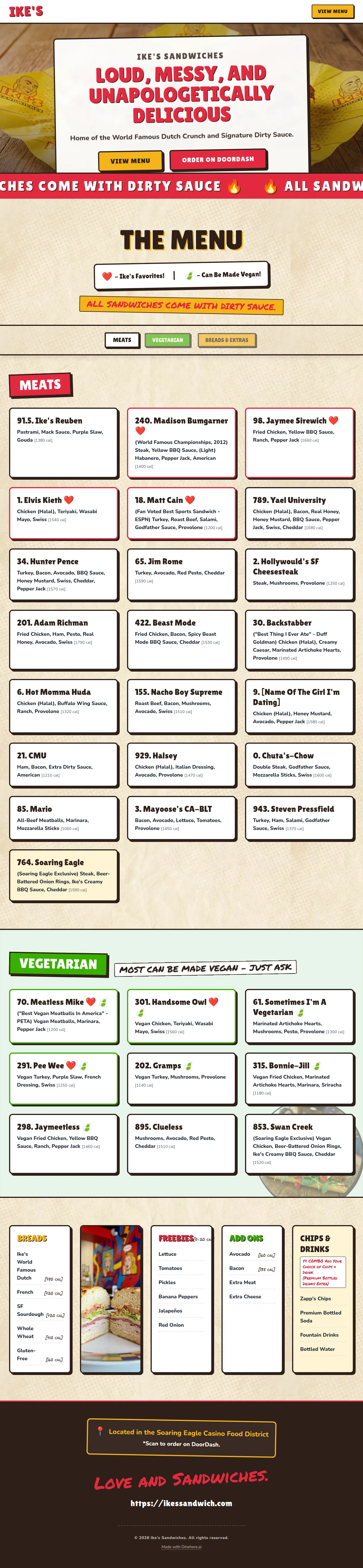
Built from a few menu photos — this is a live site. Take a look.
Tips for Fusion Restaurant Owners
Define Your Fusion Logic
Don't just list 'Fusion' as your category. Use your website's bio to explain the *specific* connection (e.g., 'The spice route meeting the Silk Road'). Customers need a narrative to understand why your ingredients belong together.
Prioritize Visual Education
Words often fail to describe new flavors. Ensure your Dinehere site features bright, close-up photos of your most innovative dishes so customers can see the texture and presentation before they visit.
SEO for Specific Dishes
Instead of just trying to rank for 'Fusion Restaurant', write detailed descriptions for unique items like 'Bulgogi Cheesesteak' or 'Curry Pizza'. These specific terms capture high-intent diners looking for exactly what you sell.
Highlight the 'Safe' Options
Fusion can be intimidating. Use your menu descriptions to flag 'gateway dishes'—items that are approachable for hesitant diners—to ensure your group appeal remains high.
Keep the Menu Updated
Fusion concepts often rely on seasonal experimentation. A stagnant PDF menu frustrates customers. Use the website builder to ensure tonight's special experiment is visible to everyone searching online right now.
Challenges Fusion Restaurants Face Online
The 'Identity Crisis' in Search
Why it matters: Search engines like Google force restaurants into rigid categories. If you check 'Italian' and 'Japanese', you might get buried in both lists rather than highlighted.
How we help: Dinehere creates a dedicated platform where you control the keywords. By optimizing your own domain, you can rank for specific hybrid terms ('Italian-Japanese pasta') that directory categories miss.
Menu Complexity & Confusion
Why it matters: If a customer reads a text-only PDF and sees 'Unagi Risotto', they might assume it's gross or a typo. Confusion is the enemy of conversion.
How we help: Our format combines descriptive text with imagery. You can explain the dish's flavor profile and show the beautiful plating, converting confusion into curiosity and appetite.
Mobile Discovery for Niche Concepts
Why it matters: Fusion appeals to adventurous eaters who often decide where to eat while scrolling on their phones. Slow, non-responsive sites lose these impulse diners.
How we help: Dinehere sites are mobile-native. They load instantly and present the menu clearly on small screens, ensuring you capture the 'foodie' demographic searching for their next new experience.
Three Simple Steps
Upload Your Menu
Take photos of your fusion menu or upload existing images. Our AI reads any format.
AI Creates Your Site
Watch as our AI designs a beautiful website tailored to fusion cuisine aesthetics.
Go Live Instantly
Preview, make edits if needed, and publish. Your restaurant is now online.
One Price, Everything Included
or $390/year — 2 months free
No contracts, no setup fees. Cancel anytime. Just a beautiful website for your fusion restaurant.
- AI-powered website generation
- Mobile-responsive design
- Custom subdomain (yourname.dinehere.ai)
- Menu parsing from photos
- SEO optimized
- Hosting included
- SSL certificate included
Common Questions About Fusion Restaurant Websites
Not at all. Dinehere is designed for rapid updates. You can swap out dish names, descriptions, and prices in seconds from your phone, keeping your digital menu as current as your chalkboard.
A website allows you to control the narrative. Unlike a simple directory listing, you can use the 'About' section and rich menu descriptions to explain the cultural history and inspiration behind your fusion concept.
Yes. While photos are great, Dinehere's clean typography ensures your menu looks professional even without images. You can add photos gradually as you take them.
With our SEO optimization, your content is structured so that search engines can identify the specific keywords you use. If you describe 'Korean Tacos', you improve your chances of appearing for both Korean and Mexican food searches.
Significantly. Custom web design can cost thousands. Dinehere offers a professional, single-page presence for a transparent, affordable price, eliminating the need for expensive developers.
Our menu editor allows for detailed descriptions and dietary tags. You can explicitly state if a dish contains unexpected allergens (like fish sauce in a pasta dish) to ensure customer safety.
Absolutely. Your social media icons are prominently displayed, encouraging website visitors to follow your daily culinary experiments on visual platforms.
Yes. You can easily update your location in the address/hours section, and the mobile-friendly design is perfect for customers standing in line or searching from the sidewalk.
Best Cities for Fusion Restaurants
Related Cuisines You Might Like
Ready to Build Your Fusion Restaurant Website?
Join other fusion restaurant owners who built their websites with Dinehere.
Build My Fusion Restaurant Site