
Build Your Chinese Restaurant Website
From dim sum houses to Sichuan specialists, our AI creates beautiful websites for every Chinese cuisine style.
Chinese Restaurant Website Examples

AI-designed for Chinese restaurants
Understanding Chinese Cuisine
History & Origins
Chinese culinary history spans thousands of years, evolving through dynastic changes where imperial courts set standards of refinement while peasant traditions mastered the art of preservation and waste reduction. The philosophy of Chinese medicine often intersects with food, viewing meals not just as sustenance but as a way to balance the body's 'qi' through the careful pairing of hot (yang) and cold (yin) ingredients. From the ancient fermentation techniques of the Zhou dynasty to the intricate knife work developed during the Tang, the cuisine is a testament to longevity and adaptation. In the context of the United States, Chinese cuisine has a unique dual history. It began with Cantonese immigrants in the mid-19th century who adapted dishes to local palates, creating the distinct 'American-Chinese' repertoire of Chop Suey and General Tso's Chicken. However, the last few decades have seen a culinary renaissance, with a massive influx of regional specificity. Today, the landscape is no longer monolithic; it is a vibrant tapestry where authentic Sichuan hot pots, Xi'an hand-pulled noodles, and Shanghainese soup dumplings coexist alongside beloved takeout classics.
Regional Styles
China's culinary landscape is often divided into the 'Eight Great Traditions,' each shaped by geography and climate. Cantonese (Yue) cuisine, dominant in the West, emphasizes freshness and natural flavors through steaming and stir-frying. Sichuan and Hunan cuisines are famous for their bold use of chili heat and the numbing 'ma-la' sensation of Sichuan peppercorns. Northern cuisine (Lu/Beijing) features wheat-based staples like noodles and dumplings alongside roasting techniques, while the coastal Jiangsu and Zhejiang regions are renowned for sweet-savory braises and intricate seafood preparations.
Signature Techniques
The wok is the heartbeat of the Chinese kitchen, essential for 'Wok Hei'—the breath of the wok—which imparts a distinct seared flavor during high-heat stir-frying. Beyond the stir-fry, techniques are incredibly diverse: 'Hong Shao' (red braising) uses soy sauce and sugar to create rich stews; 'Siu Mei' involves roasting meats over open fire or in rotisseries; and intricate dumpling folding requires years of manual dexterity. Steaming is also paramount, particularly in Cantonese cuisine, to preserve the texture and nutritional integrity of ingredients.
Dining Culture
Chinese dining is inherently communal, centering on the concept of sharing. Dishes are placed in the center of the table, often on a Lazy Susan, allowing everyone equal access to the meal. This format symbolizes unity and family harmony. A typical meal seeks balance in texture, flavor, and color; it is not uncommon to serve a whole fish or chicken to symbolize completeness. Tea is not merely a beverage but a ritual cleanser consumed throughout the meal, and the dining etiquette involves a complex social dance of hosting, serving others before oneself, and respecting elders.
Our AI understands Chinese cuisine
Bilingual Menu Support
Seamlessly display dish names and descriptions in both English and Chinese characters to appeal to heritage speakers and locals alike.
Large Menu Optimization
Clean, categorized layouts designed to handle extensive menus (100+ items) common in Chinese restaurants without overwhelming the user.
Visual Dish Dictionary
Photo-centric layouts that help customers visualize unfamiliar authentic dishes like 'Lion's Head Meatballs' or 'Ants Climbing a Tree'.
Click-to-Call Prominence
High-visibility phone buttons, essential for establishments that rely heavily on traditional takeout phone orders.
Family Style Explanations
dedicated 'About' sections to explain portion sizes and the communal dining concept to new customers.
AI That Understands Chinese Menus
Our AI automatically recognizes and organizes traditional chinese menu categories.
Siu Mei (Roast Meats)
BBQ Pork (Char Siu), Roast Duck, and Soy Sauce Chicken.
Dim Sum (Dian Xin)
Small steamer baskets containing Hargow, Siu Mai, and buns.
Clay Pot Casseroles
Braised tofu, brisket, or seafood stews served bubbling hot.
Chef's Specialties
Authentic regional dishes like Mapo Tofu or Squirrel Fish.
Congee & Noodle Soups
Rice porridge with preserved egg, Wonton noodle soup, or Beef Brisket soup.
Seasonal Vegetables
Stir-fried Pea Shoots, Water Spinach (Ong Choy), or Bok Choy.
Upload your menu photos and watch the magic happen
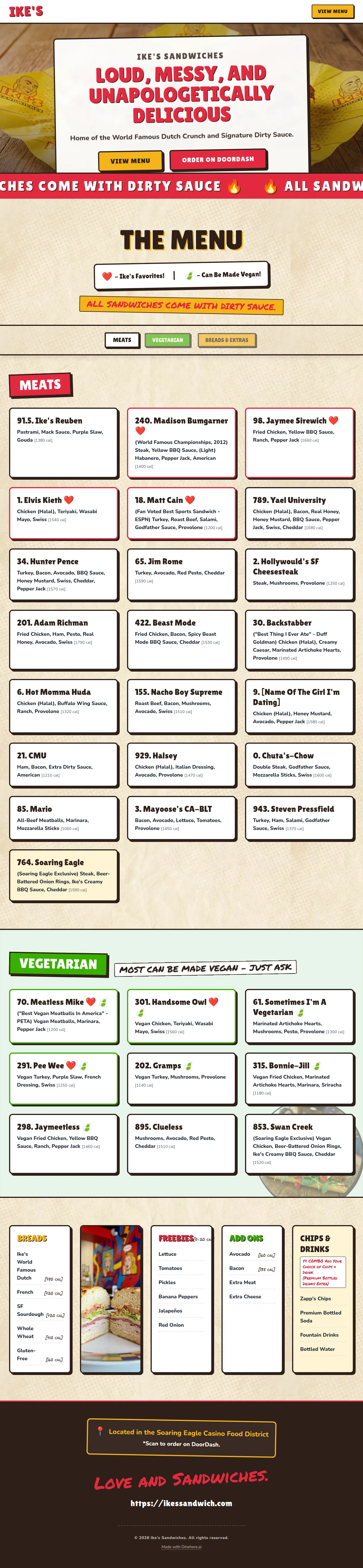
Try It FreeA real restaurant website built with Dinehere
Built from a few menu photos — this is a live site. Take a look.
Tips for Chinese Restaurant Owners
Educate Through Descriptions
Don't just list 'Husband and Wife Slices.' Use your website description to explain it's a spicy beef and tripe dish. Educational descriptions encourage customers to try authentic items they might otherwise be scared to order.
Highlight Your Region
If you serve specific regional food (like Xi'an or Fujian), mention this clearly in your site headline. Generic 'Chinese Food' searches are competitive; specific regional keywords help you find customers looking for exactly what you cook.
Digitize the Numbered Menu
If your regulars order by number (e.g., 'I'll have the L4 lunch special'), keep those numbers on your digital menu. It bridges the gap between your old printed takeout menus and your new digital presence.
Clarify Dietary Options
Chinese cuisine is naturally friendly to many diets but sauces can be tricky. Explicitly tag dishes as 'Vegetarian' (no oyster sauce) or 'Gluten-Free' (no soy sauce) to attract health-conscious diners who usually avoid Chinese takeout due to uncertainty.
Showcase the Interior
Many customers assume Chinese restaurants are takeout-only counters. If you have a nice dining room with round tables for families, include a high-quality photo of the space to encourage dine-in visits.
Challenges Chinese Restaurants Face Online
Reliance on PDF Menus
Why it matters: Restaurant owners often upload a PDF of their trifold takeout menu. On a mobile phone, this requires pinching and zooming, is hard to read, and frustrates hungry customers.
How we help: Dinehere converts that PDF into a mobile-responsive digital webpage where customers can scroll and read easily without zooming, improving the user experience immediately.
The 'Generic Takeout' Trap
Why it matters: Without a website, Google often categorizes authentic regional restaurants as generic 'Chinese Takeout,' causing you to lose customers looking for a high-quality sit-down experience.
How we help: A professional website with an 'About' section and photo gallery elevates your brand perception, distinguishing you as a legitimate culinary destination rather than just a quick lunch spot.
Inaccurate Third-Party Info
Why it matters: Delivery apps often scrape data and create unauthorized pages for your restaurant with marked-up prices and wrong hours, angering customers who blame you.
How we help: Creating your own official website gives you a 'source of truth' to link on your Google Business Profile, ensuring customers see the prices and hours YOU control, not what a bot scraped.
Three Simple Steps
Upload Your Menu
Take photos of your chinese menu or upload existing images. Our AI reads any format.
AI Creates Your Site
Watch as our AI designs a beautiful website tailored to chinese cuisine aesthetics.
Go Live Instantly
Preview, make edits if needed, and publish. Your restaurant is now online.
One Price, Everything Included
or $390/year — 2 months free
No contracts, no setup fees. Cancel anytime. Just a beautiful website for your chinese restaurant.
- AI-powered website generation
- Mobile-responsive design
- Custom subdomain (yourname.dinehere.ai)
- Menu parsing from photos
- SEO optimized
- Hosting included
- SSL certificate included
Common Questions About Chinese Restaurant Websites
Absolutely. Dinehere is designed to organize large menus efficiently using clear categories. We can also include your dish numbers (e.g., #24, C5) so customers can order by number over the phone, just like they do in person.
Yes. displaying both languages is great for authenticity and clarity. You can list the Chinese name alongside the English description to serve all your customers effectively.
That is fine. While photos help, our clean, text-based designs look professional even without images. You can start with a text menu and add photos of your signature dishes later when you have them.
You can update your menu instantly through your dashboard. If you sell seasonal items like lobster or crab where prices fluctuate, you can either update the price daily or simply label it 'Market Price' on the digital menu.
Yes, Dinehere websites are fully mobile-responsive. Whether a customer opens your link from Google, Yelp, or inside the WeChat browser, the menu will load instantly and be easy to read.
Yes, we can create distinct sections or time-based categories to clearly separate your Lunch Specials from your main Dinner offerings, preventing customer confusion about availability.
A website puts you in control. Instead of customers finding outdated menus on third-party sites, they find your official site with your correct phone number front and center, encouraging direct calls where you keep 100% of the profit.
Definitely. The 'About' section is the perfect place to tell your story, explain your region's spicy flavor profile, and educate customers on why your food is unique compared to standard takeout.
Best Cities for Chinese Restaurants
Related Cuisines You Might Like
Explore Other Cuisines
Ready to Build Your Chinese Restaurant Website?
Join other chinese restaurant owners who built their websites with Dinehere.
Build My Chinese Restaurant Site