
Build Your French Restaurant Website
From cozy bistros to Michelin-style dining, our AI creates sophisticated websites worthy of French cuisine.
French Restaurant Website Examples

AI-designed for French restaurants
Understanding French Cuisine
History & Origins
French cuisine traces its roots to medieval guilds, but its modern form began to crystalize in the 17th century under chefs like La Varenne who moved away from heavy spices toward the natural flavors of high-quality ingredients. The French Revolution sparked the birth of the restaurant as we know it, as guild restrictions fell and private chefs opened public dining rooms. In the 19th and 20th centuries, Auguste Escoffier codified the five 'Mother Sauces' and organized the professional kitchen brigade system used worldwide today. The 1960s saw the rise of Nouvelle Cuisine, emphasizing lighter sauces and artful presentation, followed by the modern Bistronomy movement which brings Michelin-quality techniques to casual, accessible settings. Today, French cuisine remains the benchmark for culinary education globally, celebrated for its rigid technical discipline and deep respect for terroir—the belief that the land and climate imbue ingredients with unique characteristics.
Regional Styles
France's culinary landscape is distinctly regional. The North (Normandy and Brittany) relies heavily on dairy, apples, and seafood, famous for rich butter and camembert. The South (Provence and Côte d'Azur) shares a Mediterranean soul, utilizing olive oil, garlic, tomatoes, and herbs like rosemary and thyme. The East (Alsace) reflects Germanic influences with sauerkraut, sausages, and dry Rieslings, while the Southwest is the heartland of duck confit, foie gras, and hearty cassoulets. The Burgundy region is renowned for its wine-centric dishes like Boeuf Bourguignon and Coq au Vin.
Signature Techniques
French cooking is defined by precision. Key techniques include 'Mise en place' (preparation before cooking), the creation of the roux as a thickening agent, and braising meats in wine or stock. Sautéing is fundamental for texture, while 'sous-vide' (vacuum sealing) has become a modern staple for consistent cooking. The art of the sauce—from delicate Béchamels to glossy demi-glaces—remains the signature skill that separates a good cook from a great French chef.
Dining Culture
Dining in France is a ritual, not a pit stop. Meals typically unfold in courses: an entrée (starter), plat principal (main), fromage (cheese), and dessert, often accompanied by wine and bread throughout. There is a cultural emphasis on savoring the moment; rushing a meal is seen as disrespectful to the food. Service is professional and discreet, and the concept of 'terroir' extends to the table, where knowing the provenance of the ingredients is as important as the taste itself.
Our AI understands French cuisine
Daily 'Ardoise' Updates
Easily update your 'Plat du Jour' or market specials in seconds, mimicking the traditional chalkboard menu (ardoise) found in bistros.
Wine Region Categorization
Structure your wine list logically by region (Bordeaux, Burgundy, Loire) rather than just varietal, respecting French oenological tradition.
Provenance Highlighting
Dedicated text areas to showcase ingredient sourcing, allowing you to tell the story of your local farmers or imported AOC cheeses.
Accent & Special Character Support
Flawless rendering of French diacritics (é, à, ô, ç) ensuring your menu items like 'Boeuf à la Bourguignonne' look professional and grammatically correct.
Visual Tasting Menu Layouts
Clean, linear design specifically suited for presenting multi-course 'Menu Dégustation' options without cluttering the mobile view.
AI That Understands French Menus
Our AI automatically recognizes and organizes traditional french menu categories.
Apéritifs
Pre-dinner drinks including Kir Royale, Pastis, or Lillet.
Hors d'Oeuvres
Light starters such as Steak Tartare, Salade Niçoise, or Pâté de Campagne.
Les Plats
Substantial main courses focusing on proteins like Duck, Lamb, or fish with complex sauces.
Plateau de Fromages
A curated selection of cheeses (soft, hard, blue, goat) served before dessert.
Digestifs
Strong post-meal spirits like Cognac, Armagnac, or Calvados.
Upload your menu photos and watch the magic happen
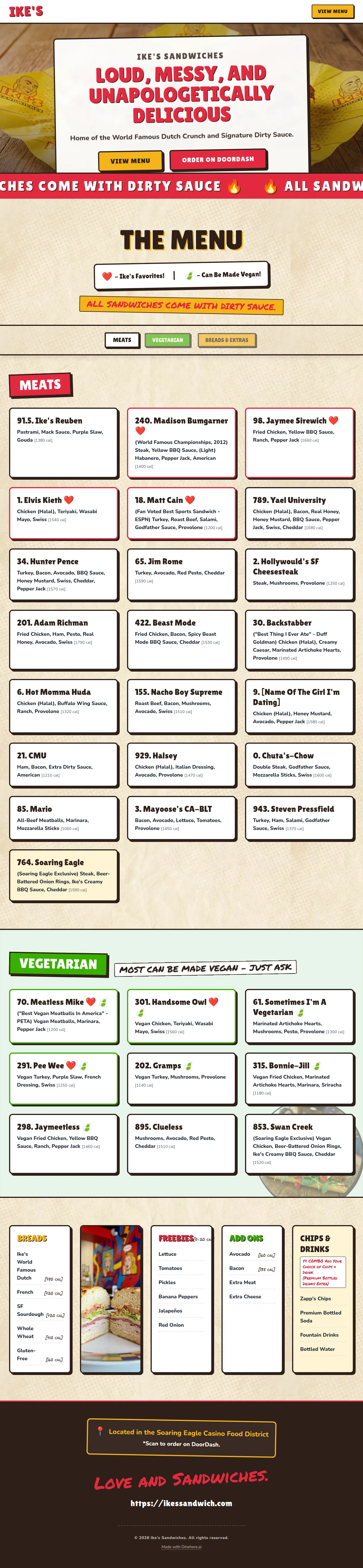
Try It FreeA real restaurant website built with Dinehere
Built from a few menu photos — this is a live site. Take a look.
Tips for French Restaurant Owners
Highlight Your Chef's Origin
Use the 'About' section to mention your chef's training or region of origin. In French cuisine, pedigree and regional background act as a strong signal of authenticity and quality to potential diners.
Keep the Wine List Current
Nothing frustrates a diner more than ordering a specific vintage listed online that is out of stock. Use Dinehere's easy editor to remove out-of-stock bottles instantly.
Use French Terms Correctly
Ensure you spell terms like 'sauté', 'crème', and 'entrée' with the correct accents. A website with grammatical errors undermines the perception of culinary precision expected from a French restaurant.
Showcase the Ambiance
French dining is about atmosphere. Upload a high-quality photo of your dining room or table setting as the header image to promise a romantic or cozy experience before they even book.
Clarify 'Fait Maison'
If you make your bread, stocks, or desserts in-house, explicitly state this on your digital menu. The 'House Made' designation is a major selling point that distinguishes you from chains.
Challenges French Restaurants Face Online
PDF Menus on Mobile
Why it matters: French menus can be text-heavy. Forcing customers to pinch-and-zoom a PDF on their phone is frustrating and often leads to them abandoning the search.
How we help: Dinehere converts your menu into a mobile-responsive HTML format, ensuring every item, description, and price is perfectly legible on any device size.
Outdated Information
Why it matters: Many bistros rely on seasonal ingredients. Having a winter menu online during summer confuses customers and hurts your credibility.
How we help: We make text updates instant and free. You don't need to call a developer to change 'Asparagus' to 'Squash'; you just log in and type it.
Lack of Visual SEO
Why it matters: French food is visual. If search engines don't 'see' your menu items as text, you don't rank for terms like 'best duck confit near me'.
How we help: By digitizing the menu text (rather than using an image of text), Dinehere allows Google to index every single dish, helping you rank for specific cravings.
Three Simple Steps
Upload Your Menu
Take photos of your french menu or upload existing images. Our AI reads any format.
AI Creates Your Site
Watch as our AI designs a beautiful website tailored to french cuisine aesthetics.
Go Live Instantly
Preview, make edits if needed, and publish. Your restaurant is now online.
One Price, Everything Included
or $390/year — 2 months free
No contracts, no setup fees. Cancel anytime. Just a beautiful website for your french restaurant.
- AI-powered website generation
- Mobile-responsive design
- Custom subdomain (yourname.dinehere.ai)
- Menu parsing from photos
- SEO optimized
- Hosting included
- SSL certificate included
Common Questions About French Restaurant Websites
Yes, Dinehere allows for distinct menu sections. You can have a dedicated wine list that is easy to scroll through on mobile, organized by region or color, keeping your food menu clean.
Our platform is built for speed. You can edit a text block or menu item description from your phone in seconds to reflect today's market availability or the 'Plat du Jour'.
No. Our responsive design ensures that even detailed descriptions of preparation methods or sauce ingredients wrap beautifully and remain readable on small screens.
Absolutely. While photos help, many classic French bistros prefer a text-forward, minimalist menu approach. A well-formatted text menu often looks more elegant than one with low-quality images.
You can easily format your menu items to include the French name followed by an English description, which is standard practice for authentic French restaurants in English-speaking areas.
Dinehere is designed to be affordable with a simple pricing model. You save significantly compared to hiring a web designer or paying monthly fees for complex features you don't use.
We optimize the underlying code for SEO (Search Engine Optimization). This helps Google understand your location, cuisine type, and menu items, making it easier for local diners to find you.
Yes, there is a dedicated 'About' or 'Story' section where you can detail your commitment to sourcing and your relationships with purveyors, which is crucial for French gastronomy.
Yes. Dinehere sites are extremely lightweight single-page designs, meaning they load instantly even on slower mobile connections, perfect for tourists finding you on the go.
Best Cities for French Restaurants
Related Cuisines You Might Like
Explore Other Cuisines
Ready to Build Your French Restaurant Website?
Join other french restaurant owners who built their websites with Dinehere.
Build My French Restaurant Site