
Build Your Indian Restaurant Website
From curry houses to fine dining, our AI creates authentic Indian restaurant websites that showcase your cuisine beautifully.
Indian Restaurant Website Examples

AI-designed for Indian restaurants
Understanding Indian Cuisine
History & Origins
Indian cuisine is one of the world's oldest and most diverse culinary traditions, spanning over 5,000 years of history. Its evolution has been shaped by the subcontinent's vast geography, the ancient Ayurvedic system of medicine which dictates the balance of flavors for health, and the historical Spice Route trade. Throughout the centuries, the cuisine absorbed influences from Persian and Mughal invaders—who introduced the tandoor (clay oven), rich cream-based gravies, and nuts—as well as Portuguese traders who brought staples like potatoes, tomatoes, and chilies to the western coast.
Regional Styles
The culinary landscape changes dramatically every few hundred miles. North Indian cuisine, prevalent in many Western restaurants, features rich dairy, wheat-based breads like naan, and tandoori meats. South Indian cuisine is rice-centric, characterized by ferments like dosas and idlis, the heavy use of coconut milk, and distinct spices like curry leaves and mustard seeds. Eastern India is known for its delicate freshwater fish dishes and mustard oil, while Western India ranges from the sweet-salty vegetarian thalis of Gujarat to the vinegar-spiked, spicy vindaloos of Goa.
Signature Techniques
Essential techniques define the flavor profile of Indian food. 'Tadka' or 'Chhonk' (tempering) involves frying whole spices in hot oil or ghee to release their essential oils before pouring them over a finished dish. 'Dum Pukht' is a slow-cooking method where the pot is sealed with dough to cook ingredients in their own steam, famously used for Biryanis. 'Bhunao' involves sautéing spices and aromatics until the oil separates, creating the deep, caramelized base found in many classic curries.
Dining Culture
In Indian culture, food is synonymous with hospitality, embodied by the Sanskrit phrase 'Atithi Devo Bhava' (The guest is equivalent to God). Dining is traditionally communal and family-style, with multiple dishes placed in the center of the table or served on a 'Thali'—a large metal platter holding small bowls of various dishes to ensure a balance of six key tastes: sweet, salt, sour, pungent, bitter, and astringent. Eating with the right hand is traditional, allowing a tactile connection to the texture and temperature of the food.
Our AI understands Indian cuisine
Dietary Iconography System
Indian menus often need clear distinctions between Veg, Non-Veg, Jain (no onion/garlic), and Halal options. A website allows for distinct, standardized icons that PDF menus often lack.
Mobile-First Menu Layout
Indian menus can be extensive with 100+ items. A responsive design prevents the 'pinch-and-zoom' frustration of PDF menus, making categories like 'Breads' and 'Curries' collapsible and easy to navigate.
Heritage Storytelling Section
Space to explain your restaurant's specific regional focus (e.g., 'Chettinad Cuisine' or 'Punjabi Dhaba Style'), helping customers understand the authenticity behind the dishes.
Buffet & Lunch Special Display
Many Indian restaurants thrive on lunch buffets. A digital menu allows you to highlight specific buffet hours and rotating daily items without reprinting physical menus.
High-Contrast Dish Photography
Since many curries look similar in text, the ability to display high-quality images of signature dishes like Tandoori Chicken helps distinct visual appeal drive appetite.
Catering Services Page
Indian weddings and corporate events are huge revenue streams. A dedicated static page outlining party tray sizes and contact info helps capture this high-ticket business.
AI That Understands Indian Menus
Our AI automatically recognizes and organizes traditional indian menu categories.
Chaat Bhandar
Street food favorites like Pani Puri, Samosa Chaat, and Bhel Puri.
Shorba
Traditional soups and broths, often spiced with pepper and ginger.
Sabzi / Tarkari
Vegetarian dishes ranging from dry stir-fries (ookha) to gravy-based preparations.
Basmati Khazana
Aromatic rice dishes, including Jeera Rice, Pulao, and Biryani.
Indian Breads
Tandoori Naan, Roti, Kulcha, and Paratha.
Mithai
Traditional sweets like Gulab Jamun, Rasmalai, and Gajar Halwa.
Upload your menu photos and watch the magic happen
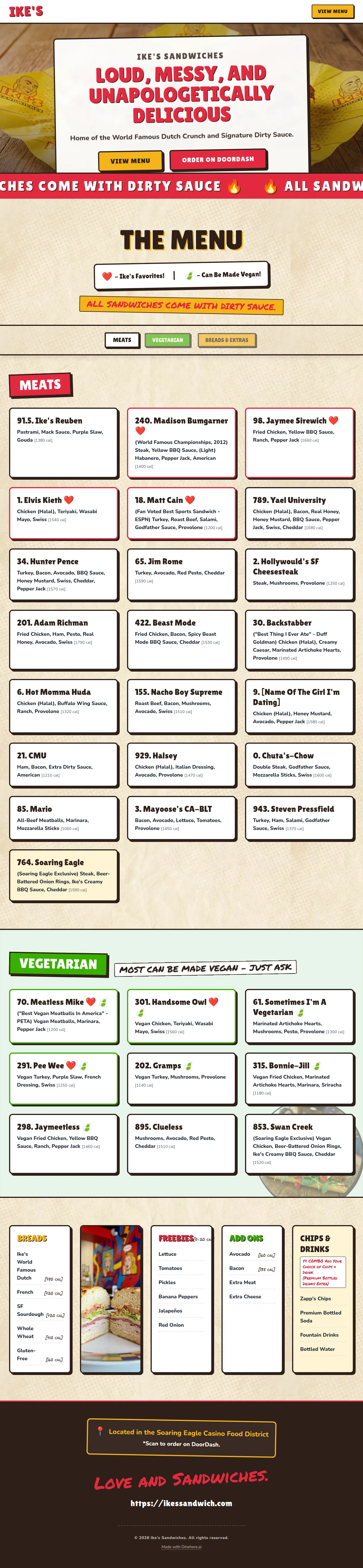
Try It FreeA real restaurant website built with Dinehere
Built from a few menu photos — this is a live site. Take a look.
Tips for Indian Restaurant Owners
Use English Descriptions for Regional Names
Don't just list 'Baingan Bharta'; describe it as 'Roasted Eggplant Mash with Spices'. This helps non-Indian customers feel confident ordering dishes they haven't tried before.
Highlight Your Vegan Options
Indian cuisine is a haven for vegans, but they often don't know if ghee (clarified butter) is used. Clearly explicitly marking dishes as 'Dairy-Free' or 'Vegan' can capture a loyal niche audience.
Showcase the 'Making Of' in Your Story
In your About section, mention if you grind your own spices or use a clay tandoor. These details signal quality and authenticity that differentiates you from generic curry houses.
Optimize for 'Near Me' Searches
Ensure your location and hours are accurate on your website. When people crave Indian food, they often decide quickly; having accurate open/close times prevents lost business.
Promote Your Lunch Thali
The Thali (platter) is a huge draw for value-conscious lunch crowds. List exactly what comes in the daily Thali on your site to entice office workers looking for a quick, complete meal.
Challenges Indian Restaurants Face Online
The 'Curry House' Stereotype
Why it matters: Customers may assume all brown gravies taste the same if the online presentation is generic.
How we help: Dinehere allows for rich descriptions and high-quality hero images, helping you distinguish a creamy Makhani from a spicy Vindaloo through clear text and visuals.
Outdated PDF Menus
Why it matters: PDFs are difficult to read on mobile phones, forcing customers to pinch and zoom, often leading them to abandon the search.
How we help: We convert your menu into a mobile-responsive HTML format that loads instantly and fits any screen size perfectly.
Invisibility on Google Maps
Why it matters: If your website isn't linked properly to your Google Business Profile, Google ranks you lower than competitors.
How we help: We provide a professional, SEO-optimized URL that signals legitimacy to Google, helping you rank higher in local map packs.
Three Simple Steps
Upload Your Menu
Take photos of your indian menu or upload existing images. Our AI reads any format.
AI Creates Your Site
Watch as our AI designs a beautiful website tailored to indian cuisine aesthetics.
Go Live Instantly
Preview, make edits if needed, and publish. Your restaurant is now online.
One Price, Everything Included
or $390/year — 2 months free
No contracts, no setup fees. Cancel anytime. Just a beautiful website for your indian restaurant.
- AI-powered website generation
- Mobile-responsive design
- Custom subdomain (yourname.dinehere.ai)
- Menu parsing from photos
- SEO optimized
- Hosting included
- SSL certificate included
Common Questions About Indian Restaurant Websites
No. Dinehere organizes long menus into collapsible categories (e.g., Starters, Clay Oven, Vegetarian). This makes it easy for customers to browse without endless scrolling.
Yes. You can add specific descriptions or tags to dishes like 'Chana Masala' or 'Dosa' to clearly indicate they meet dietary requirements, which is a common question for Indian cuisine.
Absolutely. You don't need a photo for every single item. We recommend using a few high-quality images for your signature dishes (like Biryani or Tandoori platter) to set the mood, while listing the rest as text.
Yes, we can feature your Halal certification prominently in the 'About' or footer section so customers seeking Halal options feel confident visiting your restaurant.
You can create separate menu sections for 'Lunch Specials' or 'Buffet' with their own pricing and hours, ensuring customers know exactly what to expect when they arrive.
Yes, you can mention spice levels (Mild, Medium, Spicy) in the dish descriptions. This helps prevent customer complaints about food being too hot or too bland.
Definitely. You can have a specific section or page dedicated to catering, listing tray sizes (half/full) and prices, along with a phone number for inquiries.
Dinehere sites are optimized for local SEO. By properly structuring your menu and location data, we significantly improve your chances of appearing in local Google searches compared to having no website.
Best Cities for Indian Restaurants
Related Cuisines You Might Like
Explore Other Cuisines
Ready to Build Your Indian Restaurant Website?
Join other indian restaurant owners who built their websites with Dinehere.
Build My Indian Restaurant Site