
Build Your Polish Restaurant Website
From traditional pierogi houses to modern Polish cuisine, our AI creates warm websites that celebrate Polish heritage.
Polish Restaurant Website Examples

AI-designed for Polish restaurants
Understanding Polish Cuisine
History & Origins
Polish cuisine is a rich tapestry woven from centuries of agricultural tradition, noble court customs, and foreign influences. Its foundations lie in the Slavic reliance on local grains like rye, buckwheat, and wheat, combined with forest treasures such as wild mushrooms, berries, and game. Over the centuries, trade routes and shifting borders introduced flavors from Italian, French, German, Austro-Hungarian, and Jewish traditions, creating a culinary landscape that is both hearty and surprisingly complex. Historical staples like salted meats and pickled vegetables were born of necessity to survive harsh winters, evolving into the beloved delicacies served today. The evolution of Polish food in the United States often mirrors the waves of immigration, starting with late 19th-century laborers who brought peasant dishes like 'chłopskie jedzenie' (peasant food) to industrial cities. Today, modern Polish cuisine honors these rustic roots—characterized by simple ingredients prepared with time-consuming care—while increasingly embracing lighter, contemporary interpretations. It remains a cuisine deeply connected to the seasons and the land, where a simple beet is transformed into the elegant 'barszcz' and a humble potato becomes the foundation of countless celebratory dishes.
Regional Styles
While often viewed as homogenous abroad, Polish cuisine varies significantly by geography. In the north, particularly Pomerania and the Masurian Lake District, freshwater fish and Baltic specialties like herring take center stage. To the south, in the Tatra Mountains, the 'Górale' (highlanders) cuisine features heavily smoked sheep's milk cheeses like 'oscypek' and distinct lamb dishes. Silesia in the southwest is famous for its unique potato dumplings ('kluski śląskie') and beef roulades, reflecting strong Germanic influences. The eastern borderlands ('Kresy') contribute dishes with Lithuanian and Ukrainian roots, favoring buckwheat, savory pancakes, and distinct varieties of pierogi.
Signature Techniques
The soul of Polish cooking lies in preservation and patience. Fermentation ('kiszenie') is paramount, used not just for cucumbers and cabbage (sauerkraut), but also for beets to create the 'zakwas' base for borscht. Smoking is another master craft, with cold-smoked kielbasa and hams cured over juniper or fruitwood fire. Braising is essential for the national dish, 'bigos' (hunter's stew), which is cooked for days to meld flavors. Finally, the art of the dumpling—rolling the perfect thin dough for pierogi and folding it to seal in savory or sweet fillings—is a skill passed down through generations, often requiring a communal kitchen effort.
Dining Culture
Polish dining culture is encapsulated by the proverb 'Gość w dom, Bóg w dom' (Guest in the house, God in the house). Meals are an act of extreme hospitality, often beginning with a soup, which is considered mandatory for a proper dinner. Portions are notoriously generous, and refusing seconds can be seen as a slight to the host. Meals are frequently accompanied by 'kompot' (stewed fruit drink) or vodka, which is traditionally consumed chilled and neat, often with a toast ('Na zdrowie'). Holidays, particularly the Christmas Eve 'Wigilia' dinner, are steeped in ritual, featuring specific meatless courses that number twelve to represent the apostles.
Our AI understands Polish cuisine
Diacritical Mark Support
Our system correctly renders essential Polish characters (ł, ń, ś, ź, ż), ensuring your menu looks professional and linguistically accurate.
Bilingual Item Descriptions
Easily structure your menu to show the Polish name (e.g., 'Gołąbki') alongside an English description, helping non-Polish speakers understand the dish.
Visual Ingredient Storytelling
High-quality image parsing that highlights the texture of rustic breads and the color of beet soups, critical for appetizing presentation.
Daily Special Highlighting
Perfect for 'Danie Dnia' (Dish of the Day) or rotating soups, allowing you to update your featured items in seconds.
Catering Service Showcase
A dedicated section layout to list bulk options for communions, weddings, and holidays, which are major revenue drivers for Polish spots.
AI That Understands Polish Menus
Our AI automatically recognizes and organizes traditional polish menu categories.
Przystawki Zimne
Cold appetizers such as Herring in oil or cream (Śledzie), Steak Tartare, and Vegetable Salad (Sałatka Jarzynowa).
Zupy
Essential soups like Żurek (sour rye), Barszcz Czerwony (red beet), and Flaki (tripe soup).
Dania Mączne
Flour-based dishes including various Pierogi, Kopytka (hoof-shaped dumplings), and Naleśniki (crepes).
Mięsa i Drób
Hearty meat mains like Kotlet Schabowy (breaded pork chop), Duck with apples, and Beef Rouladen.
Surówki i Dodatki
Side salads (sauerkraut, shredded beets, carrots) and starches (buckwheat, potato pancakes).
Napoje Gorące i Zimne
Kompot (stewed fruit drink), Herbal teas, and specialized coffees.
Upload your menu photos and watch the magic happen
Try It FreeA real restaurant website built with Dinehere
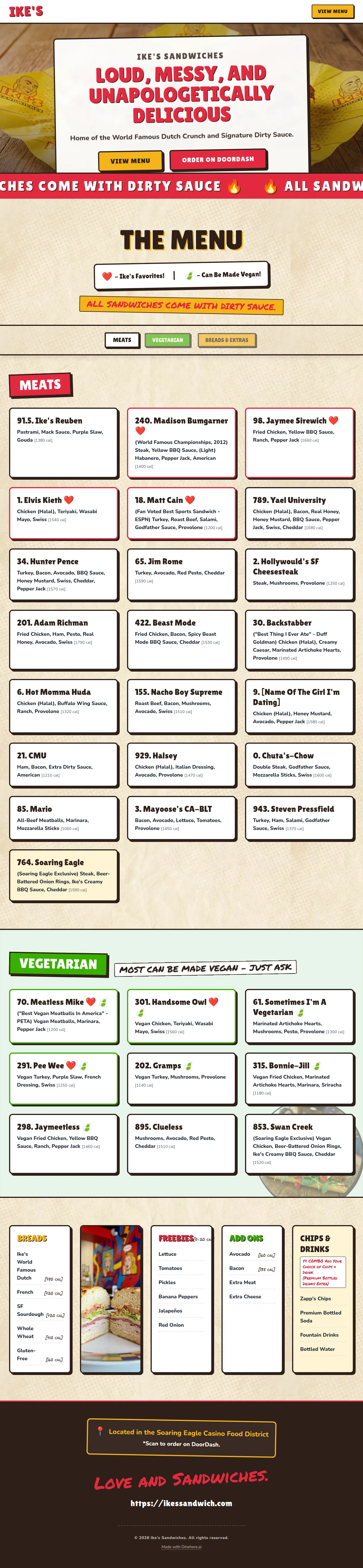
Built from a few menu photos — this is a live site. Take a look.
Tips for Polish Restaurant Owners
Demystify the Menu
Don't just list 'Bigos'. Describe the process—'Sauerkraut and fresh cabbage stewed for three days with smoked kielbasa and pork shoulder.' The effort implies value and justifies the price.
Highlight 'Homemade'
In an era of industrial food, emphasize what is made from scratch. Use your website's About section to mention that your pierogi are hand-pinched daily or that you smoke your own meats.
Use English Phonetics
Consider adding simple phonetic pronunciations next to difficult names (e.g., Paczki -> 'Pawnch-key'). It lowers the anxiety for non-Polish customers who are afraid of mispronouncing their order.
Leverage Nostalgia
Use your website's imagery to evoke warmth. Rustic wood textures, pottery, and steam rising from hot soup connect deeply with customers looking for comfort food.
Promote Bulk Takeout
Make sure your website explicitly states you sell frozen pierogi or quarts of soup by the dozen. This is a massive revenue stream that many customers won't know about unless they see it online.
Challenges Polish Restaurants Face Online
The 'Brown Food' Aesthetic
Why it matters: Polish food (stews, fried meats, gravy) can look unappealing in amateur photos, turning away customers who eat with their eyes.
How we help: Dinehere's templates prioritize clean layout and text descriptions over heavy reliance on photos, ensuring your menu sounds delicious even if you don't have a professional food photographer.
Language Barriers Online
Why it matters: If a menu is only a PDF scan in Polish, you alienate 90% of your potential local market who can't read it.
How we help: We turn scanned menus into digital text, allowing you to easily add English descriptions alongside Polish names so everyone knows what they are ordering.
outdated 'Old World' Perception
Why it matters: Customers often assume traditional Polish spots are cash-only, dark, or stuck in the past, leading them to choose 'modern' competitors.
How we help: A sleek, mobile-responsive website immediately signals that your business is modern, open, and welcoming to new customers, bridging the gap between tradition and modern convenience.
Three Simple Steps
Upload Your Menu
Take photos of your polish menu or upload existing images. Our AI reads any format.
AI Creates Your Site
Watch as our AI designs a beautiful website tailored to polish cuisine aesthetics.
Go Live Instantly
Preview, make edits if needed, and publish. Your restaurant is now online.
One Price, Everything Included
or $390/year — 2 months free
No contracts, no setup fees. Cancel anytime. Just a beautiful website for your polish restaurant.
- AI-powered website generation
- Mobile-responsive design
- Custom subdomain (yourname.dinehere.ai)
- Menu parsing from photos
- SEO optimized
- Hosting included
- SSL certificate included
Common Questions About Polish Restaurant Websites
Not at all. Dinehere is designed for instant updates. You can snap a photo of your new menu or type in the daily soups in just a few minutes from your phone.
Yes. We can organize your menu to separate dine-in plates from bulk take-home options, which is essential for customers ordering for holidays like Easter or Christmas.
Dinehere's clean, minimalist templates are designed to look professional even without expensive photography. We focus on clear typography and layout so your food descriptions do the heavy lifting.
That is our main goal. We optimize your site's structure specifically for Google, helping you rank for local terms like 'Polish food' and 'pierogi' in your specific neighborhood.
It is best to keep the authentic name but provide a clear English description. Our layout allows you to display both, so customers learn the traditional name while knowing exactly what they are ordering.
Absolutely. You can update your hours of operation instantly to reflect holiday closures or extended hours for catering pickups.
No. Dinehere charges a simple, affordable fee. You avoid the high monthly costs of agencies or complex platforms that charge for features you don't use.
Yes, there is a dedicated 'About' section where you can share your family's history, the origin of your recipes, and your connection to Polish traditions.
Best Cities for Polish Restaurants
Related Cuisines You Might Like
Ready to Build Your Polish Restaurant Website?
Join other polish restaurant owners who built their websites with Dinehere.
Build My Polish Restaurant Site