
Build Your BBQ Restaurant Website
From backyard BBQ to championship pitmasters, our AI creates mouth-watering websites that showcase your smoke.
BBQ Restaurant Website Examples

AI-designed for BBQ restaurants
Understanding BBQ Cuisine
History & Origins
The origins of Barbecue (BBQ) are ancient and complex, tracing back to the indigenous Taino people of the Caribbean who used a method called 'barbacoa' to slow-cook meat over green wood to preserve it. This technique migrated north to the American South, where it evolved into a distinct culinary religion. It became the food of community gatherings, utilizing tougher, cheaper cuts of meat and transforming them through low heat and wood smoke into tender delicacies. The specific regional styles we know today—Carolinas, Texas, Memphis, and Kansas City—developed over centuries based on local livestock and available hard woods.
Regional Styles
While the UK scene borrows heavily from US traditions, the distinct styles are crucial. Texas BBQ focuses primarily on beef brisket and sausage, seasoned simply with salt and pepper and smoked over post oak. The Carolinas are pork-centric, often utilizing whole hog or shoulders with vinegar or mustard-based sauces to cut the fat. Kansas City is known for a wide variety of meats slathered in thick, sweet, tomato-based molasses sauce, while Memphis style is famous for 'dry' ribs rubbed with spice blends rather than sauced. In the UK, a modern 'British BBQ' style is also emerging, applying these low-and-slow techniques to high-quality British heritage breeds like Tamworth pork and Belted Galloway beef.
Signature Techniques
True BBQ is defined by 'low and slow' cooking, often at temperatures between 225°F and 250°F (107°C-121°C) for up to 16 hours. The critical technique involves managing the fire in an offset smoker, ceramic kamado, or drum smoker to produce 'thin blue smoke' rather than thick white smoke, which tastes bitter. Pitmasters obsess over the 'bark' (the dark, flavorful crust formed by the Maillard reaction and spices) and the 'smoke ring' (a pink discoloration under the surface indicating chemical changes from the smoke). The 'stall'—a period during cooking where evaporation cools the meat—is a test of patience often managed by wrapping the meat in butcher paper or foil.
Dining Culture
BBQ dining is inherently communal, unpretentious, and tactile. Food is traditionally served on metal trays lined with butcher paper rather than fine china, emphasizing the rustic nature of the meal. Eating with one's hands is encouraged, particularly for ribs and chicken wings. In the UK, the smokehouse culture has intertwined with the craft beer movement, creating a vibrant social scene where bold, hoppy IPAs or dark stouts are paired to cut through the rich, fatty meats. The concept of 'until sold out' is also central to the culture; because smoking takes half a day, when the brisket is gone, it is gone, creating a sense of urgency and appreciation among patrons.
Our AI understands BBQ
Meat-Focused Menu Layouts
Structure your menu to prioritize 'By Weight' (100g/lb) pricing and combo platters, typical of smokehouse dining.
Dietary Badge Clarity
Clearly mark gluten-free options (rub-only meats) versus items with flour-thickened sauces, crucial for modern diners.
The 'Pit' Story Section
A dedicated space to explain your smoking process, wood types, and cooking times to justify premium pricing.
Visual Feast Gallery
High-resolution image areas to showcase the 'smoke ring' and texture of brisket, which drives appetite instantly.
Location Finder
Essential for destination smokehouses often located in industrial estates or railway arches.
AI That Understands BBQ Menus
Our AI automatically recognizes and organizes traditional bbq menu categories.
From The Pit
The core protein offering, usually priced by weight or serving.
Trays & Combos
Curated selections offering a mix of meats and sides.
The Fixin's
Essential side dishes that complement rich meats.
Sandwiches & Buns
Meats served inside brioche or potato rolls.
Sauces & Rubs
Descriptions of house-made condiments available.
Upload your menu photos and watch the magic happen
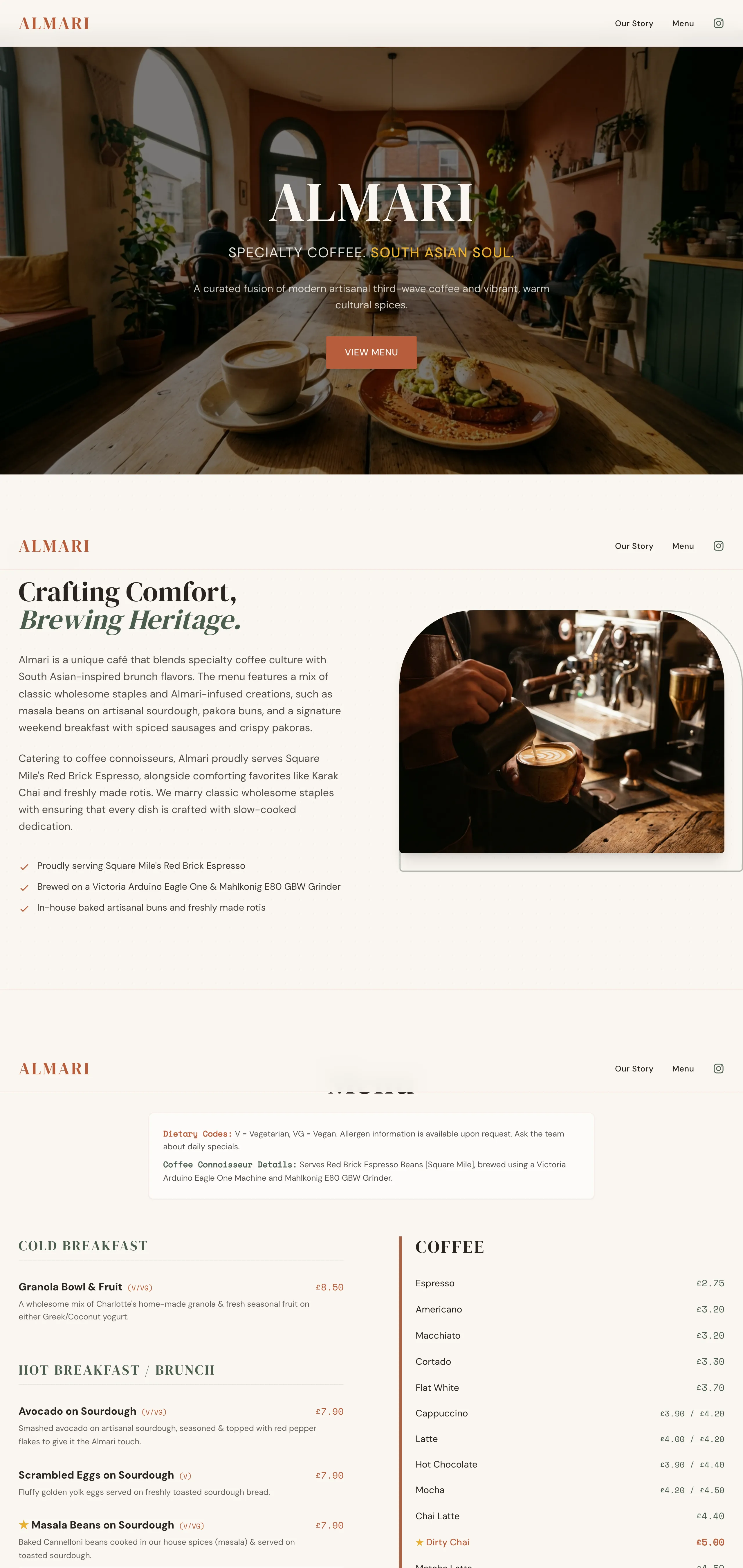
Try It FreeA real restaurant website built with Dinehere
Built from a few menu photos — this is a live site. Take a look.
Tips for BBQ Restaurant Owners
Showcase the Process
Use your website's imagery to show the raw wood, the fire, and the meat resting. Educating customers that their dinner took 12 hours to cook justifies the price point and builds respect for the craft.
Clarify 'Sold Out' Policies
Avoid angry reviews by clearly stating on your website that you cook fresh daily and close when food runs out. Frame it as a mark of quality and freshness rather than a logistical failure.
Highlight Local Provenance
In the UK market, listing the specific farm your pork or beef comes from adds immense value. Use the 'About' section to connect your American cooking style with high-quality British agriculture.
Keep the Menu Simple
Don't overcomplicate your online menu description. Use standard terms like '1/2 lb', 'Rack', or 'Tray' so customers can quickly calculate how much food they are ordering.
Mention Group Dining
BBQ is social food. Add a note on your site encouraging large groups or sharing platters, as this helps increase average ticket size and suits the communal dining style.
Challenges BBQ Restaurants Face Online
Managing 'Sold Out' Disappointment
Why it matters: customers who travel to you only to find you closed or empty-handed leave bad reviews.
How we help: Dinehere allows for clear, static text explaining your service model ('Until Sold Out') and easy updates, managing expectations before the customer leaves their house.
Invisibility in Search
Why it matters: Many smokehouses rely on social media, but hungry people search Google for 'BBQ near me', not Instagram.
How we help: We build a proper HTML website that Google can read, ensuring your smokehouse appears in local search results where social media pages often fail.
Menu Complexity on Mobile
Why it matters: Large PDF menus with combos, sides, and weights are impossible to read on a phone screen.
How we help: Dinehere converts your menu into a mobile-responsive, scrolling format that is easy to read, ensuring customers don't get frustrated and bounce to a competitor.
Three Simple Steps
Upload Your Menu
Take photos of your bbq menu or upload existing images. Our AI reads any format.
AI Creates Your Site
Watch as our AI designs a beautiful website tailored to bbq cuisine aesthetics.
Go Live Instantly
Preview, make edits if needed, and publish. Your restaurant is now online.
One Price, Everything Included
or £290/year — 2 months free
No contracts, no setup fees. Cancel anytime. Just a beautiful website for your bbq restaurant.
- AI-powered website generation
- Mobile-responsive design
- Custom subdomain (yourname.dinehere.ai)
- Menu parsing from photos
- SEO optimized
- Hosting included
- SSL certificate included
Common Questions About BBQ Restaurant Websites
Not at all. Dinehere allows you to upload a photo of your chalkboard or printed daily menu, and we parse the text for you, or you can make quick text edits in minutes.
We recommend adding a prominent 'About' or 'Hours' note on the site explaining the 'Low & Slow' philosophy and stating 'Open until sold out' to manage customer expectations.
Yes. Our text-based menu format is flexible enough to display pricing per 100g, per lb, or per tray, ensuring customers understand your pricing model before they arrive.
While professional photos are great, BBQ is very photogenic. A clear, well-lit photo of a sliced brisket or a loaded tray taken on a smartphone is often enough to make customers hungry.
Absolutely. The 'About' section is the perfect place to detail your use of local oak, hickory imports, or specific heritage meat suppliers, which builds trust and authenticity.
Dinehere optimizes your site for SEO, making it much easier for Google to index your location and menu, helping you appear in 'BBQ near me' searches.
Yes. Dinehere is designed to drive foot traffic. By not having a confusing 'order online' button, you encourage customers to visit the restaurant for the full experience.
Yes, it's designed to be affordable for independent owners. Dinehere is a simple subscription (£29/month, or £290/year with two months free), far less than an agency or designer, with hosting included and no hidden maintenance costs. You can cancel anytime.
Best Cities for BBQ Restaurants
Related Cuisines You Might Like
Ready to Build Your BBQ Restaurant Website?
Join other bbq restaurant owners who built their websites with Dinehere.
Build My BBQ Restaurant Site