
Build Your Italian Restaurant Website
From trattoria to fine dining, our AI creates authentic Italian restaurant websites that showcase your cuisine beautifully.
Italian Restaurant Website Examples

AI-designed for Italian restaurants
Understanding Italian Cuisine
History & Origins
Italian cuisine traces its roots back to antiquity, evolving significantly over centuries of social and political change. While dishes from the Roman Empire established a foundation of legumes, grains, and meats, it was the discovery of the New World that introduced tomatoes, potatoes, and maize—ingredients now inseparable from the Italian identity. However, these staples did not become widespread until the 18th century. Before the unification of Italy in 1861, the peninsula was a patchwork of distinct kingdoms, each developing unique culinary traditions based on local agriculture and trade routes. The massive Italian diaspora of the late 19th and early 20th centuries exported these regional traditions to the world, often adapting them to local ingredients. In the UK and US, 'Italian food' initially became synonymous with the rich, red-sauce dishes of the South. Today, the cuisine is celebrated globally not just for specific recipes, but for a philosophy that prioritizes ingredient quality over complexity, respecting the distinct seasonality of produce and the cultural heritage of specific regions, from the Alps to Sicily.
Regional Styles
The most significant divide exists between the North and South. Northern regions like Lombardy, Piedmont, and Veneto traditionally rely less on olive oil and tomato, favoring butter, cream, rice (risotto), and polenta due to the cooler climate and historical trade links with France and Austria. Here, you find rich braised meats like Osso Buco and stuffed pastas like Tortellini. Central Italy, particularly Tuscany and Umbria, is famous for its 'cucina povera' (peasant cooking), utilizing stale bread, beans, and game meat to create hearty soups like Ribollita. Moving South to Campania, Puglia, and Sicily, the climate allows for the cultivation of durum wheat (for dried pasta), vibrant tomatoes, citrus, and olives. The cuisine becomes brighter, spicier, and heavily reliant on the bounty of the Mediterranean Sea, with distinct Arab influences visible in Sicilian desserts and couscous dishes.
Signature Techniques
The foundation of countless Italian dishes is the 'soffritto'—a slowly sautéed mixture of onions, carrots, and celery in olive oil that provides an aromatic base. In pasta preparation, 'mantecatura' is the vital technique of emulsifying the pasta water with cheese or fat to create a creamy, clinging sauce, distinct from simply pouring sauce over noodles. Simplicity is a discipline in Italian cooking. Techniques often focus on preserving the integrity of the ingredient, such as 'al dente' cooking for vegetables and pasta to maintain texture. Wood-fired cooking is essential for authentic pizza and certain roasts, imparting a smoky char that gas ovens cannot replicate. Additionally, the art of curing meats (salumi) and aging cheeses requires patience and precise environmental controls, skills passed down through generations.
Dining Culture
Italian dining is centered around 'convivialità'—the joy of sharing a meal together. It is rarely a rushed affair; lunch and dinner are times to disconnect from work and reconnect with family or friends. The meal structure is designed to pace the appetite, starting with an aperitivo to stimulate the palate, moving through antipasti, a carbohydrate-heavy primo, a protein-focused secondo (served with contorni), and finishing with dolce and coffee. Bread is treated with reverence, used to 'fare la scarpetta' (clean the plate of sauce), but never eaten alongside pasta. Wine is considered food, an essential component of the meal rather than just an accompaniment. In authentic settings, hospitality is warm but informal, where the personality of the host is as important as the food served.
Our AI understands Italian cuisine
Ingredient Provenance Showcase
Dedicate space to list your suppliers, whether it's San Marzano tomatoes from Campania or local organic meats.
Seasonal Menu Agility
Easily swap out dishes as ingredients change, moving from autumn truffles to summer caprese in seconds.
Family History Section
A specialized 'About' layout designed to tell the multi-generational story of your family's journey to the kitchen.
Dietary Filter Clarity
Clearly mark gluten-free pasta options or dairy-free modifications without cluttering the elegant menu design.
Visual Texture Focus
High-resolution image headers that highlight the texture of fresh pasta and crusty bread to drive appetite.
Aperitivo & Digestivo Layouts
Separate menu sections specifically formatted for the pre-dinner spritz and post-dinner grappa traditions.
AI That Understands Italian Menus
Our AI automatically recognizes and organizes traditional italian menu categories.
Contorni
Vegetable side dishes meant to accompany the main course.
Pizze Rosse e Bianche
Pizzas divided by base: Tomato sauce (Rosse) vs. Cheese/Olive Oil (Bianche).
Le Paste Fresche
House-made fresh egg pasta selections.
I Classici
Traditional regional dishes that never leave the menu.
Digestivi
After-dinner liqueurs like Limoncello, Amaro, and Grappa.
Taglieri
Sharing boards of cured meats and cheeses.
Upload your menu photos and watch the magic happen
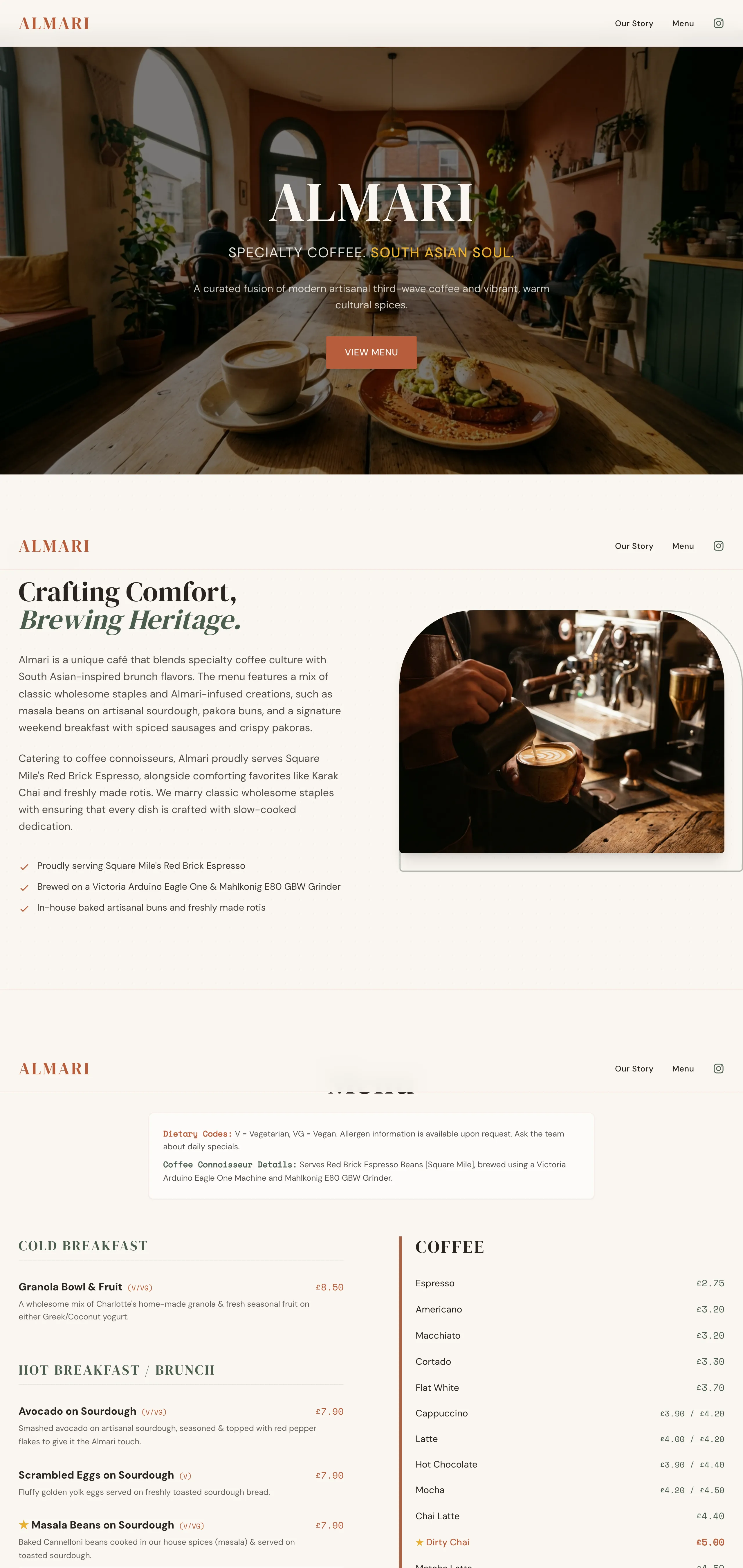
Try It FreeA real restaurant website built with Dinehere
Built from a few menu photos — this is a live site. Take a look.
Tips for Italian Restaurant Owners
Educate Through Your Menu
Don't just list 'Cacio e Pepe'; describe the Pecorino Romano and black pepper emulsion. Italian food lovers enjoy learning about the specific ingredients and regions your dishes come from.
Highlight 'Fatto in Casa'
If you make your own focaccia, pasta, or gelato, put this front and center on your website. 'House-made' is the single strongest trust signal for Italian cuisine.
Use Warm, Authentic Imagery
Avoid stock photos of generic pizza. Use photos of your actual team rolling dough or a close-up of a fresh ingredient crate. Imperfection implies authenticity in Italian dining.
Clarify the Course Structure
UK diners sometimes find the Primo/Secondo structure confusing. Use your website headers to subtly explain that pasta is a first course, but it's okay to order it as a main.
Keep the Wine List Current
Nothing frustrates a wine lover more than selecting a bottle online that isn't in the cellar. A simple text-based digital menu lets you remove out-of-stock vintages instantly.
Challenges Italian Restaurants Face Online
Reliance on PDF Menus
Why it matters: PDFs are terrible on mobile phones; customers have to pinch and zoom, often leading them to give up and choose a restaurant with an easier-to-read site.
How we help: Dinehere converts your menu into a mobile-responsive web format that is easy to scroll and read on any device, ensuring you don't lose hungry mobile users.
Inconsistent Business Info
Why it matters: Italian restaurants often have varying hours (closed mid-afternoon). If Google says open but you're closed, you get bad reviews.
How we help: We provide a clear, single source of truth for your opening hours and contact info that is easy to update and indexable by search engines.
Getting Lost in 'Pizza' Searches
Why it matters: Fine dining Italian restaurants often get categorized alongside fast-food takeaways, attracting the wrong clientele.
How we help: Our SEO optimization helps you rank for specific terms like 'authentic trattoria' or 'fresh pasta' rather than just generic pizza keywords, attracting diners looking for a sit-down experience.
Three Simple Steps
Upload Your Menu
Take photos of your italian menu or upload existing images. Our AI reads any format.
AI Creates Your Site
Watch as our AI designs a beautiful website tailored to italian cuisine aesthetics.
Go Live Instantly
Preview, make edits if needed, and publish. Your restaurant is now online.
One Price, Everything Included
or £290/year — 2 months free
No contracts, no setup fees. Cancel anytime. Just a beautiful website for your italian restaurant.
- AI-powered website generation
- Mobile-responsive design
- Custom subdomain (yourname.dinehere.ai)
- Menu parsing from photos
- SEO optimized
- Hosting included
- SSL certificate included
Common Questions About Italian Restaurant Websites
Dinehere keeps your authentic Italian names (like 'Orecchiette alle Cime di Rapa') as the bold header, but allows for clear English descriptions underneath so customers know exactly what they are ordering without losing the cultural charm.
Not at all. You can update your menu in seconds from your phone. Many owners use this to post their 'Piatto del Giorno' immediately before service starts.
No. While photos help, Italian food often speaks for itself. Our designs look beautiful with just text and a few high-quality atmosphere shots of your dining room or fresh ingredients.
Dinehere is built for independents. The design emphasizes your story and family roots, making you look professional but maintaining that warm, welcoming 'mom and pop' feel.
We have specific formatting for wine lists that can categorize by region (Tuscany, Piedmont, etc.) or type (Red, White, Rosé), allowing you to display vintage years and DOC/DOCG classifications clearly.
Absolutely. The 'About' section or even the menu descriptions are perfect places to highlight imported ingredients, which adds immense value and authenticity to your brand.
Yes. Having a dedicated website linked to your Google Business Profile significantly improves your visibility in local searches like 'authentic Italian near me'.
Yes. We can prominently display your 'Walk-ins Welcome' policy and opening hours, so customers don't waste time looking for a booking button that doesn't exist.
Best Cities for Italian Restaurants
Related Cuisines You Might Like
Explore Other Cuisines
Ready to Build Your Italian Restaurant Website?
Join other italian restaurant owners who built their websites with Dinehere.
Build My Italian Restaurant Site