
Build Your French Restaurant Website
From cozy bistros to Michelin-style dining, our AI creates sophisticated websites worthy of French cuisine.
French Restaurant Website Examples

AI-designed for French restaurants
Understanding French Cuisine
History & Origins
French cuisine, often heralded as the cornerstone of Western gastronomy, has a storied evolution that mirrors the nation's political and social history. From the medieval banquets of the aristocracy to the codified 'haute cuisine' of the 17th century developed by chefs like La Varenne, French cooking has always emphasized structure and hierarchy. The 19th and 20th centuries saw culinary titans like Auguste Escoffier streamline these traditions into the 'brigade system' used in professional kitchens worldwide today. In 2010, the 'gastronomic meal of the French' was even inscribed on UNESCO's Representative List of the Intangible Cultural Heritage of Humanity, recognizing it as a social custom involving specific rituals and presentation. In the modern era, the rigid structures of classical cuisine gave way to 'Nouvelle Cuisine' in the 1960s and 70s, characterized by lighter sauces, smaller portions, and an intense focus on the natural flavors of high-quality ingredients. Today, the landscape ranges from the rustic, hearty fare of local 'bouchons' and bistros to the avant-garde molecular gastronomy found in Michelin-starred establishments. Regardless of the style, the underlying philosophy remains the same: a profound respect for terroir—the specific environmental context of ingredients—and an unwavering dedication to technique.
Regional Styles
France's culinary landscape is famously fragmented by region. In the northwest (Normandy and Brittany), the cuisine is defined by the extensive use of butter, cream, and apples, with seafood playing a major role. Moving to the southwest (Gascony and Périgord), duck fat replaces butter as the primary cooking medium, famous for foie gras, confit, and robust cassoulets. The southeast (Provence) shares a Mediterranean influence with Italy, utilizing olive oil, garlic, tomatoes, and herbs like rosemary and thyme. Eastern France, particularly Alsace, reflects its proximity to Germany with dishes featuring sauerkraut (choucroute), pork, and Riesling wines. Meanwhile, the central Burgundy region is celebrated for its rich, wine-based stews like Beef Bourguignon and Coq au Vin, utilizing the prized Charolais beef and local red wines. Each region not only dictates the ingredients but also the wine pairings that are inextricably linked to the local dishes.
Signature Techniques
The mastery of French cuisine relies heavily on fundamental techniques codified over centuries. Central to this is 'mise en place'—the precise setup of ingredients before cooking begins. The creation of the five 'Mother Sauces' (Béchamel, Velouté, Espagnole, Sauce Tomate, and Hollandaise) serves as the foundation for hundreds of derivative sauces. Techniques such as braising (simmering meat slowly in liquid), sautéing (cooking quickly in fat), and confit (preserving meat in its own fat) are essential skills. More specifically, the art of pastry and baking (pâtisserie and boulangerie) requires scientific precision in measuring and temperature control.
Dining Culture
French dining is a ritualized affair where the sequence of the meal is paramount. A traditional meal follows a strict order: l'apéro (pre-dinner drink), l'entrée (starter), le plat principal (main course), le fromage (cheese course), and finally le dessert. Bread is omnipresent but is typically placed directly on the table cloth, not on a side plate, and is used to accompany food rather than as a standalone appetizer. Meals are leisurely, often lasting several hours, emphasizing conversation and the enjoyment of food and wine pairings. It is not merely about sustenance but 'convivialité'—the shared pleasure of eating together.
Our AI understands French cuisine
Terroir Storytelling Section
A dedicated space to explain the provenance of your ingredients, highlighting relationships with local farmers or specific French regions, which builds perceived value.
Bilingual Menu Support
Structured layouts that allow you to list the French dish name (e.g., 'Escargots de Bourgogne') followed clearly by the English description, avoiding customer confusion.
Daily Specials Spotlight
An easy-to-update text section for your 'Ardoise' or Plat du Jour, allowing you to change lunch specials instantly without needing a designer.
Ambiance Gallery
High-resolution photo grid to showcase the interior decor, table settings, and atmosphere, which are crucial decision factors for diners seeking a romantic or authentic French experience.
Wine Cellar Highlight
Specialized list formatting that handles vintage years, regions, and varietals cleanly, making extensive wine lists readable on mobile devices.
Location & Parking Integration
Clear map integration which is vital for destination dining, ensuring guests don't get lost finding your bistro in complex city streets.
AI That Understands French Menus
Our AI automatically recognizes and organizes traditional french menu categories.
Apéritifs & Amuse-Bouches
Pre-dinner drinks and small bites.
Les Poissons
Fish and seafood courses.
Les Viandes
Meat and poultry dishes.
Plateau de Fromages
Assorted cheese selection.
Digestifs
Post-dinner spirits.
Upload your menu photos and watch the magic happen
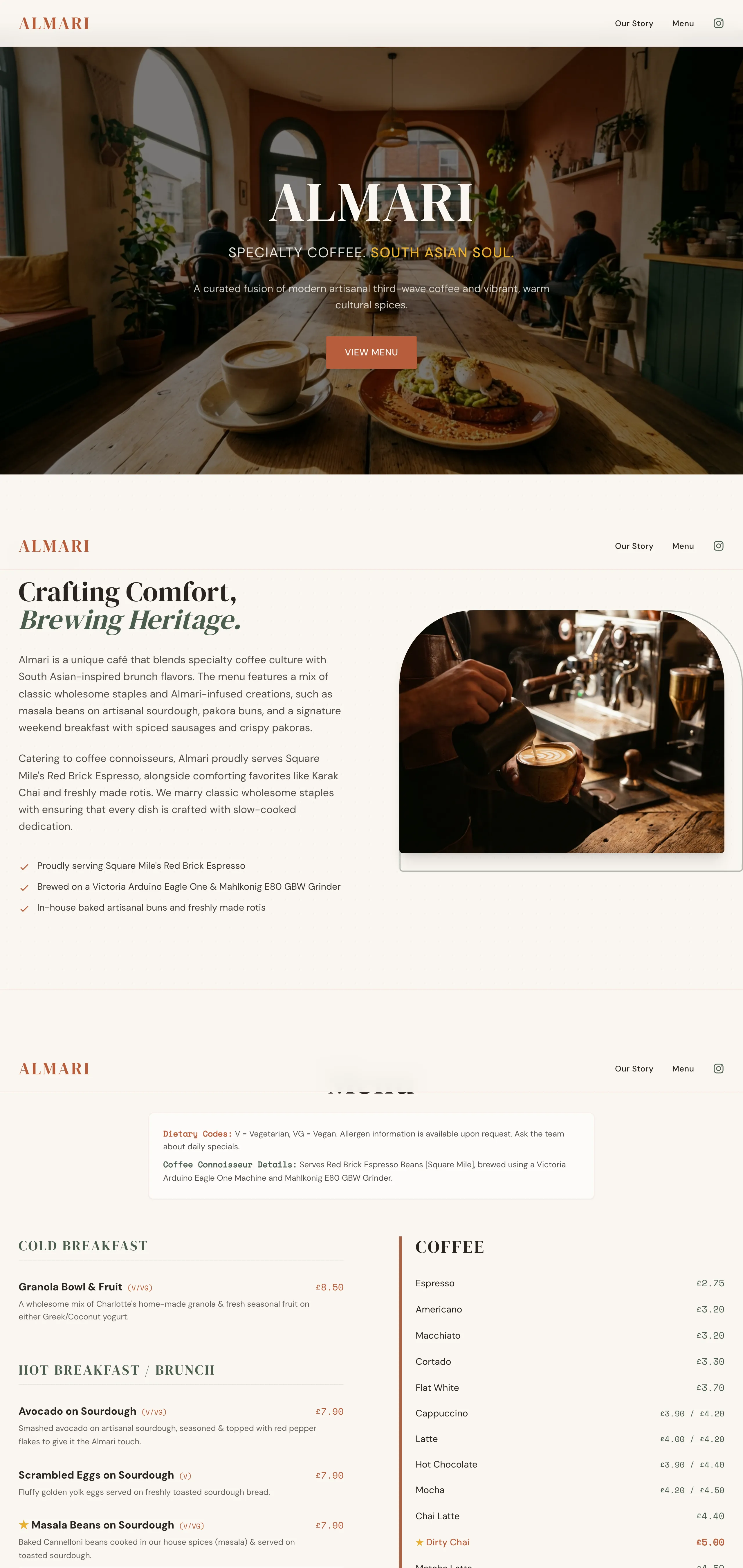
Try It FreeA real restaurant website built with Dinehere
Built from a few menu photos — this is a live site. Take a look.
Tips for French Restaurant Owners
Translate the Experience, Not Just Words
Don't just list 'Boeuf Bourguignon'. Describe it as '24-hour slow-cooked beef in red Burgundy wine'. Use your website text to evoke the flavors and time invested in the cooking.
Highlight the Chef's Pedigree
French cuisine is chef-driven. Use the 'About' section to mention where your chef trained or their regional influences. This establishes authority and authenticity immediately.
Keep the Wine List Up to Date
Wine is as important as food in a French restaurant. Ensure your online vintage list matches your cellar. Nothing disappoints a connoisseur more than spotting a bottle online that is out of stock.
Showcase the 'Specials Board'
The 'Ardoise' (chalkboard) is a symbol of freshness. Mention on your site that you have rotating daily specials to encourage repeat visits from locals looking for lunch variety.
Clarify the Prix Fixe Rules
If your set menu is only available at certain times (e.g., lunch or pre-theatre), state this clearly on the website to avoid awkward conversations at the door.
Challenges French Restaurants Face Online
Perception of Exclusivity/Price
Why it matters: Potential customers might assume a French restaurant is too expensive or 'stuffy' without seeing a menu first.
How we help: By displaying your prices and a welcoming 'About' section clearly online, you demystify the experience and make your restaurant accessible to a wider audience.
Complex Menu Structures
Why it matters: PDF menus on mobile phones are frustrating to read, especially with multi-course structures like Prix Fixe and A la Carte mixed together.
How we help: Dinehere parses your menu into a clean, mobile-responsive format where customers can easily toggle between sections without pinching or zooming.
Language Barriers
Why it matters: If customers don't understand French culinary terms, they may feel intimidated and choose a different restaurant.
How we help: Our simple layout encourages descriptive text alongside dish names, allowing you to educate guests and make them feel comfortable before they even arrive.
Three Simple Steps
Upload Your Menu
Take photos of your french menu or upload existing images. Our AI reads any format.
AI Creates Your Site
Watch as our AI designs a beautiful website tailored to french cuisine aesthetics.
Go Live Instantly
Preview, make edits if needed, and publish. Your restaurant is now online.
One Price, Everything Included
or £290/year — 2 months free
No contracts, no setup fees. Cancel anytime. Just a beautiful website for your french restaurant.
- AI-powered website generation
- Mobile-responsive design
- Custom subdomain (yourname.dinehere.ai)
- Menu parsing from photos
- SEO optimized
- Hosting included
- SSL certificate included
Common Questions About French Restaurant Websites
Yes. Our menu builder allows you to create distinct sections, so you can clearly separate your set lunch menus from your evening a la carte offerings without clutter.
Absolutely. We format lists to be scrollable and clean, ensuring customers can browse vintages and regions easily without pinching and zooming.
Not at all. You can log in from your phone and update the text for your daily specials in seconds, ensuring your website always matches your chalkboard.
Yes. While we don't process bookings ourselves, we provide prominent buttons that can link directly to your profile on any third-party reservation platform you use.
While professional photos help, they aren't strictly necessary for every item. A few high-quality atmosphere shots and hero dishes are enough to set the mood; the menu text does the rest.
Yes, our platform fully supports all UTF-8 characters, so accents on words like 'entrée', 'sauté', and 'crème' will render perfectly on all devices.
Yes, the 'Story' section is perfect for this. In French cuisine, the Chef's training and philosophy are major selling points for potential diners.
If you have your menu text and a few photos ready, your site can be live in under an hour. It's designed for busy restaurateurs who need a professional presence immediately.
Related Cuisines You Might Like
Explore Other Cuisines
Ready to Build Your French Restaurant Website?
Join other french restaurant owners who built their websites with Dinehere.
Build My French Restaurant Site