
Build Your Chinese Restaurant Website
From dim sum houses to Sichuan specialists, our AI creates beautiful websites for every Chinese cuisine style.
Chinese Restaurant Website Examples

AI-designed for Chinese restaurants
Understanding Chinese Cuisine
History & Origins
The history of Chinese cuisine stretches back thousands of years, evolving through dynasties where food was considered both sustenance and medicine. From the sophisticated banquets of the Zhou Dynasty to the refined culinary arts of the Song Dynasty, Chinese cooking has always emphasized the harmony of flavors, known as the balance of Yin and Yang. The philosophy centers on the 'Five Flavors'—sweet, sour, bitter, spicy, and salty—which correspond to the five elements, ensuring that a meal is not just delicious but energetically balanced. In the Western world, particularly in the UK and US, Chinese cuisine began its journey with early immigrants from the Guangdong (Canton) province in the late 19th and early 20th centuries. This led to the proliferation of Cantonese-style dishes and the establishment of Chinatowns in major cities. Over the decades, the landscape has dramatically shifted from adapted 'chop suey' houses to a rich tapestry of authentic regional representations. Today, diners are just as likely to seek out the numbing heat of Sichuan peppercorns or the delicate sweetness of Huaiyang cuisine as they are traditional dim sum.
Regional Styles
Chinese cuisine is often categorized into the 'Eight Great Traditions,' though in the West, four main styles are most prominent. Cantonese cuisine (Yue) is renowned for its fresh ingredients, steaming techniques, and dim sum culture, emphasizing natural flavors over heavy spices. Sichuan cuisine (Chuan), conversely, is famous for its bold, pungent flavors resulting from the liberal use of garlic, chili peppers, and the unique numbing sensation of Sichuan peppercorns. Northern or Beijing cuisine (Lu) relies heavily on wheat-based foods like noodles, dumplings, and buns due to the cooler climate, with Peking Duck being its crowning jewel. Meanwhile, Eastern cuisine, specifically from the Jiangsu and Zhejiang regions, is characterized by its sweet and savory flavor profiles, emphasis on seafood, and intricate knife work. Modern restaurants often specialize in one specific region rather than offering a generic pan-Chinese menu.
Signature Techniques
The most iconic technique is 'Wok Hei' or 'Breath of the Wok,' a complex interaction of oil, extreme heat, and stir-frying that imparts a distinct charred aroma and flavor to dishes. This requires high-pressure burners and immense skill to control the flame. Steaming is another cornerstone, particularly crucial for dim sum and fresh fish, allowing the natural sweetness of ingredients to shine without heavy oils. Other vital methods include 'Red Braising' (Hong Shao), where meats are slow-cooked in soy sauce, sugar, and wine until tender and dark, and 'Velveting,' a marinating process using egg white and cornstarch to keep meat incredibly silky and tender during stir-frying. Deep-frying is also elevated to an art form, often used twice to achieve the perfect crispness for dishes like Sweet and Sour Pork or Salt and Pepper Squid.
Dining Culture
Chinese dining is inherently communal, designed to strengthen relationships between family and friends. Dishes are typically served centrally on a round table, often equipped with a 'lazy Susan' turntable to facilitate sharing. A balanced meal consists of a starch (fan) like rice or noodles, accompanied by several shared dishes (tsai) of meat, vegetables, and soup. It is culturally significant to ensure there is an abundance of food, symbolizing prosperity and generosity. Tea is inextricably linked to the dining experience, particularly during 'Yum Cha' (drinking tea), the traditional Cantonese brunch involving dim sum. Etiquette plays a role, such as tapping fingers on the table to thank the tea pourer. In modern restaurant settings, the menu is often vast, and the ability to navigate these extensive options is seen as part of the host's duty to curate a balanced meal for their guests.
Our AI understands Chinese cuisine
Bilingual Menu Optimization
Seamlessly displays dish names in both English and Chinese characters (Hanzi), ensuring authenticity for traditional customers while remaining accessible to locals.
Large Catalog Management
Specifically designed to handle extensive menus (often 100+ items) typical of Chinese restaurants without cluttering the mobile view.
Visual Dish Clarification
Allows photo uploads for less familiar regional dishes, helping customers understand exactly what 'Lion's Head Meatballs' or 'Ants Climbing a Tree' looks like.
Set Dinner & Banquet Displays
Distinct sections to showcase 'Set Dinners for Two' or Banquet menus, effectively communicating value bundles common in Chinese dining.
Allergen & Ingredient Transparency
Clear tagging for common allergens like peanuts, shellfish, and sesame, addressing modern diner concerns instantly.
Fast Mobile Loading
Ensures that even with hundreds of menu items, the site loads instantly on mobile data, capturing hungry customers searching nearby.
AI That Understands Chinese Menus
Our AI automatically recognizes and organizes traditional chinese menu categories.
Siu Mei (Roasted Meats)
Cantonese-style BBQ including Char Siu, Roast Duck, and Crispy Pork Belly.
Dim Sum Classics
Small bite-sized portions served in bamboo steamers, such as Har Gow and Siu Mai.
Chef's Clay Pot
Slow-braised dishes served in the cooking vessel to retain heat.
Live Seafood
Market-fresh fish, lobster, and crab prepared steamed or ginger-scallion style.
Congee & Broths
Rice porridge with various toppings like century egg or sliced fish.
Vegetarian (Jai)
Meat-free dishes often using tofu skins, mushrooms, and seasonal greens.
Upload your menu photos and watch the magic happen
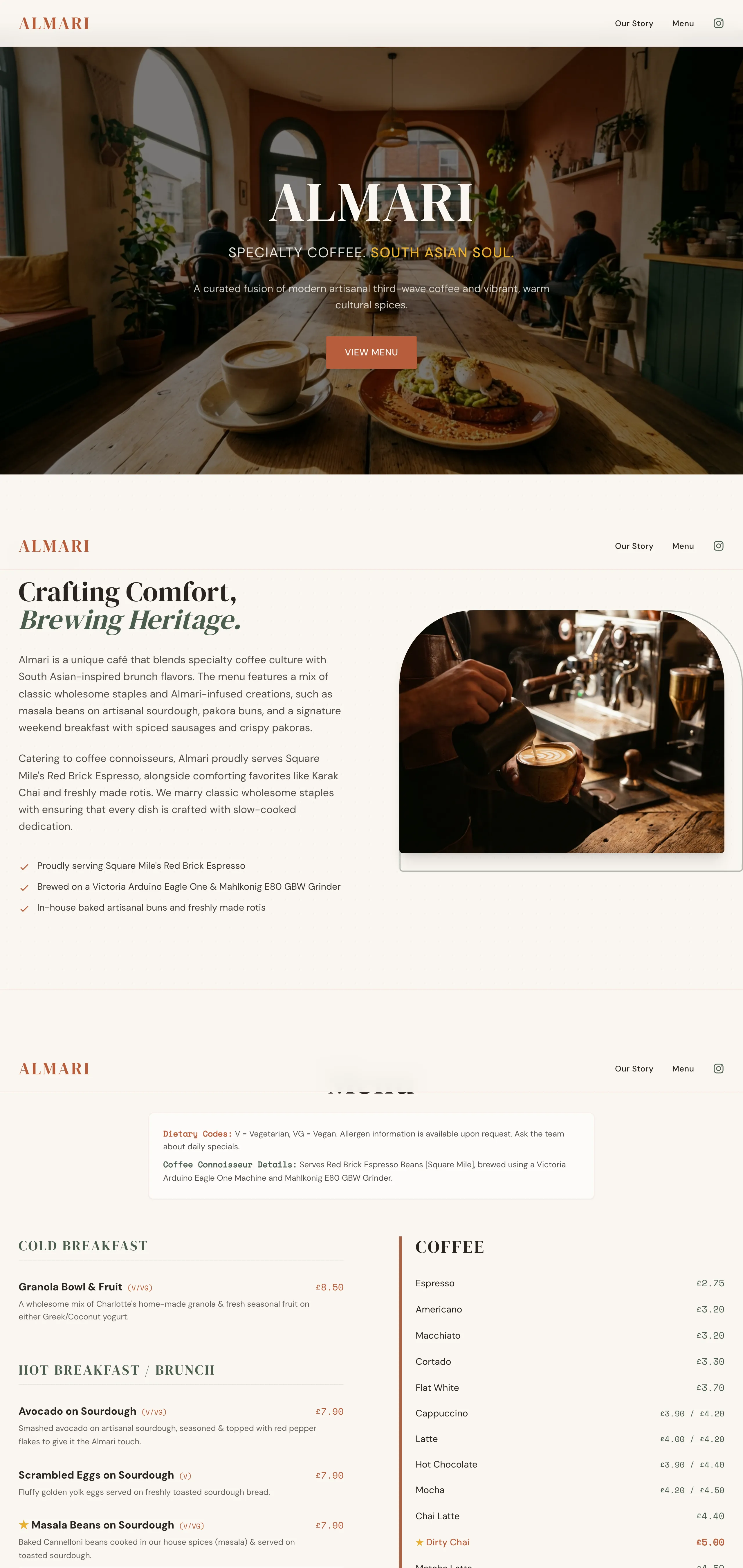
Try It FreeA real restaurant website built with Dinehere
Built from a few menu photos — this is a live site. Take a look.
Tips for Chinese Restaurant Owners
Highlight Your Regional Speciality
Don't just be a 'Chinese' restaurant. If you specialize in spicy Sichuan or delicate Cantonese, state this clearly in your 'About' section to attract foodies looking for authenticity.
Clarify Spice Levels
Use your menu descriptions to clearly indicate heat levels (mild, medium, mala). This builds trust with customers who might be wary of ordering unfamiliar spicy dishes.
Tell the Story of Your Chef
Chinese cuisine relies heavily on the skill of the chef. Mentioning your head chef's experience or home province adds prestige and justifies price points for premium dishes.
Optimize for 'Near Me' Searches
Ensure your address and opening hours are accurate on your website. This is crucial for capturing the late-night crowd or hungry office workers searching for 'Chinese food near me'.
Showcase Banquet Menus Online
Groups often look for set menus online before booking. Clearly displaying your 'Set Meal B for 4 People' helps large groups make quick decisions to visit you.
Challenges Chinese Restaurants Face Online
The 'PDF Menu' Problem
Why it matters: Many Chinese restaurants upload a photo of their takeaway flyer as their website. This is unreadable on mobile phones, forcing customers to pinch-and-zoom, often leading them to give up and go elsewhere.
How we help: Dinehere converts that flyer into a fully responsive, mobile-optimized webpage where text is clear, legible, and easy to scroll through on any device.
Lack of Search Visibility
Why it matters: Without a website, a restaurant is invisible to Google's indexing. You rely entirely on expensive third-party apps (like Deliveroo) where you compete side-by-side with every other option.
How we help: We provide a dedicated domain and SEO-friendly structure that helps your restaurant claim its own space on the internet, allowing customers to find you directly without an intermediary.
Outdated Information
Why it matters: Old Facebook pages often list incorrect hours or discontinued dishes. This frustrates customers who travel to visit you only to find you closed.
How we help: Dinehere offers a centralized, professional presence that serves as the 'source of truth' for your business, ensuring hours and location data are always professional and accessible.
Three Simple Steps
Upload Your Menu
Take photos of your chinese menu or upload existing images. Our AI reads any format.
AI Creates Your Site
Watch as our AI designs a beautiful website tailored to chinese cuisine aesthetics.
Go Live Instantly
Preview, make edits if needed, and publish. Your restaurant is now online.
One Price, Everything Included
or £290/year — 2 months free
No contracts, no setup fees. Cancel anytime. Just a beautiful website for your chinese restaurant.
- AI-powered website generation
- Mobile-responsive design
- Custom subdomain (yourname.dinehere.ai)
- Menu parsing from photos
- SEO optimized
- Hosting included
- SSL certificate included
Common Questions About Chinese Restaurant Websites
Yes. Our system is built to parse and organize large menus efficiently. We can display item numbers alongside dish names, which is helpful for customers ordering by phone.
Absolutely. While photos help, Dinehere creates a clean, text-based layout that looks professional even without images. You can add photos gradually to your most popular items or chef's specials.
Yes, we can organize your website into clear sections. Set Meals, Lunch Specials, and A La Carte can be separated so customers can easily find the best value options.
Yes, Dinehere supports all unicode characters. You can have the menu item title in English and the description or subtitle in Chinese characters (or vice versa).
Not at all. You can log in and update a price in seconds. Alternatively, you can list items as 'Market Price' (MP) so customers know to ask.
Yes. Having a mobile-responsive website linked to your Google Business Profile significantly helps your local SEO, making it easier for customers to find your location and hours.
Yes, it's designed to be affordable for independent owners. Dinehere is a simple subscription (£29/month, or £290/year with two months free), far less than an agency or designer, with hosting included and no hidden maintenance costs. You can cancel anytime.
Everything's included. Your subscription (£29/month, or £290/year with two months free) covers the website, hosting, and a custom subdomain, so there's no separate hosting bill. If you already own a .com you can connect it too. Cancel anytime.
Best Cities for Chinese Restaurants
Related Cuisines You Might Like
Explore Other Cuisines
Ready to Build Your Chinese Restaurant Website?
Join other chinese restaurant owners who built their websites with Dinehere.
Build My Chinese Restaurant Site