
Build Your Indian Restaurant Website
From curry houses to fine dining, our AI creates authentic Indian restaurant websites that showcase your cuisine beautifully.
Indian Restaurant Website Examples

AI-designed for Indian restaurants
Understanding Indian Cuisine
History & Origins
Indian cuisine in the United Kingdom has a rich and complex history that spans over two centuries, evolving from the early 'Hindoostane Coffee House' of 1810 to the ubiquitous high street curry house. Initially dominated by Anglo-Indian hybrid dishes like Mulligatawny soup and Kedgeree, the post-war era saw a massive influx of chefs from the Sylhet region of Bangladesh, who adapted their cooking to British palates, giving birth to the now-legendary Chicken Tikka Masala. This era established the 'British Indian Restaurant' (BIR) style, characterized by the use of a master base gravy to quickly assemble a vast array of curries.
Regional Styles
While the generic 'curry house' style remains popular, the UK market has seen a surge in authentic regional specificity. North Indian (Punjabi) cuisine remains dominant with its rich, buttery gravies and tandoor-cooked meats. However, South Indian cuisine has gained significant traction, celebrated for its use of rice, lentils, coconut milk, and curry leaves, featuring dishes like Dosas and Idlis. Gujarati cuisine offers a wealth of vegetarian options, while Bengali cooking brings distinct mustard oil and fish preparations. The modern Indian dining scene now strictly differentiates between these styles rather than blending them into a single menu.
Signature Techniques
The foundation of Indian cooking lies in 'Tadka' or tempering—the act of blooming whole spices in hot oil to release essential oils. The 'Tandoor' (clay oven) is essential for classic breads and charred meats, imparting a distinct smoky flavor that conventional ovens cannot replicate. 'Dum' cooking, a slow-cooking method often used for Biryanis, seals the pot with dough to steam ingredients in their own juices. In the British Indian Restaurant context, the preparation of 'Garabi' (base gravy) is the secret weapon that allows kitchens to serve hundreds of different dishes rapidly during peak service.
Dining Culture
Dining at an Indian restaurant is inherently communal. It is customary to order 'family style,' with multiple curries, rice dishes, and breads placed in the center of the table for sharing. The concept of 'Thali'—a round platter with small bowls of various dishes—is also culturally significant, offering a balanced meal of six distinct flavors. In the UK, the 'Friday Night Curry' is a cultural institution, often accompanied by lager or pale ale, though traditional dining emphasizes water, lassi, or chai to cleanse the palate between spicy bites.
Our AI understands Indian cuisine
Dietary Iconography System
Indian menus are havens for diverse diets; our system clearly tags Vegan, Vegetarian, Halal, and Gluten-Free items, vital for group decision-making.
Chef's Heritage Story
A dedicated section to explain your regional roots (e.g., 'A Taste of Kerala'), distinguishing you from generic curry houses.
Visual Heat Guide
Replace text warnings with intuitive chilli icons to help customers confidently choose the right spice level without asking staff.
Mobile-Optimized Long Menus
Indian menus often have 100+ items; our accordion-style design organizes this vast selection so it never feels overwhelming on a phone screen.
Sundries & Sides Focus
Specific layout logic that ensures high-margin items like Poppadoms, Naans, and Pickles aren't buried at the bottom of the page.
Instant Contact Actions
One-tap calling buttons that are crucial for takeaways where customers prefer to order directly over the phone to customize dishes.
AI That Understands Indian Menus
Our AI automatically recognizes and organizes traditional indian menu categories.
Chaat & Street Food
Savory snacks typically served at roadsides
Clay Oven (Tandoor)
Marinated meats and paneer cooked at high heat
Sabzi (Vegetarian)
Vegetable-focused dry and gravy dishes
Dal (Lentils)
Slow-cooked lentil stews
Sundries (Rice & Breads)
Accompaniments to scoop up curries
Thali Specials
Complete meal platters
Upload your menu photos and watch the magic happen
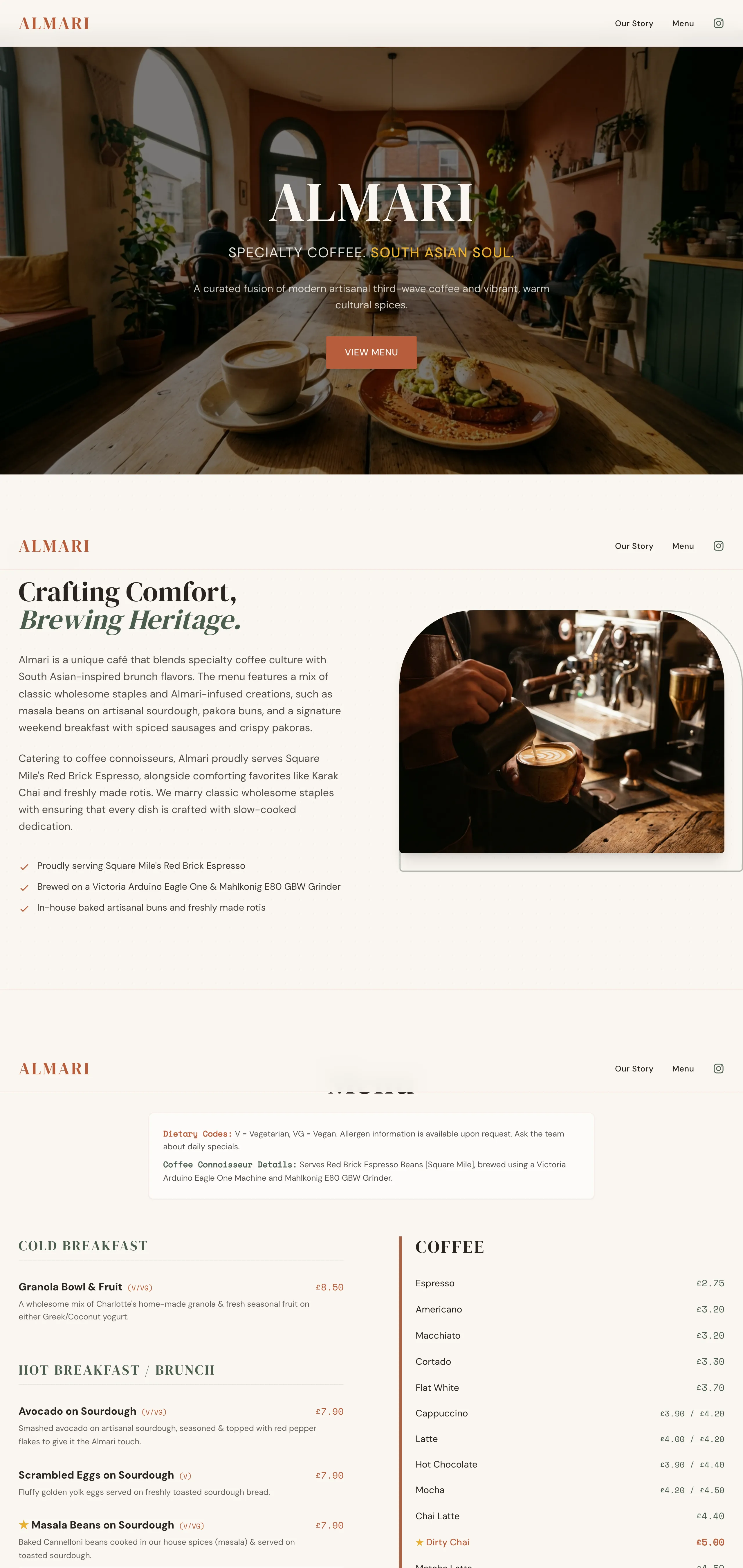
Try It FreeA real restaurant website built with Dinehere
Built from a few menu photos — this is a live site. Take a look.
Tips for Indian Restaurant Owners
Highlight the 'Home-Style' Difference
Customers are moving away from generic sauce bases. Use your 'About' section to mention if you grind your own spices or use grandmother's recipes. Authenticity is your biggest marketing asset right now.
Master the Mobile Menu Layout
70% of takeaway searches happen on mobile. Avoid uploading PDF menus that require pinching and zooming. A digital text-based menu allows customers to scan categories like 'Starters' and 'Mains' instantly.
Clarify Vegan vs. Vegetarian
Indian cuisine is vegan-friendly by nature, but customers worry about Ghee (clarified butter). Explicitly marking dishes as 'Dairy-Free' or 'Vegan' can open up a massive new customer base for you.
Promote High-Margin Sundries
Don't hide your Naans, Rice, and Pickles at the very end. On your website, ensure these high-profit items are easy to find, as they complete the meal and increase the average order value.
Leverage Your Google Business Profile
Once your Dinehere site is live, link it immediately to your Google Business Profile. This ensures that when someone searches 'Indian food near me', they land on your professional menu, not a competitor's.
Challenges Indian Restaurants Face Online
The 'PDF Menu' Trap
Why it matters: Most Indian restaurants upload a scan of their tri-fold paper menu. On a mobile phone, this is unreadable. Customers get frustrated trying to zoom in and often bounce to a competitor with a clearer site.
How we help: Dinehere parses your menu into a mobile-responsive format. It turns a cluttered paper layout into a sleek, scrollable digital list that works perfectly on any smartphone.
Third-Party App Dependency
Why it matters: Apps like Just Eat or Deliveroo take large commissions and own the customer data. If you don't have your own website, you have no way to encourage direct, commission-free orders.
How we help: We give you an independent digital home. You can direct loyal customers to your own URL, allowing them to view the menu and call you directly, keeping 100% of the profit in your pocket.
Outdated Pricing Online
Why it matters: Indian restaurants often have large menus and price changes are frequent due to ingredient costs. Old menus floating around the internet lead to angry customers when the bill arrives.
How we help: Dinehere offers a centralized place for your 'Official Menu.' You can update prices in seconds, giving you a single source of truth to point customers toward when disputes arise.
Lack of Visual Appeal
Why it matters: Curries can look similar in photos (brown sauce). Without a good website structure, the food can look unappealing or generic.
How we help: Our clean, minimalist templates prioritize typography and layout. Even without professional photos, the organized structure makes your food sound delicious and high-quality through good presentation.
Three Simple Steps
Upload Your Menu
Take photos of your indian menu or upload existing images. Our AI reads any format.
AI Creates Your Site
Watch as our AI designs a beautiful website tailored to indian cuisine aesthetics.
Go Live Instantly
Preview, make edits if needed, and publish. Your restaurant is now online.
One Price, Everything Included
or £290/year — 2 months free
No contracts, no setup fees. Cancel anytime. Just a beautiful website for your indian restaurant.
- AI-powered website generation
- Mobile-responsive design
- Custom subdomain (yourname.dinehere.ai)
- Menu parsing from photos
- SEO optimized
- Hosting included
- SSL certificate included
Common Questions About Indian Restaurant Websites
Not at all. Dinehere uses smart categorization (collapsible sections) to organize extensive Indian menus. Customers can tap to open 'Tandoori Specials' or 'Vegetarian Sides' without endless scrolling, making it much easier to read than a PDF.
Yes. While photos help, Indian menus are description-heavy. Our design looks professional and clean using just text and your logo. You can add photos later for signature dishes like your Chef's Specials as you get them.
Absolutely. This is a critical search term for many customers. We can feature a 'Halal Certified' badge prominently on your site and within the menu descriptions to reassure your diners immediately.
It complements it but saves you money. Many customers search for you on Google to check prices. If they find your official website, they are more likely to call you directly to order, saving you the high commission fees charged by third-party apps.
You can upload your full allergen matrix or list common allergens (like nuts, dairy, gluten) directly in the dish descriptions. This protects your business and helps customers with sensitivities feel safe eating with you.
Yes, we recommend creating separate sections. You can have a 'Traditional Favorites' section for Korma/Masala and a 'Chef's Regional Specialties' section for your authentic dishes, helping educate your customers.
No, you don't need to call anyone. If you have a new menu PDF or a list of price changes, you simply upload or paste the new details, and the site updates. It keeps your Google business profile accurate.
Perfectly. Since we don't force table bookings, the site focuses entirely on your menu, opening hours, and a big 'Call to Order' button, which is exactly what a takeaway business needs.
Best Cities for Indian Restaurants
Related Cuisines You Might Like
Explore Other Cuisines
Ready to Build Your Indian Restaurant Website?
Join other indian restaurant owners who built their websites with Dinehere.
Build My Indian Restaurant Site