
Build Your Thai Restaurant Website
From street food to royal Thai cuisine, our AI creates beautiful websites that capture Thai culinary traditions.
Thai Restaurant Website Examples

AI-designed for Thai restaurants
Understanding Thai Cuisine
History & Origins
Thai cuisine, or 'Ahaan Thai,' is a complex tapestry woven from centuries of migration and trade. Its roots trace back to the migration of people from southern China into Southeast Asia, bringing with them rice cultivation and stir-frying techniques. Over time, these foundational methods blended with Indian spices like cumin and coriander, introduced by Buddhist monks and traders, as well as Portuguese influences in the 16th century, which famously introduced the chili pepper—an ingredient now synonymous with Thai heat. The result is a culinary tradition that harmonizes foreign influences into something distinctly Siamese. Historically, Thai food has been divided into two distinct lineages: Royal cuisine ('Chao Wang') and folk cuisine ('Chao Ban'). Royal cuisine, developed in the palaces of Ayutthaya and Bangkok, emphasizes intricate presentation, mild spices, and the removal of bones and pits, focusing on texture and balance. Folk cuisine, conversely, varies wildly by region and makes use of pungent ingredients like fermented fish sauce ('pla ra') and intensely spicy bird's eye chilies. Today's global Thai cuisine is a beautiful amalgamation of these styles, offering everything from refined massaman curries to fiery street-food salads. At the heart of Thai culinary history is the philosophy of the five flavors: sweet, sour, salty, bitter, and spicy. Unlike Western courses served sequentially, traditional Thai meals serve dishes simultaneously to allow diners to customize the flavor balance of each bite. This communal approach reflects the country's social fabric, where food is the central pillar of community and family life.
Regional Styles
Thailand's culinary landscape is defined by four main regions. The North (Lanna) favors sticky rice, mild curries like Khao Soi, and herbal sausages, often eating with hands from small woven baskets. The Northeast (Isan), heavily influenced by Laos, is famous for simple, fiery dishes like Som Tum (papaya salad), Larb (minced meat salad), and fermented fish sauce. Central Thailand, home to Bangkok, offers the most balanced flavors and includes complex curries using coconut milk, such as Green and Red curries. Southern Thai cuisine is the spiciest, characterized by heavy use of turmeric, seafood, and intense sour-spicy soups like Gaeng Som.
Signature Techniques
The soul of Thai cooking lies in the 'Pok Pok' sound of the mortar and pestle, used to pound fresh herbs and spices into curry pastes; this releases essential oils that blenders simply cannot replicate. High-heat wok stir-frying is essential for dishes like Pad Kaprao, imparting 'wok hei' (breath of the wok). Steaming and grilling over charcoal are also prevalent, particularly for fish and sticky rice. Intricate fruit and vegetable carving remains a signature technique for upscale presentation, a remnant of Royal palace traditions.
Dining Culture
Thai dining is inherently communal, centering on 'Sum Rup'—the shared set of dishes. A typical meal includes a soup, a curry, a fried dish, and a salad, all centered around a large pot of jasmine rice. Traditionally, Thais eat with a spoon in the right hand and a fork in the left (used only to push food onto the spoon); chopsticks are reserved strictly for noodle dishes. The concept of 'Nam Jai' (water of the heart/generosity) means portions are generous, and the host often ensures guests' plates are never empty.
Our AI understands Thai cuisine
Allergen Clarity Display
Thai cuisine uses peanuts, shrimp paste, and fish sauce heavily. Our design clearly highlights ingredients to reassure customers with allergies.
Bilingual Menu Support
Seamlessly display dishes in both Thai script (for authenticity) and English (for clarity) without cluttering the mobile view.
Visual Storytelling Blocks
Dedicated space to explain the regional origin of dishes (e.g., 'Isan Style'), helping customers appreciate the culinary depth.
High-Volume Menu Layout
Thai menus often have 50+ items. Our structured layout prevents 'infinite scroll' fatigue, grouping items intuitively.
Quick-Update Hours
Easily adjust opening times for holidays or Songkran festivals instantly, ensuring Google results are always accurate.
AI That Understands Thai Menus
Our AI automatically recognizes and organizes traditional thai menu categories.
Khong Wang (Appetizers)
Small bites designed to awaken the palate, featuring intricate textures.
Yam & Tam (Salads)
Spicy, sour, and fresh salads like Som Tum and Yam Nua.
Tom (Soups)
Aromatic broths ranging from clear and mild to creamy and spicy.
Gaeng (Curries)
The heart of the meal, featuring coconut milk or water-based pastes.
Guay Teow (Noodles)
Street food staples including soups, stir-frys, and boat noodles.
Khong Wan (Desserts)
Sweet finishes often using coconut milk, palm sugar, and fresh fruit.
Upload your menu photos and watch the magic happen
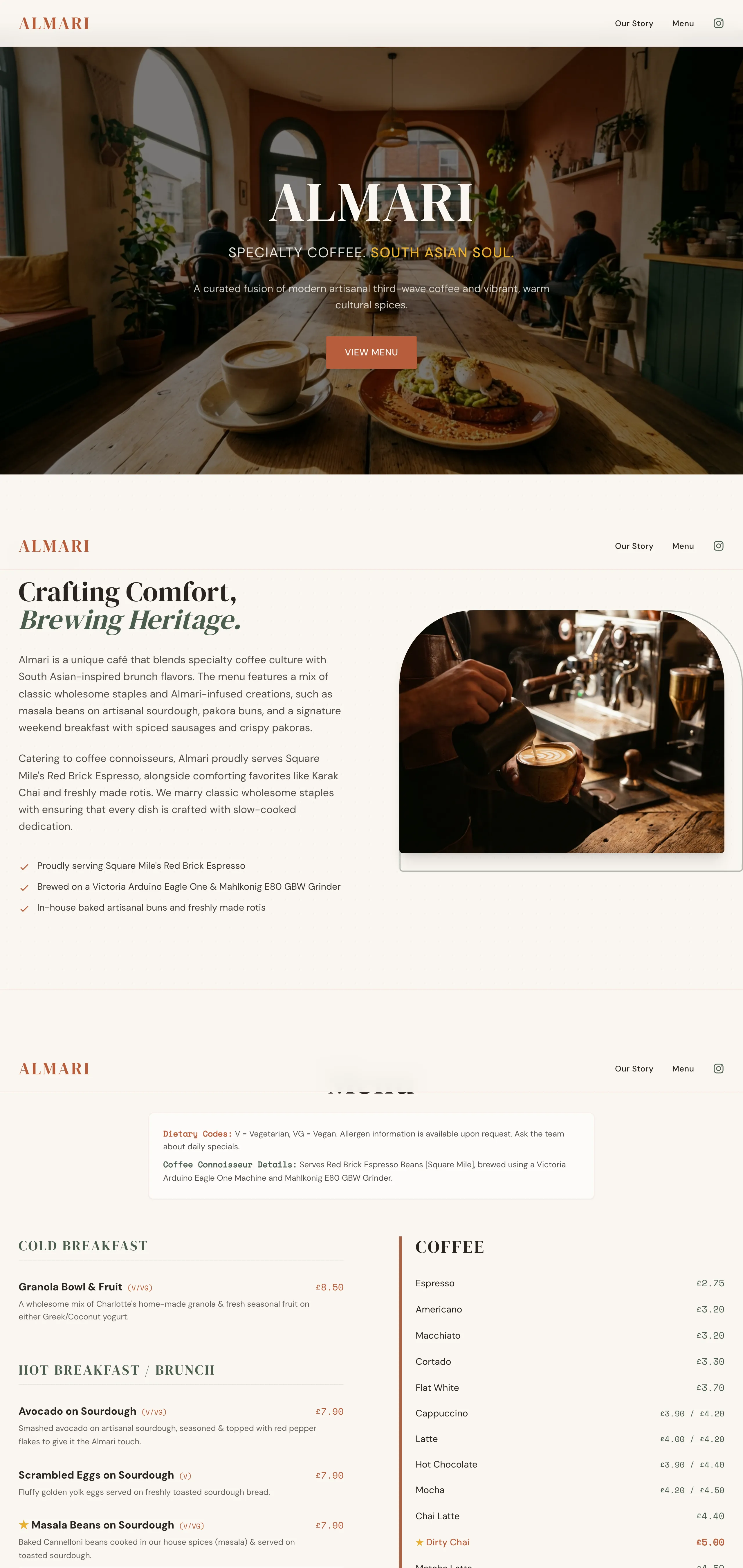
Try It FreeA real restaurant website built with Dinehere
Built from a few menu photos — this is a live site. Take a look.
Tips for Thai Restaurant Owners
Highlight Regional Authenticity
Don't just say 'Thai Food.' Use your 'About' section to mention if your recipes are from Isan or the South. Customers love a backstory and it separates you from generic chains.
Clarify 'Thai Spicy' vs. 'Western Spicy'
Use the menu description fields to clearly explain your spice scale. A simple note like 'We can adjust spice levels upon request' reduces customer complaints about food being too hot or too mild.
Optimize for 'Near Me' Searches
Ensure your address and opening hours on your Dinehere site match your Google Business Profile exactly. This consistency helps Google trust your data and rank you higher for local Thai food searches.
Showcase Fresh Ingredients
In your website's story section, mention if you import galangal or lemongrass, or use locally sourced meats. This detail signals quality and justifies your price point to browsing customers.
Keep the Menu Mobile-Readable
Avoid uploading PDF menus. They are impossible to read on phones. A digital, text-based list (which Dinehere creates) ensures customers can read your offerings without pinching and zooming.
Challenges Thai Restaurants Face Online
The 'PDF Menu' Problem
Why it matters: Thai menus are often long and complex. When these are uploaded as PDFs or photos, mobile users can't read them, can't search for text like 'vegan', and often give up.
How we help: Dinehere converts your menu into a mobile-responsive, text-based format. Customers can scroll smoothly, read clearly, and find exactly what they want on any device.
Invisibility on Google Maps
Why it matters: If you only have a Facebook page, Google often doesn't link it correctly to your maps listing. You lose the 'Website' button traffic to competitors.
How we help: We provide a dedicated, fast-loading URL (e.g., siamkitchen.dinehere.com) that you can paste into your Google Business Profile, instantly verifying your digital presence.
Updating Third-Party Sites
Why it matters: Updating prices on Deliveroo, UberEats, JustEat, and your own physical menu is a hassle. Often the 'official' website gets left behind with old prices.
How we help: Dinehere is the easiest platform to update. You can change a price or hide an out-of-stock item in seconds on your phone, ensuring your direct customers always see accurate info.
Three Simple Steps
Upload Your Menu
Take photos of your thai menu or upload existing images. Our AI reads any format.
AI Creates Your Site
Watch as our AI designs a beautiful website tailored to thai cuisine aesthetics.
Go Live Instantly
Preview, make edits if needed, and publish. Your restaurant is now online.
One Price, Everything Included
or £290/year — 2 months free
No contracts, no setup fees. Cancel anytime. Just a beautiful website for your thai restaurant.
- AI-powered website generation
- Mobile-responsive design
- Custom subdomain (yourname.dinehere.ai)
- Menu parsing from photos
- SEO optimized
- Hosting included
- SSL certificate included
Common Questions About Thai Restaurant Websites
Yes. We specialize in organizing extensive menus into clear, collapsible sections (like Starters, Curries, Noodles) so customers can find 'Number 42' quickly without scrolling forever on their phones.
Absolutely. Since fish sauce is common in Thai food, our text-based menu allows you to explicitly state which curries or stir-frys can be made with soy sauce or tofu, attracting more plant-based customers.
Yes. While photos help, Dinehere builds a text-first, SEO-friendly menu. You can upload just a few hero images of your best dishes (like Pad Thai or Tom Yum) to set the mood, and list the rest as text.
We provide prominent 'Order on Deliveroo' or 'Order on UberEats' buttons right at the top of your site. We don't take commissions; we just send the traffic directly to your existing delivery platforms.
Yes, Dinehere sites are designed for clarity. We focus on English descriptions while allowing you to keep authentic Thai names, making it easy for locals and tourists alike to understand what they are ordering.
Yes, you can prominently display dietary badges or notes in your 'About' section or menu footer to inform customers about Halal meats or specific preparation methods.
You can update prices in seconds. Unlike a PDF menu where you have to re-upload a file, our editor lets you change the price of 'Green Curry' instantly, and it updates on the live site immediately.
It complements it. Facebook is hard to search and menus get buried. Your Dinehere site serves as your permanent, professional digital home that you can link to from Facebook, Instagram, and Google Maps.
Best Cities for Thai Restaurants
Related Cuisines You Might Like
Explore Other Cuisines
Ready to Build Your Thai Restaurant Website?
Join other thai restaurant owners who built their websites with Dinehere.
Build My Thai Restaurant Site