
Build Your Fusion Restaurant Website
From creative small plates to innovative tasting menus, our AI creates modern websites for culinary boundary-pushers.
Fusion Restaurant Website Examples

AI-designed for Fusion restaurants
Understanding Fusion Cuisine
History & Origins
Fusion cuisine, often misunderstood as a modern marketing trend, actually has roots stretching back centuries to the earliest trade routes. The Silk Road, for example, facilitated the exchange of spices and ingredients between East and West, creating early precursors to fusion dishes. However, the term itself gained traction in the 1970s and 1980s, popularized by chefs like Wolfgang Puck and Roy Yamaguchi who intentionally blended European culinary techniques with Asian flavor profiles. This era, often termed 'East-meets-West,' introduced the world to dishes like wasabi mashed potatoes and sashimi pizzas, legitimizing the concept of culinary hybridization in fine dining. In the UK, fusion has distinct historical roots tied to the British Empire. The Anglo-Indian cuisine that gave rise to Kedgeree and Chicken Tikka Masala is perhaps the earliest widespread form of fusion in the region. Over time, migration patterns have evolved this concept further. Modern fusion is less about rigid 'East-meets-West' rules and more about organic cultural collisions found in urban centers. This 'third culture' cooking is driven by chefs who grew up in multicultural environments—blending the food of their heritage with the local ingredients and techniques of their home city. Today, the movement has shifted from white-tablecloth establishments to the vibrant street food scene. The rise of the 'mashup'—such as the Korean taco, the Sushirrito, or the Cronut—democratized fusion cuisine. It is no longer just about French techniques applied to Japanese ingredients; it is a playful, often bold experimentation that combines comfort foods from disparate cultures, prioritizing flavor and creativity over strict tradition.
Regional Styles
Fusion styles often depend on the specific diasporas present in a region. 'Nikkei' cuisine is a specific, well-established blend of Japanese and Peruvian traditions, famous for ceviches with soy and ginger. 'Chifa' blends Chinese Cantonese traditions with Peruvian ingredients. In the US and UK, 'Asian-Latin' is a dominant variation, merging the heat and acids of Mexican salsa with the fermentation and umami of Korean or Vietnamese cooking. Another prominent style is 'Modern Euro-Asian,' where classic French or Italian bases are spiked with miso, yuzu, or lemongrass.
Signature Techniques
The hallmark of successful fusion is the balance of contrasting flavor profiles—acid, heat, salt, and sweet—borrowed from different culinary grammars. Techniques often involve swapping key components; for example, using a wok to sauté pasta, or applying French sous-vide precision to tough cuts of meat traditionally used in slow-cooked Asian curries. Fermentation is also key, with chefs utilizing kimchi, koji, or miso to add depth to Western dishes like burgers or roasting glazes.
Dining Culture
Dining at a fusion restaurant is typically an exploratory experience. Guests arrive expecting the unexpected and are often looking to be challenged or surprised. The culture is highly visual and social; because the dishes are novel (like a 'Cheeseburger Gyoza'), they invite conversation and photography. Menus often require more interpretation than standard cuisines, with servers acting as guides to explain how disparate ingredients—like blue cheese and unagi—work together on the plate.
Our AI understands fusion cuisine
Ingredient Storytelling Space
Fusion menus often contain unfamiliar ingredient combinations. Our layout provides ample space to describe the 'why' behind the dish, helping customers understand your creative vision.
Visual-First Menu Cards
Because fusion dishes can be hard to visualize by name alone, our design prioritizes high-quality images to show customers exactly what a 'Sushi Pizza' looks like.
Concept Clarity 'About' Section
Fusion restaurants often need to explain their specific cultural blend to avoid confusion. A dedicated story section helps legitimise your unique culinary perspective.
Allergen & Diet Transparency
Fusion often hides unexpected ingredients (e.g., dairy in Asian-style sauces). Clear text sections allow you to explicitly list allergens, building trust with diners.
Dual-Audience SEO
Our SEO structure helps you rank for both cuisines you bridge (e.g., appearing for both 'Mexican food' and 'Korean food' searches), widening your potential customer base.
AI That Understands Fusion Menus
Our AI automatically recognizes and organizes traditional fusion menu categories.
Small Plates & Tapas
The heart of most fusion menus, designed for sharing and sampling multiple flavors.
Robata & Grill
Skewers and charcoal-grilled meats featuring cross-cultural marinades.
Signature Mashups
The bold headline dishes that define the restaurant's specific fusion identity.
Raw Bar / Crudo
Uncooked preparations blending varying curing techniques.
Hybrid Sweets
Desserts that merge contrasting textures and sweetness levels.
Upload your menu photos and watch the magic happen
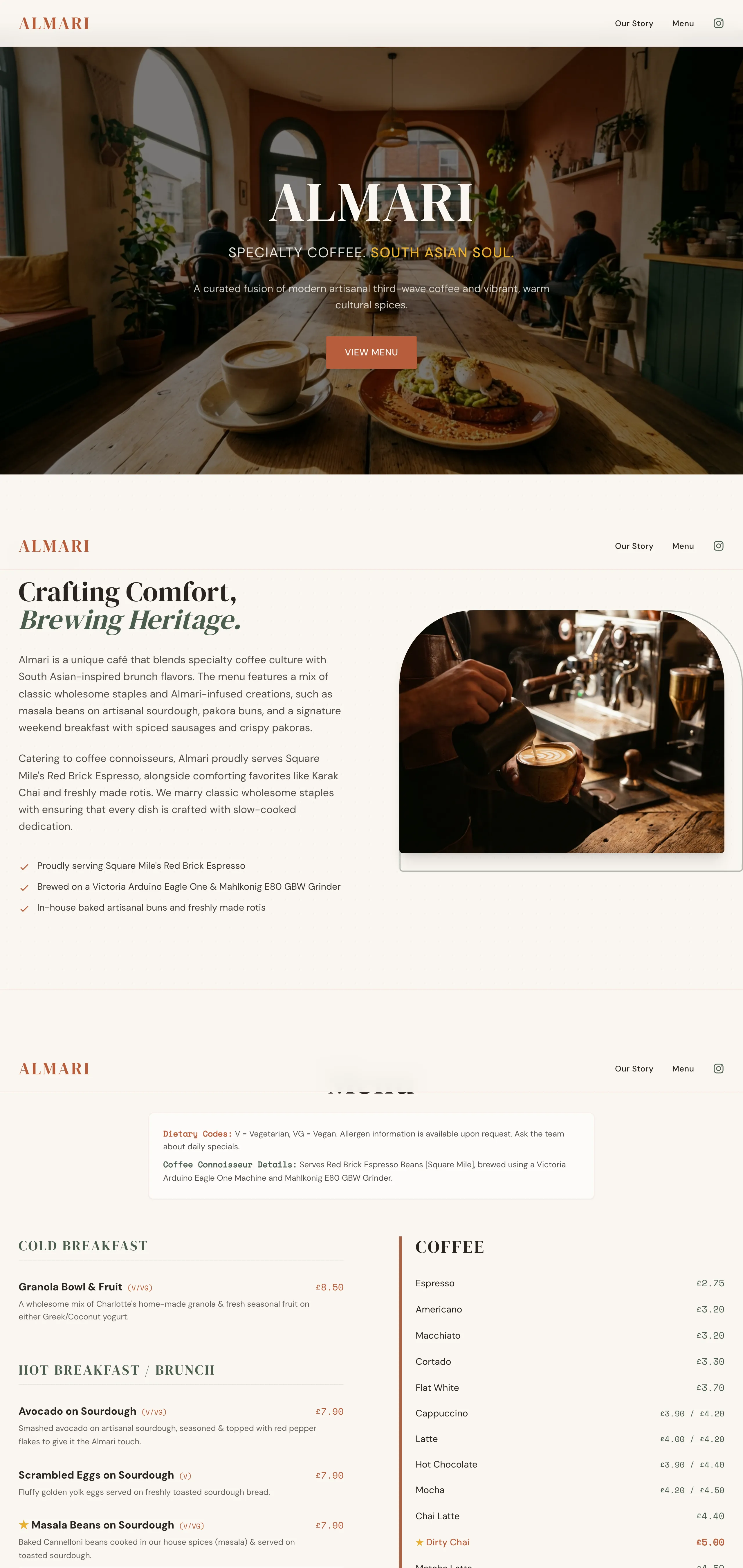
Try It FreeA real restaurant website built with Dinehere
Built from a few menu photos — this is a live site. Take a look.
Tips for Fusion Restaurant Owners
Define Your Fusion Identity
Don't just list 'Fusion.' Be specific in your website title, like 'Nordic-Japanese Dining.' Specificity attracts foodies looking for a distinct experience rather than generic variety.
Highlight the 'Hero' Dish
Choose the one dish that perfectly encapsulates your concept (e.g., a Kimchi Quesadilla) and put it at the top of your digital menu with a great photo. This anchors the customer's understanding.
Educate Through Description
Use your menu descriptions to bridge the gap. Instead of just writing 'Ponzu,' write 'Citrus-soy sauce.' Small educational cues on your website make the menu less intimidating to new diners.
Leverage Your Chef's Background
Fusion works best when it feels authentic to the creator. Use the 'About' section to explain that the chef grew up in two cultures. This legitimizes the menu and creates an emotional connection.
Local SEO for Niche Cravings
Make sure your website text includes the names of the individual cuisines you combine. You want to capture the person searching for 'best tacos' as well as the person searching for 'Korean food.'
Challenges Fusion Restaurants Face Online
Concept Confusion
Why it matters: If potential customers can't quickly understand what you serve, they will scroll past to a familiar option like a pizzeria.
How we help: Dinehere provides a structured 'About' section and clear menu categorization that allows you to explain your concept simply and effectively, turning confusion into curiosity.
Search Engine Invisibility
Why it matters: People rarely search for the generic term 'fusion restaurant.' They search for specific foods.
How we help: Our SEO structure ensures your site is readable by Google for specific dish names and component cuisines, helping you appear in a wider range of local searches.
Inaccessible PDF Menus
Why it matters: Fusion menus often require reading descriptions. Tiny text on a PDF viewed on a mobile phone is frustrating and causes drop-offs.
How we help: We present your menu as a mobile-responsive web page, not a file download. This ensures your descriptions are legible and engaging on any device.
Three Simple Steps
Upload Your Menu
Take photos of your fusion menu or upload existing images. Our AI reads any format.
AI Creates Your Site
Watch as our AI designs a beautiful website tailored to fusion cuisine aesthetics.
Go Live Instantly
Preview, make edits if needed, and publish. Your restaurant is now online.
One Price, Everything Included
or £290/year — 2 months free
No contracts, no setup fees. Cancel anytime. Just a beautiful website for your fusion restaurant.
- AI-powered website generation
- Mobile-responsive design
- Custom subdomain (yourname.dinehere.ai)
- Menu parsing from photos
- SEO optimized
- Hosting included
- SSL certificate included
Common Questions About Fusion Restaurant Websites
Yes. You can simply upload a photo of your new printed menu or paste the new text in minutes. There's no need to contact a developer every time you invent a new dish.
That is the primary goal. By combining your 'About' story with a clear, visual menu, the website acts as an educational tool that explains your unique culinary crossover before guests even arrive.
Not every dish, but for fusion, having 3-4 hero images is highly recommended. Since customers might not have a reference point for your specific creations, visuals help bridge the gap.
Your Dinehere website uses optimized text to help connect the dots. We ensure the keywords on your site mention both cuisines (e.g., 'Japanese-Italian Pasta'), helping search engines understand your niche.
Absolutely. Fusion cuisine is popular with younger, digital-native diners who browse on phones. Dinehere sites are fully responsive and load instantly on mobile devices.
Yes. Our text layouts are designed to be clean and readable, allowing you to include descriptions and ingredient lists without overwhelming the visual design.
Perfectly. It gives you a permanent digital address to legitimise your business, ensuring your loyal following can find your new location and opening hours easily.
Dinehere is a simple, flat subscription (£29/month, or £290/year with two months free) with hosting and a custom subdomain included. The price doesn't change with your traffic, there are no setup fees or hidden costs, and you can cancel anytime.
Best Cities for Fusion Restaurants
Related Cuisines You Might Like
Ready to Build Your Fusion Restaurant Website?
Join other fusion restaurant owners who built their websites with Dinehere.
Build My Fusion Restaurant Site