
Build Your German Restaurant Website
From beer halls to fine German dining, our AI creates warm websites that celebrate German culinary traditions.
German Restaurant Website Examples

AI-designed for German restaurants
Understanding German Cuisine
History & Origins
German cuisine is a tapestry woven from centuries of regional independence, neighboring influences, and distinct climatic conditions. Far more than just the unified culinary tradition it is often perceived to be, it evolved from the hearty peasant foods of the Middle Ages, heavily reliant on preservation techniques like pickling and smoking to survive harsh winters, to the refined courtly dishes influenced by French and Austrian techniques in the 17th and 18th centuries. The introduction of the potato by Frederick the Great in the 18th century revolutionized the German diet, becoming a staple that bridged the gap between the aristocracy and the common people. While the world often equates German food with Bavarian traditions, the culinary landscape is incredibly diverse. The northern coastal regions developed a cuisine rich in herring, eel, and seafood, strongly tied to the Hanseatic League's trading routes. In contrast, the southern regions like Swabia and Bavaria perfected egg-based noodles and dumplings. Throughout history, the German 'Reinheitsgebot' (Beer Purity Law) of 1516 not only defined brewing standards but also symbolized a broader cultural commitment to pure, high-quality ingredients, a philosophy that extends to their bread-baking culture, which boasts over 3,000 distinct varieties recognized by UNESCO.
Regional Styles
Germany's culinary map is distinctively divided. In the North (Hamburg, Schleswig-Holstein), dishes are maritime-focused, featuring 'Labskaus' (corned beef hash with herring) and subtle sweet-sour flavor profiles. The West (Rhineland) is heavily influenced by wine culture, with dishes like 'Sauerbraten' (marinated roast) often using raisins and gingerbread for gravy. The South (Bavaria, Baden-Württemberg) is famous for 'Maultaschen' (swabian ravioli), 'Spätzle', and hearty pork knuckles, emphasizing rich sauces and flour-based sides over potatoes. The East maintains traditions of hearty stews like 'Soljanka', a remnant of Eastern European influences.
Signature Techniques
German cooking relies heavily on preservation and slow-cooking methods. 'Einlegen' (pickling) extends beyond sauerkraut to cucumbers, onions, and herring. 'Schmoren' (braising) is the cornerstone of Sunday roasts, breaking down tough cuts of meat into tender delicacies like Rouladen. Smoking (Räuchern) is essential for the vast array of sausages and hams, particularly the famous Black Forest Ham. Additionally, the specific technique of double-frying veal or pork to achieve the rippled, soufflé-like breading on a Schnitzel is a test of a true German chef's skill.
Dining Culture
At the heart of German dining is 'Gemütlichkeit'—a concept encompassing coziness, belonging, and a relaxed atmosphere. Meals are often hearty and communal. The tradition of 'Stammtisch', a reserved table for regulars in a Gasthaus, highlights the social importance of eating and drinking. Another vital custom is 'Kaffee und Kuchen' (coffee and cake), a mid-afternoon ritual similar to British tea time but centered around substantial slices of tortes or fruit cakes. Dining is unhurried, emphasizing substantial portions and high-quality, locally sourced ingredients.
Our AI understands German cuisine
Seasonal Menu Rotation
Easily update your site for 'Spargelzeit' (asparagus season) or Pfifferlinge (chanterelle) season without technical headaches.
Ingredient Storytelling
Space to explain the provenance of your sausages or the purity of your imported beers to educate British diners.
Atmosphere Showcase
High-quality photo sections to convey 'Gemütlichkeit', showing the warmth of your interior wood paneling and steins.
Bilingual Dish Display
Clear formatting for German names (e.g., Schweinshaxe) alongside English descriptions so customers know exactly what to expect.
Dietary Filter Clarity
Highlight vegetarian options like Kässpätzle clearly to dispel the myth that German food is only for meat eaters.
AI That Understands German Menus
Our AI automatically recognizes and organizes traditional german menu categories.
Brotzeit & Kalte Küche
Cold cuts, cheeses, and artisanal breads typically served on wooden boards.
Suppen & Eintöpfe
Hearty soups and one-pot stews like Gulaschsupp or Linseneintopf.
Flammkuchen
Thin, crispy dough topped with creme fraiche, onions, and bacon (Alsatian pizza).
Vom Grill & Pfanne
Grilled and pan-fried specialties typically featuring sausages and steaks.
Kaffee & Kuchen
Afternoon coffee and cake selection, including Black Forest Gateau and Apple Strudel.
Biere vom Fass
Selection of draft beers imported from Germany.
Upload your menu photos and watch the magic happen
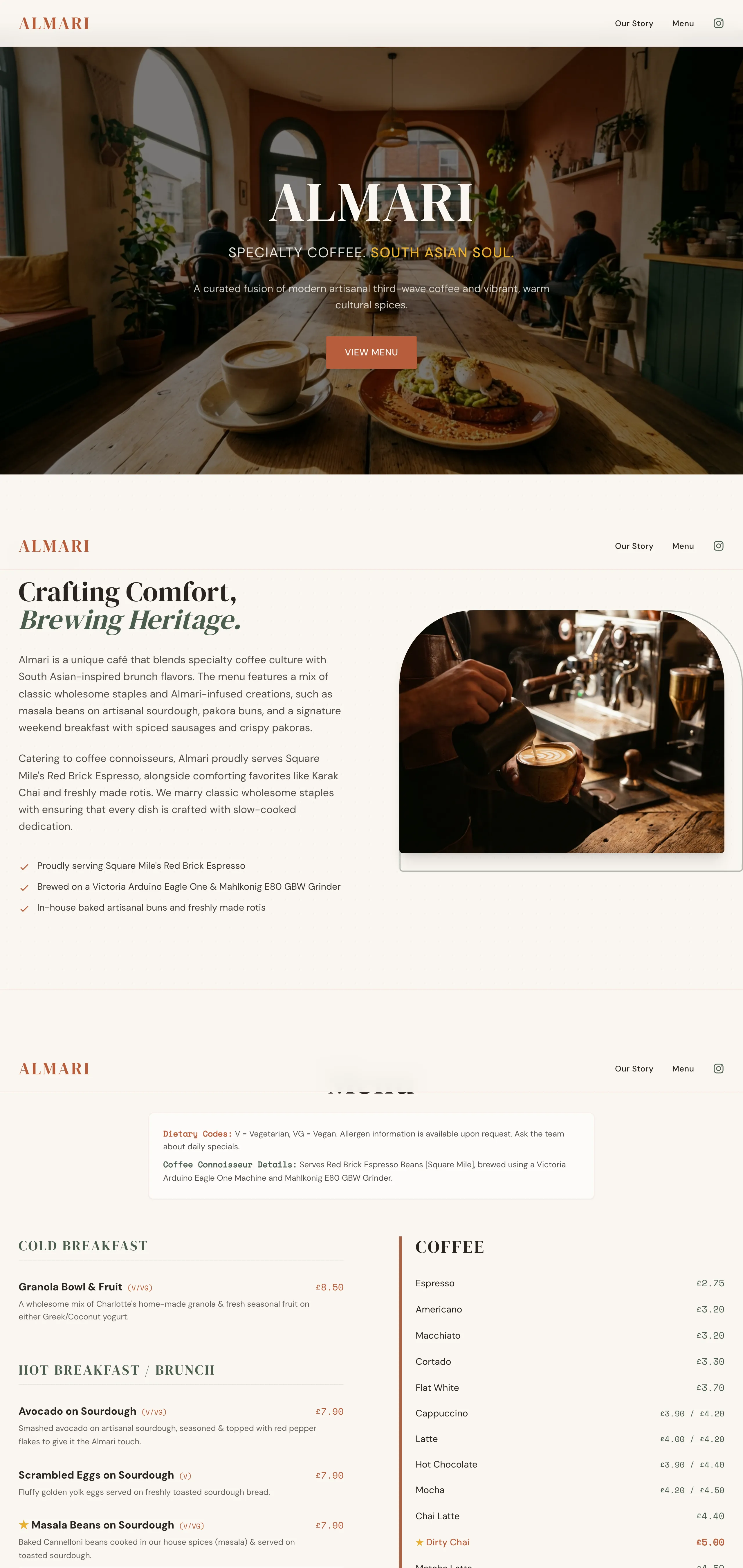
Try It FreeA real restaurant website built with Dinehere
Built from a few menu photos — this is a live site. Take a look.
Tips for German Restaurant Owners
Educate Your Diner
Use your menu descriptions to explain what specific items are. Instead of just writing 'Leberkäse', describe it as 'Bavarian meatloaf, pan-seared and served with egg' to reduce ordering anxiety for British customers.
Showcase Vegetarian Options
German cuisine is stereotyped as meat-heavy. Use your website to highlight dishes like Spätzle with cheese, potato pancakes, and mushroom sauces to attract a wider group of diners.
Highlight Import Quality
If you import your mustard from Düsseldorf or your beer from Munich, mention this on your website. It establishes authenticity and justifies price points to customers comparing you to a supermarket sausage.
Leverage Seasonality
German culinary calendar is strict. Update your website header or special section when it's Asparagus season (May/June) or Chantarelle season. This creates urgency and brings customers back.
Visualise the Portions
German food is famous for generous portions. Use a gallery on your site to show the size of a Schnitzel or a knuckle. This visual value proposition is a huge driver for hungry customers searching online.
Challenges German Restaurants Face Online
Overcoming the 'Beer Hall' Stereotype
Why it matters: Many potential diners assume German restaurants are rowdy drinking dens unsuitable for families or business lunches.
How we help: Dinehere's clean, professional design allows you to control your narrative. By showcasing your refined plating, family atmosphere, and high-quality ingredients through text and images, you present yourself as a legitimate dining destination, not just a pub.
Inconsistent Menu Translation
Why it matters: PDF menus often don't translate well or are hard to read on phones, leaving customers confused about what dishes actually are.
How we help: We build mobile-responsive text menus. This allows you to list the authentic German name followed by a clear English description, ensuring the menu is readable, searchable by Google, and easy to understand for non-German speakers.
Low Visibility for Niche Cuisine
Why it matters: German food is less common than Italian or Indian in the UK. If you aren't visible on search, people won't stumble upon you by accident.
How we help: Dinehere sites are SEO-optimized out of the box. We structure your site so that when someone types 'Schnitzel near me' or 'Authentic German food', your restaurant has a much higher chance of being the answer.
Three Simple Steps
Upload Your Menu
Take photos of your german menu or upload existing images. Our AI reads any format.
AI Creates Your Site
Watch as our AI designs a beautiful website tailored to german cuisine aesthetics.
Go Live Instantly
Preview, make edits if needed, and publish. Your restaurant is now online.
One Price, Everything Included
or £290/year — 2 months free
No contracts, no setup fees. Cancel anytime. Just a beautiful website for your german restaurant.
- AI-powered website generation
- Mobile-responsive design
- Custom subdomain (yourname.dinehere.ai)
- Menu parsing from photos
- SEO optimized
- Hosting included
- SSL certificate included
Common Questions About German Restaurant Websites
Yes, Dinehere allows for instant updates. You can upload a photo of your seasonal specials sheet or edit the text directly, ensuring your digital menu matches what is in the kitchen during these crucial short culinary seasons.
Our templates are mobile-responsive and designed to handle text wrapping gracefully. Words like 'Schwarzwälder Kirschtorte' won't break the layout or look cluttered on small screens.
Absolutely. You can create specific sections for 'Vom Fass' (Draft) and 'Flaschenbiere' (Bottles), allowing you to showcase ABVs, breweries, and descriptions for each.
It works perfectly for both. Whether you run a quick-service 'Imbiss' or a sit-down 'Gasthaus', the layout adapts to show your offerings clearly, from kebabs to roast pork.
While pro photos help, modern smartphones take great pictures. Our clean design elevates even simple photos, and we focus on the text descriptions to do the selling if your images are limited.
Yes. We optimize your site for local SEO. When people in your city search for 'German food near me' or 'Bratwurst restaurant', having a proper website significantly improves your chances of appearing in the results.
Definitely. Dinehere includes an 'About' section where you can tell the story of your Oma's recipes or the region of Germany your food comes from, building a connection with your customers.
Everything's included. Your subscription (£29/month, or £290/year with two months free) covers the website, hosting, and a custom subdomain, so there's no separate hosting bill. If you already own a .com you can connect it too. Cancel anytime.
Best Cities for German Restaurants
Related Cuisines You Might Like
Ready to Build Your German Restaurant Website?
Join other german restaurant owners who built their websites with Dinehere.
Build My German Restaurant Site