
Build Your Polish Restaurant Website
From traditional pierogi houses to modern Polish cuisine, our AI creates warm websites that celebrate Polish heritage.
Polish Restaurant Website Examples

AI-designed for Polish restaurants
Understanding Polish Cuisine
History & Origins
Polish cuisine has evolved over centuries to become a rich tapestry of Slavic traditions blended with German, Hungarian, Jewish, and French influences. Historically, it was divided into the refined game-heavy cuisine of the nobility and the hearty, grain-based diet of the peasantry. Throughout the turbulent 20th century, despite shortages, the Polish kitchen maintained a strong identity centered on resourcefulness, transforming simple root vegetables and meats into deeply flavorful comfort foods. Today, Polish gastronomy is experiencing a renaissance, moving beyond the stereotype of heavy potatoes and cabbage. Modern Polish chefs are rediscovering pre-war recipes, utilizing the country's vast forests for foraging mushrooms and berries, and elevating humble ingredients like beetroot and buckwheat into sophisticated dishes. The cuisine remains anchored in its love for fermentation, soups, and communal feasting.
Regional Styles
Poland's geography dictates its regional flavors. In the north (Pomerania/Mazury), freshwater fish and Baltic herring dominate the table. The mountainous south (Podhale/Tatras) is famous for 'Oscypek' (smoked sheep cheese) and lamb dishes. Silesia in the southwest shares culinary DNA with Germany, known for its specific potato dumplings ('kluski śląskie') and roulades. Eastern Poland retains strong influences from Lithuania and Ukraine, often featuring specific types of pierogi and buckwheat dishes.
Signature Techniques
Fermentation ('kiszenie') is arguably the most defining technique, applied not just to cabbage (sauerkraut) and cucumbers, but also to beets for 'zakwas' used in barszcz. Smoking ('wędzenie') is crucial for the world-renowned Polish sausages and cold cuts. Braising and slow-cooking are standard for meats, while the art of 'lepienie' (wrapping/sealing) is essential for creating the perfect pierogi. Soups are often thickened with sour cream or a roux ('zasmażka').
Dining Culture
Polish hospitality is legendary, summarized by the proverb 'Gość w dom, Bóg w dom' (Guest in the house, God in the house). Meals are often heavy and celebrated at a leisurely pace. The main meal, 'obiad', is typically eaten in the afternoon and consists of a soup followed by a main course. Bread is treated with immense respect, often blessed with the sign of the cross before cutting. Celebratory meals, particularly the 12-dish Christmas Eve supper (Wigilia), are strictly observed cultural pillars.
Our AI understands Polish cuisine
Bilingual Menu Descriptions
Easily display the Polish name (e.g., 'Golonka') alongside the English description (Braised Pork Knuckle) to cater to both homesick expats and curious locals.
Visual Soup Showcase
Since soup is the heart of a Polish meal, dedicate space to high-quality photos of your Żurek or Barszcz to show their richness and texture.
Seasonal Special Highlights
Quickly update your site to feature seasonal ingredients like wild mushrooms in autumn or 'botwinka' (young beet greens) in spring.
Chef's Story Section
Share the heritage behind your recipes—whether they are Grandma's secret pierogi dough or a modern twist on classics—to build an emotional connection.
Beverage Pairing Display
Suggest specific Polish beers or vodka varieties alongside heavy meat dishes directly on the digital menu.
AI That Understands Polish Menus
Our AI automatically recognizes and organizes traditional polish menu categories.
Przystawki i Zakąski
Cold and hot appetizers designed to stimulate the appetite.
Dania Mączne
Flour-based dishes that are pillars of Polish comfort food.
Surówki
Fresh, raw vegetable salads served as side dishes.
Napoje Gorące i Zimne
Beverages including traditional compotes and teas.
Alkohole
Selection of Polish beers and vodkas.
Upload your menu photos and watch the magic happen
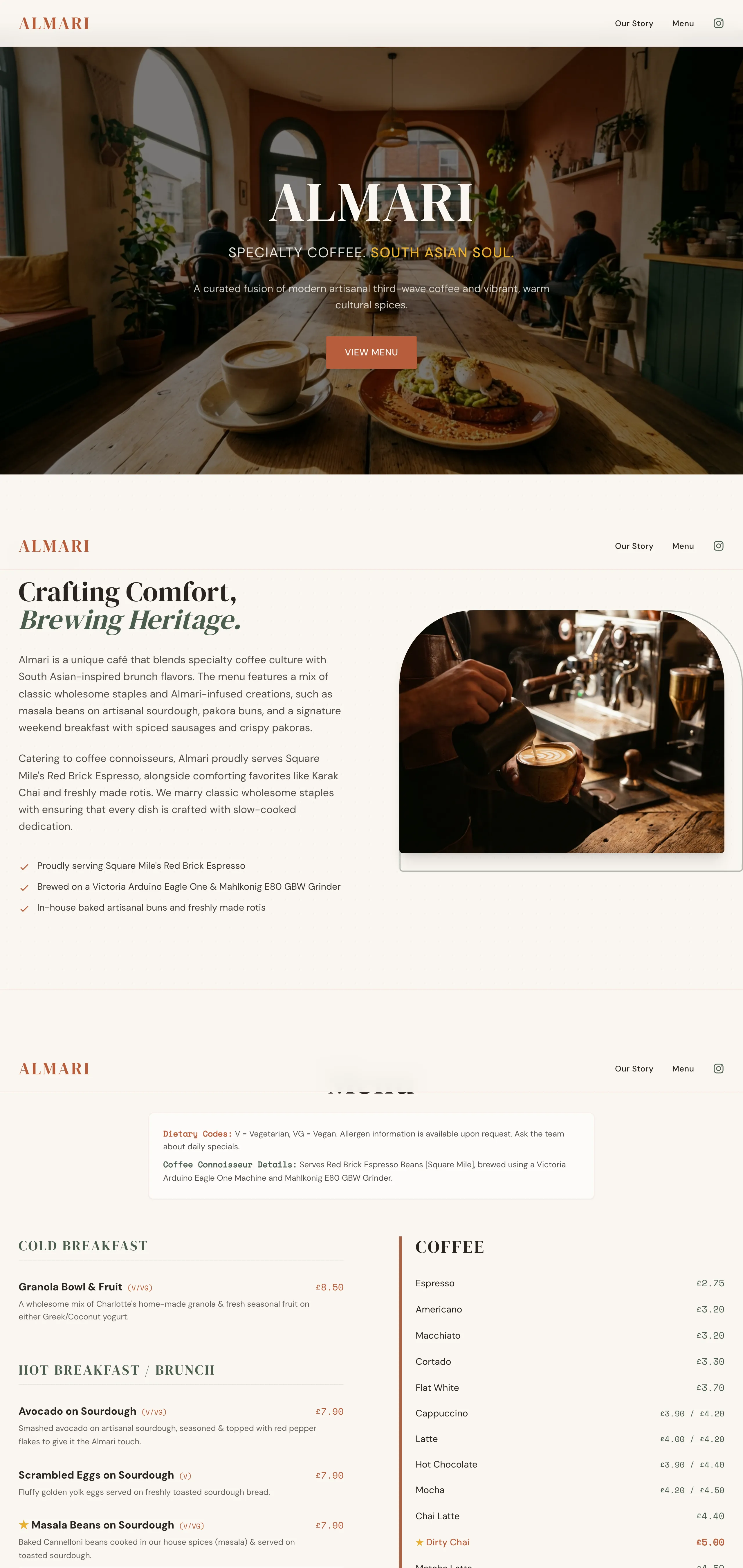
Try It FreeA real restaurant website built with Dinehere
Built from a few menu photos — this is a live site. Take a look.
Tips for Polish Restaurant Owners
Demystify the Menu
Don't just list 'Bigos'. Describe it as 'Hunter's Stew with sauerkraut, fresh cabbage, and mixed meats'. Descriptive language reduces anxiety for customers unfamiliar with Polish cuisine.
Highlight 'Domowe' (Homemade)
In the UK market, 'homemade' is a powerful selling point. If you make your own pierogi dough or pickles in-house, state this clearly on your website to distinguish yourself from frozen alternatives.
Promote the Lunch Special
The 'Zestaw Obiadowy' (Soup + Main) is a great value proposition. Displaying your lunch prices prominently can attract office workers looking for a hearty, affordable alternative to sandwiches.
Showcase the Interior
Polish restaurants often have a specific warmth—whether rustic 'chata' style or modern. Include photos of your dining room to show it's a welcoming place for a sit-down meal, not just a takeaway.
Educate on Portions
Polish portions are famously generous. Mentioning 'Hearty Portions' or 'Great for Sharing' can appeal to groups and families looking for value.
Challenges Polish Restaurants Face Online
The Language Barrier
Why it matters: Potential customers who don't speak Polish may feel intimidated by a menu they can't read, causing them to go elsewhere.
How we help: Dinehere allows for clean, structured text where you can pair authentic Polish names with welcoming English descriptions, bridging the cultural gap.
Stereotypes of 'Greasy' Food
Why it matters: People may avoid Polish food thinking it's unhealthy or unrefined.
How we help: Our image-first design lets you showcase the freshness of your soups, salads, and modern plating, visually correcting misconceptions before the customer even walks in.
Invisibility Outside the Community
Why it matters: Relying on word-of-mouth within the Polish community limits your growth potential.
How we help: By providing a SEO-optimized website, we help your restaurant appear in broader search results on Google, attracting locals and tourists who aren't part of the diaspora.
Three Simple Steps
Upload Your Menu
Take photos of your polish menu or upload existing images. Our AI reads any format.
AI Creates Your Site
Watch as our AI designs a beautiful website tailored to polish cuisine aesthetics.
Go Live Instantly
Preview, make edits if needed, and publish. Your restaurant is now online.
One Price, Everything Included
or £290/year — 2 months free
No contracts, no setup fees. Cancel anytime. Just a beautiful website for your polish restaurant.
- AI-powered website generation
- Mobile-responsive design
- Custom subdomain (yourname.dinehere.ai)
- Menu parsing from photos
- SEO optimized
- Hosting included
- SSL certificate included
Common Questions About Polish Restaurant Websites
Yes. Dinehere allows you to structure your menu so you can keep the authentic Polish names as the headers while providing clear English descriptions underneath, ensuring all customers understand the dishes.
While Dinehere creates a static site for stability, we can set up a specific section for specials or link to your social media feed where daily changes are posted, keeping the core menu professional and consistent.
High-quality photos are key. When you upload photos of your colorful salads (surówki) and delicate soups, our system displays them prominently, helping break stereotypes about Polish food being visually heavy.
Far cheaper. A local agency or designer can charge thousands for a custom site, while Dinehere is a simple subscription (£29/month, or £290/year with two months free) and our AI builds the site for you in minutes. Cancel anytime.
Absolutely. We include prominent buttons that link directly to whichever third-party delivery platforms you use, so customers can easily order for delivery without you paying extra commissions to us.
Yes, our system fully supports UTF-8 encoding, meaning characters like ą, ć, ę, ł, ń, ó, ś, ź, and ż will render perfectly on all devices.
Facebook limits who sees your posts. A website makes you visible on Google to people searching for terms like 'Polish food near me' or 'Best Pierogi in [City]', capturing customers who aren't already following your page.
Yes, the text descriptions in your menu sections can easily include allergen warnings or dietary notes (like 'Vegetarian' or 'Gluten-Free'), which is essential for UK compliance.
Best Cities for Polish Restaurants
Related Cuisines You Might Like
Ready to Build Your Polish Restaurant Website?
Join other polish restaurant owners who built their websites with Dinehere.
Build My Polish Restaurant Site