
Build Your Vietnamese Restaurant Website
From pho houses to modern Vietnamese, our AI creates fresh websites that celebrate your cuisine.
Vietnamese Restaurant Website Examples

AI-designed for Vietnamese restaurants
Understanding Vietnamese Cuisine
History & Origins
Vietnamese cuisine, known natively as 'Ẩm thực Việt Nam', is a sophisticated culinary tradition shaped by over a millennium of history. Its evolution reflects a complex interplay of indigenous traditions and foreign influences, primarily from China's prolonged historical presence and a century of French colonization. At its core, the cuisine follows the principles of 'Ngũ Hành' (Five Elements), striving for a perfect balance of five fundamental tastes: spicy, sour, bitter, salty, and sweet. Unlike heavier Asian cuisines, Vietnamese food famously relies on minimal oil and an abundance of fresh herbs and vegetables. The global rise of Vietnamese cuisine began in earnest following the diaspora of the late 20th century, where refugees carried family recipes for Phở and Bánh Mì to the West. What started as humble street food stalls serving local communities has evolved into a celebrated global gastronomy. Today, the cuisine is revered for its health benefits, freshness, and the distinct clarity of its broths, moving beyond just 'cheap eats' to encompass high-end dining experiences that honor traditional techniques while embracing modern presentations.
Regional Styles
Vietnam's geography creates three distinct culinary regions. Northern cuisine (Hanoi) is known for being subtle and savory, relying heavily on black pepper rather than chili for heat, and is the birthplace of the original, pristine Phở broth. Central cuisine (Hue), influenced by the imperial court, is famous for its intricate presentation, smaller portions, and bold, spicy flavors utilizing shrimp paste and chili oil. Southern cuisine (Ho Chi Minh City) tends to be sweeter and more vibrant, using generous amounts of coconut milk, sugar, and a vast array of tropical herbs and fresh vegetables due to the fertile Mekong Delta.
Signature Techniques
The soul of Vietnamese cooking lies in the mastery of stock and broth, particularly the slow-simmering of beef or chicken bones with charred aromatics like ginger, onions, and star anise to achieve clarity and depth. Fermentation is another pillar, specifically in the production of 'Nước mắm' (fish sauce), which serves as the primary seasoning agent. 'Kho' implies a technique of caramelizing and braising proteins in clay pots, while distinct wrapping techniques using 'Bánh tráng' (rice paper) are essential for both fresh summer rolls and fried spring rolls.
Dining Culture
Vietnamese dining is inherently communal and interactive. Meals are typically served family-style, with dishes placed in the center for sharing. a defining characteristic is the customization at the table; diners are expected to adjust flavors to their liking using a platter of accompaniments—fresh herbs (mint, cilantro, Thai basil), lime wedges, chili paste, and hoisin sauce. The culture of 'Nhậu' (drinking and eating) emphasizes leisurely social gatherings where food facilitates conversation, often accompanied by beer or rice wine.
Our AI understands Vietnamese cuisine
Complex Menu Categorization
Easily separate diverse categories like noodle soups, dry vermicelli bowls, and rice plates without clutter.
Herb & Garnish Explanations
Space to explain the essential role of fresh herbs and table condiments to uninitiated customers.
Broth Storytelling
A dedicated 'About' section to detail your 24-hour broth simmering process and family heritage.
Vegetarian & Vegan Clarity
Clearly highlight 'Chay' (vegetarian) options, crucial for the growing plant-based market.
Visual Ingredient Showcasing
High-quality image support to show the freshness of ingredients like mint, perilla, and bean sprouts.
Lunch Special Visibility
Prominently display Bánh Mì or Pho lunch combos to capture the midday office crowd.
AI That Understands Vietnamese Menus
Our AI automatically recognizes and organizes traditional vietnamese menu categories.
Khai Vị
Traditional appetizers and small plates for sharing
Phở Đặc Biệt
House special noodle soups
Bún
Cold vermicelli noodle bowls
Cơm Đĩa
Broken rice and steamed rice plates
Đặc Sản
Regional specialties and chef's signatures
Đồ Uống
Traditional beverages and Vietnamese coffee
Upload your menu photos and watch the magic happen
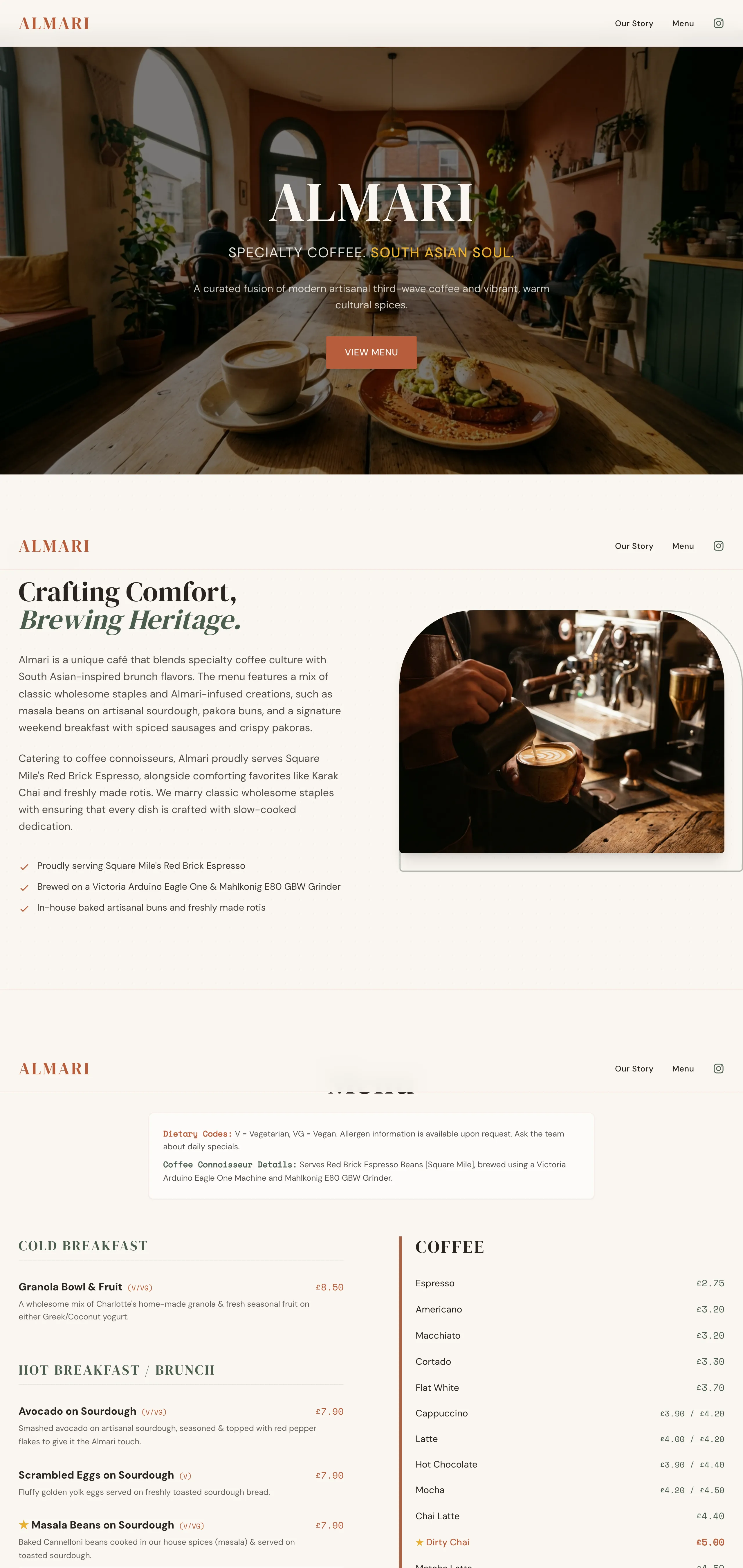
Try It FreeA real restaurant website built with Dinehere
Built from a few menu photos — this is a live site. Take a look.
Tips for Vietnamese Restaurant Owners
Photograph Herbs, Not Just Soup
Brown broth can look unappealing in photos. Instead, photograph your dishes with the fresh herb basket, lime, and chilies next to the bowl to emphasize freshness and color contrast.
Tell the Story of Your Broth
Use the 'About' section to highlight how long you simmer your bones (e.g., '18-hour bone broth'). This specific detail signals quality and authenticity to food lovers.
Clarify Dipping Sauces
Vietnamese dipping sauces can be confusing. Briefly describe the flavor profile of your sauces (e.g., 'zesty ginger fish sauce' or 'rich peanut hoisin') in the menu descriptions.
Highlight the Coffee Culture
Don't hide the coffee at the bottom of the menu. Create a feature or distinct section for Vietnamese Coffee, as it is a major draw for customers seeking an authentic experience.
Emphasize 'Gluten-Free' Naturally
Many Vietnamese dishes (like those with rice noodles and rice paper) are naturally gluten-free. Explicitly labeling these can attract a large demographic of health-conscious diners.
Challenges Vietnamese Restaurants Face Online
Reliance on Third-Party Menu Listings
Why it matters: Delivery apps often misspell dishes, strip away descriptions, or use generic photos, making your authentic food look like generic fast food.
How we help: Dinehere gives you a central 'source of truth' website where you control the spelling, descriptions, and presentation of your culture, independent of delivery apps.
Invisibility to 'Near Me' Searches
Why it matters: If you don't have a website linked to your Google Business Profile, Google is less likely to show your restaurant in top local search results.
How we help: We provide a simplified, SEO-optimized landing page that signals to Google that you are a legitimate, active business, helping you rank higher in local maps.
Perception of 'Cash Only/Hole in the Wall'
Why it matters: While 'hole in the wall' can be charming, zero online presence can make new customers worry about hygiene or reliability.
How we help: A professional, clean website instantly establishes trust. It shows you care about customer experience without needing an expensive design agency.
Three Simple Steps
Upload Your Menu
Take photos of your vietnamese menu or upload existing images. Our AI reads any format.
AI Creates Your Site
Watch as our AI designs a beautiful website tailored to vietnamese cuisine aesthetics.
Go Live Instantly
Preview, make edits if needed, and publish. Your restaurant is now online.
One Price, Everything Included
or £290/year — 2 months free
No contracts, no setup fees. Cancel anytime. Just a beautiful website for your vietnamese restaurant.
- AI-powered website generation
- Mobile-responsive design
- Custom subdomain (yourname.dinehere.ai)
- Menu parsing from photos
- SEO optimized
- Hosting included
- SSL certificate included
Common Questions About Vietnamese Restaurant Websites
Yes, Dinehere fully supports UTF-8 characters. You can and should use proper spellings like 'Bún Bò Huế' or 'Cơm Tấm' to maintain authenticity and professionalism.
We organize long menus into clean, collapsible sections. This prevents the 'infinite scroll' problem and makes it easy for customers to find their favorite number or category quickly.
While the website itself is a page, having a Dinehere site allows you to link a professional URL to your Google Business Profile, which significantly improves your legitimacy and ranking in local search results.
Not at all. You can update descriptions or add notes about seasonal availability in seconds using your mobile phone, ensuring customers know exactly what to expect.
You can use the category descriptions to briefly explain the difference (e.g., 'Noodle Soup' vs. 'Dry Vermicelli Salad') so customers feel confident ordering something new.
No. If you don't have photos for every dish, our design creates a clean text-based list that looks elegant. It's better to have no photo than a bad photo of brown soup.
Yes, you can add allergen notes to dish descriptions. This is particularly important for peanuts and shellfish, which are common in Vietnamese cuisine.
Everything's included. Your subscription (£29/month, or £290/year with two months free) covers the website, hosting, and a custom subdomain, so there's no separate hosting bill. If you already own a .com you can connect it too. Cancel anytime.
Best Cities for Vietnamese Restaurants
Related Cuisines You Might Like
Ready to Build Your Vietnamese Restaurant Website?
Join other vietnamese restaurant owners who built their websites with Dinehere.
Build My Vietnamese Restaurant Site