
Build Your Vegan Restaurant Website
From casual vegan cafes to upscale plant-based dining, our AI creates fresh websites that celebrate your mission.
Vegan Restaurant Website Examples

AI-designed for Vegan restaurants
Understanding Vegan Cuisine
History & Origins
The history of vegan cuisine is far more ancient and complex than its modern popularity suggests. While the term 'vegan' was coined in 1944 by Donald Watson in the United Kingdom, the practice of abstaining from animal products dates back millennia, rooted in the concept of 'Ahimsa' (non-violence) found in ancient Indian philosophies and religions like Jainism, Hinduism, and Buddhism. Similarly, strictly plant-based diets were observed by certain orders in Ancient Greece, most notably the Pythagoreans. For centuries, what we now call veganism existed primarily as a religious or philosophical discipline rather than a culinary genre. In the late 20th and early 21st centuries, vegan cuisine underwent a radical transformation. It moved from the fringes of counter-culture health food stores—often characterized by simple lentil stews and brown rice—to the forefront of culinary innovation. Chefs began experimenting with molecular gastronomy to replicate the textures and flavors of meat and dairy using plants. Today, vegan cuisine is a sophisticated culinary discipline that ranges from 'junk food' comfort classics made with vital wheat gluten to high-end, vegetable-forward fine dining that celebrates the intrinsic flavors of produce without trying to mimic meat at all.
Regional Styles
Vegan cuisine varies drastically depending on the philosophy of the kitchen. 'Whole Food Plant-Based' (WFPB) focuses on unprocessed ingredients, avoiding oils and refined sugars, heavily relying on legumes, whole grains, and raw produce. Conversely, 'Comfort Vegan' or 'Junk Food Vegan' mimics Western fast food using seitan (wheat meat), soy proteins, and deep-frying techniques to create burgers, wings, and mac 'n' cheese that rival their animal-product counterparts. Globally, regional variations often adapt local cuisines. For example, 'Ital' cuisine from Jamaica is a strictly natural, often vegan diet rooted in Rastafarianism, emphasizing unmodified ingredients. In East Asia, particularly within Chinese and Vietnamese traditions, 'Temple Cuisine' has utilized gluten, tofu, and mushrooms to create elaborate mock meats for centuries. Modern Raw Veganism takes a different approach entirely, using dehydration and blending at low temperatures to preserve enzymes, resulting in unique textures like zucchini noodles and cashew-based cheesecakes.
Signature Techniques
Modern vegan cooking relies on ingenious biochemical techniques to replicate familiar textures. 'Washing flour' is a labor-intensive method used to isolate gluten protein to create fibrous, meat-like seitan. Fermentation is crucial for creating dairy alternatives; culturing cashew or almond milk with probiotics creates sharp, complex cheeses that age similarly to dairy cheese. Aquafaba (chickpea brine) is whipped to create stable meringues and mousses, replacing egg whites. Flavor layering is another critical technique. Without animal fats to carry flavor, chefs rely on 'umami bombs' like nutritional yeast ('nooch'), miso paste, soy sauce, and smoked paprika to build depth. Soaking and blending nuts, particularly cashews and macadamias, provides the high-fat cream base necessary for rich sauces, dressings, and desserts.
Dining Culture
Dining in a vegan establishment is often an intersection of ethics, health, and sustainability. There is a strong emphasis on transparency; diners expect to know where ingredients are sourced, whether the soy is non-GMO, and if the palm oil is sustainable. The atmosphere can range from activism-focused community hubs with leaflet stands to upscale, sleek restaurants where the plant-based nature of the food is incidental to its quality. Inclusivity is a hallmark of vegan dining culture. Because the food avoids common allergens like dairy and eggs (and often avoids gluten in health-focused spots), these restaurants frequently become safe havens for groups with mixed dietary restrictions. The service style often involves a higher degree of storytelling, with servers explaining the origins of unique ingredients or the process behind house-made ferments to bridge the gap for customers unfamiliar with plant-based terminology.
Our AI understands plant-based
Ethical Storytelling Platform
A dedicated 'About' section to explain your sourcing philosophy, sustainability efforts, and the 'why' behind your plant-based mission, which is crucial for vegan diners.
Ingredient Transparency
Menu layouts that allow for detailed descriptions, helping you clearly list ingredients for customers concerned about allergens like nuts, soy, or gluten.
Visual Freshness
High-quality image parsing that showcases the vibrant colors of fresh produce, countering the misconception that vegan food is bland or brown.
Seasonal Menu Updates
Simple text-based editing allows you to instantly update menu items based on market availability and seasonal crop rotations without needing a developer.
Dietary Signposting
Clear text hierarchy to differentiate between 'Raw', 'Gluten-Free', or 'Nut-Free' options, which is a frequent necessity for health-conscious patrons.
AI That Understands Vegan Menus
Our AI automatically recognizes and organizes traditional vegan menu categories.
Small Plates & Grazing
Shareable starters like loaded hummus, cauliflower wings, or kimchi fritters.
The Butcher's Block (Plant-Based)
Hearty, protein-rich mains featuring seitan steaks, tempeh ribs, or mushroom wellingtons.
Earth Bowls
Nutrient-dense combinations of ancient grains, massaged kale, roasted roots, and tahini dressings.
Ferments & Cultured
House-made cashew cheeses, artisanal pickles, kombucha, and sourdough breads.
Botanical Elixirs
Cold-pressed juices, superfood lattes (turmeric/matcha), and adaptogenic smoothies.
Guilt-Free Sweets
Raw cheesecakes, avocado chocolate mousse, and aquafaba meringues.
Upload your menu photos and watch the magic happen
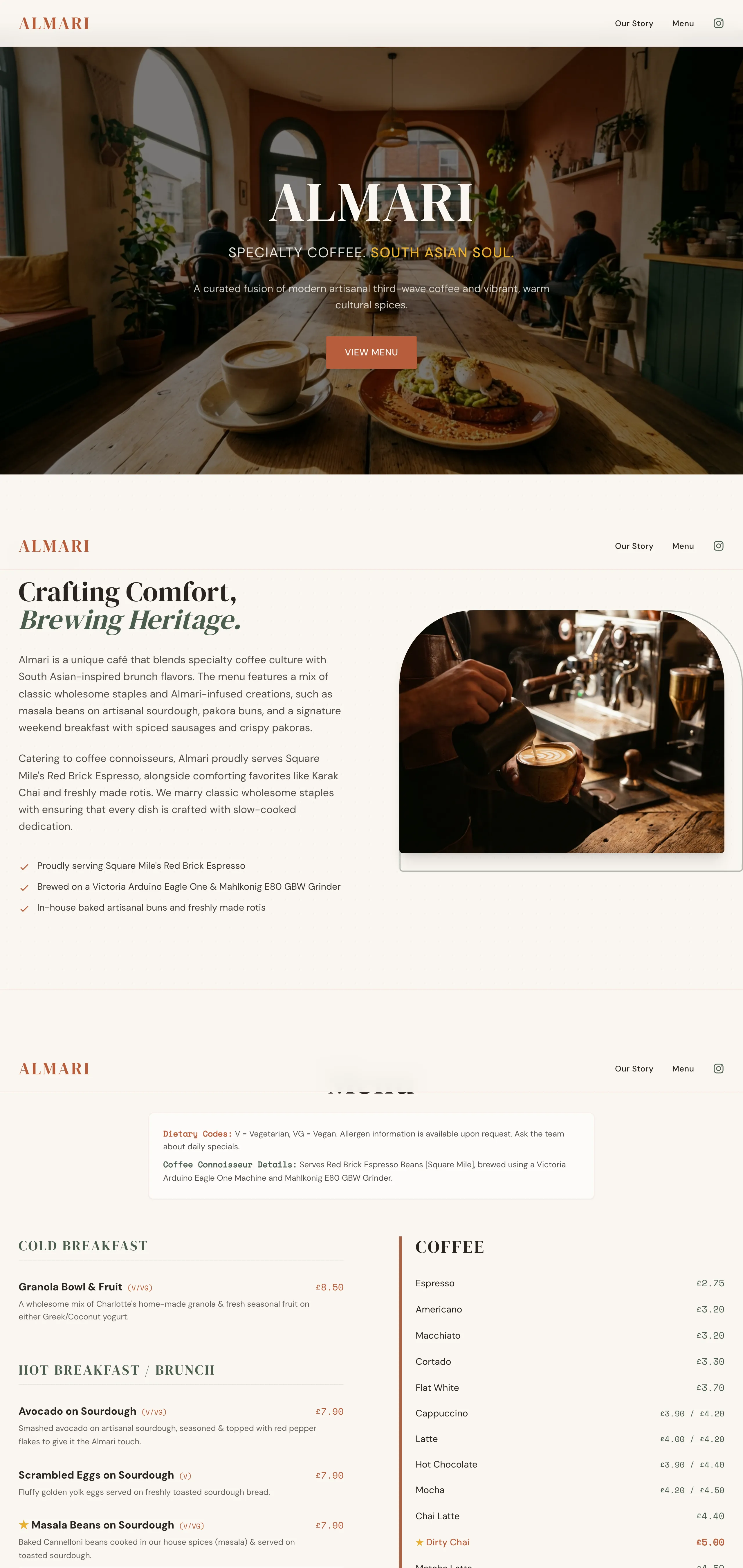
Try It FreeA real restaurant website built with Dinehere
Built from a few menu photos — this is a live site. Take a look.
Tips for Vegan Restaurant Owners
Describe Textures Vividly
Since customers often fear vegan food will be 'mushy' or 'dry,' use descriptive words like 'crispy,' 'charred,' 'velvety,' and 'crunchy' in your menu descriptions to evoke mouthfeel and appetite.
Highlight the 'Hero' Ingredient
Don't just say 'Vegan Burger.' Specify 'House-smoked Black Bean & Quinoa Patty.' Specificity implies craftsmanship and justifies price points, distinguishing homemade items from frozen processed alternatives.
Address Allergens Upfront
Vegan food relies heavily on nuts and soy, which are major allergens. Clearly labeling items as (NF) or (SF) on your website builds trust and captures the business of customers with strict dietary needs.
Use 'Plant-Based' for Broader Appeal
While 'Vegan' is a strong identity, using terms like 'Plant-Based' or 'Vegetable-Forward' in your website's story section can make your restaurant feel more inviting to flexitarians who might be intimidated by the word 'Vegan.'
Showcase Your Sourcing
Use your 'About' section to list local farms or ethical suppliers you work with. This validates your pricing and appeals to the ethical values that drive many customers to choose vegan dining.
Challenges Vegan Restaurants Face Online
The 'Rabbit Food' Stigma
Why it matters: Potential customers may skip your restaurant believing the food won't be filling or is just 'salad.'
How we help: Dinehere's layout allows you to present robust menu descriptions and ample space for your 'story,' helping you frame your food as hearty, complex, and satisfying cuisine.
Ingredient Scrutiny
Why it matters: Vegan diners are label-readers. If they can't see exactly what is in a dish (oil-free, soy-free, etc.), they often won't visit.
How we help: We provide a clean, text-focused menu presentation that makes it easy to list ingredients and dietary keys explicitly, unlike image-based PDF menus that are hard to read on phones.
High Competition in Niche Markets
Why it matters: In cities like London or Brighton, the vegan market is crowded. Relying on foot traffic isn't enough.
How we help: By providing a properly indexed website (not just a social profile), Dinehere helps you capture the search traffic for specific terms like 'organic vegan' or 'raw food' that social media algorithms often miss.
Three Simple Steps
Upload Your Menu
Take photos of your vegan menu or upload existing images. Our AI reads any format.
AI Creates Your Site
Watch as our AI designs a beautiful website tailored to vegan cuisine aesthetics.
Go Live Instantly
Preview, make edits if needed, and publish. Your restaurant is now online.
One Price, Everything Included
or £290/year — 2 months free
No contracts, no setup fees. Cancel anytime. Just a beautiful website for your vegan restaurant.
- AI-powered website generation
- Mobile-responsive design
- Custom subdomain (yourname.dinehere.ai)
- Menu parsing from photos
- SEO optimized
- Hosting included
- SSL certificate included
Common Questions About Vegan Restaurant Websites
Yes. Our menu builder focuses on clear text descriptions. You can easily add notations like (GF), (NF), or (SF) next to any item description to assist customers with allergies, which is common in the vegan community.
Not at all. Dinehere is designed for instant updates. You can log in and edit a dish's name or description in seconds, ensuring your website always matches what you are serving in the kitchen.
Yes, all Dinehere websites are fully mobile-responsive. This is critical for vegan restaurants, as a large portion of the plant-based demographic finds restaurants via social media on their phones.
No. While photos help, our clean, typography-led designs ensure your menu looks professional even without images. A well-written description of a 'Jackfruit Pulled Pork Burger' often sells better than a mediocre photo.
Absolutely. We include a dedicated story/about section where you can detail your ethical commitments, local sourcing partners, and environmental mission, helping you connect with values-driven customers.
Yes. We automatically optimize your site for local SEO. When people search for 'vegan food near me' or 'plant-based restaurant [City]', having a proper website gives you a much better chance of appearing than just having a Facebook page.
Yes, you can upload and categorize different menu sections. You can clearly separate your Morning Smoothie Bowls from your Evening Small Plates to avoid confusion.
Dinehere is a simple, flat subscription (£29/month, or £290/year with two months free) with hosting and a custom subdomain included. The price doesn't change with your traffic, there are no setup fees or hidden costs, and you can cancel anytime.
Best Cities for Vegan Restaurants
Related Cuisines You Might Like
Ready to Build Your Vegan Restaurant Website?
Join other vegan restaurant owners who built their websites with Dinehere.
Build My Vegan Restaurant Site