
Build Your BBQ Restaurant Website
From backyard BBQ to championship pitmasters, our AI creates mouth-watering websites that showcase your smoke.
BBQ Restaurant Website Examples

AI-designed for BBQ restaurants
Understanding BBQ Cuisine
History & Origins
Barbecue in the United States is more than just a method of cooking; it is a complex tapestry woven from Indigenous American, Spanish, and African culinary traditions. The word itself derives from the Taino word 'barabicu,' meaning a framework of sticks, which the Spanish adopted as 'barbacoa.' As settlers moved into the American South, this technique of slow-cooking meat over indirect heat became the standard for handling tough, inexpensive cuts of pork and beef. Enslaved Africans played a critical role in developing the flavor profiles we recognize today, utilizing their expertise in spices and slow-cooking methods to transform brisket, ribs, and shoulders into tender delicacies. Over the centuries, barbecue evolved from a necessity of preservation and community feasting into a highly regionalized art form. By the early 20th century, roadside stands and church picnics solidified BBQ as a staple of Southern culture. Today, it stands as one of America's most significant contributions to global cuisine, with pitmasters revered as artisans who manipulate fire, smoke, and time to create flavors that cannot be replicated by modern shortcuts.
Regional Styles
The American barbecue landscape is fiercely divided by geography. In the Carolinas, the focus is predominantly on whole hog or pork shoulder, often dressed with a vinegar-pepper sauce in the East or a mustard-based 'gold' sauce in the South. Moving west to Memphis, the emphasis shifts to pork ribs served 'dry' with a heavy dusting of spices or 'wet' with a tomato-based sauce. Kansas City is the melting pot of BBQ, known for using a wide variety of meats—including burnt ends—slathered in a thick, sweet, molasses-based sauce. Texas barbecue, particularly in the Central region, is a distinct beast where beef is king. Here, salt, pepper, and post oak smoke are the primary ingredients for brisket and sausage, with sauce often considered unnecessary or served strictly on the side. Further distinct styles exist in Alabama (white sauce chicken) and Kentucky (mutton), proving that barbecue is far from a monolith.
Signature Techniques
The defining technique of true barbecue is 'low and slow'—cooking meat at low temperatures (usually between 225°F and 275°F) for extended periods, sometimes up to 18 hours. This process breaks down the collagen in tough cuts, rendering them tender while infusing them with the flavor of wood smoke. The choice of wood—hickory, mesquite, oak, pecan, or fruitwoods—serves as a primary ingredient, imparting distinct flavor profiles. Mastering the 'stall' (a period during cooking where the internal temperature plateaus) and achieving the perfect 'bark' (the dark, flavorful crust formed by the reaction of smoke and dry rub) are hallmarks of a skilled pitmaster. Whether using offset smokers, drum smokers, or pit houses, the goal is always to manage airflow and temperature with precision.
Dining Culture
Barbecue dining culture is inherently casual, communal, and unpretentious. It is food meant to be eaten with hands, often served on butcher paper or simple trays rather than fine china. The atmosphere is typically rustic, with the smell of wood smoke greeting customers before they even enter the building. Long lines are not a nuisance but a sign of quality, often functioning as a social hour for enthusiasts. A unique aspect of BBQ culture is the concept of 'until sold out.' Because the cooking process takes half a day or more, pitmasters cannot simply whip up more brisket on demand. This scarcity creates a ritualistic aspect to dining, where arriving early is essential to secure the best cuts, particularly highly prized items like burnt ends or rib tips.
Our AI understands BBQ
By-The-Pound Pricing Format
Format your menu to clearly display bulk meat pricing alongside plate prices, essential for BBQ joints that sell by weight.
Catering & Bulk Order Highlight
A dedicated section to showcase 'Family Packs' or whole brisket orders, driving high-ticket sales without complex forms.
Sold-Out Policy Clarity
Prominently display your 'Open Until Sold Out' policy to manage customer expectations and create urgency.
Sauce Profile Descriptions
Space to describe your signature sauces (vinegar, sweet, mustard, spicy) so customers know exactly what to expect.
Pitmaster's Story Section
A focused area to detail your smoking process, wood types, and history, building the authenticity customers crave.
AI That Understands BBQ Menus
Our AI automatically recognizes and organizes traditional bbq menu categories.
Meat by Weight
Bulk offerings for serious carnivores.
The Trays
Pre-set combinations of meats and sides.
Fixins & Sides
Essential accompaniments like collards, slaw, and beans.
Sweet Endings
Traditional Southern desserts.
Lil' Smokers
Kids menu portions.
Bulk & Family Packs
Large format takeout options.
Upload your menu photos and watch the magic happen
Try It FreeA real restaurant website built with Dinehere
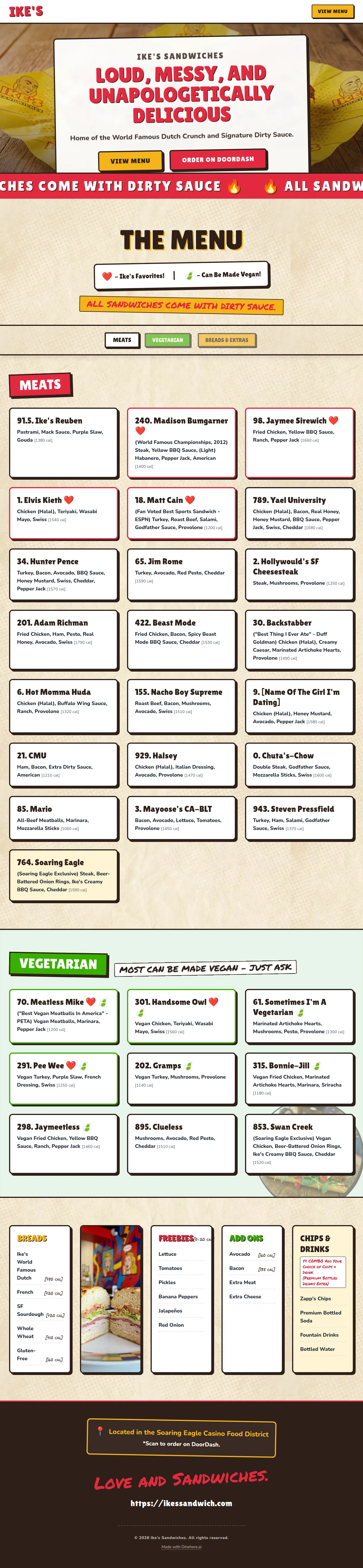
Built from a few menu photos — this is a live site. Take a look.
Tips for BBQ Restaurant Owners
Highlight Your Fuel Source
BBQ lovers are purists. Explicitly state whether you use hickory, oak, or mesquite in your website's story section; it signals authenticity and quality to connoisseurs.
Post Your 'Sold Out' Policy
Don't apologize for running out of food; frame it as a quality standard. Use your website to explain that you cook fresh daily and 'when it's gone, it's gone' to train customers to arrive early.
Simplify Your Menu for Mobile
Avoid massive PDF downloads. A clean, digital menu list allows hungry customers to make decisions quickly while navigating to your location.
Showcase the Process, Not Just the Plate
In your 'About' section, talk about the hours involved. Mentioning '14-hour smoked brisket' adds value to the price tag that a simple photo cannot convey.
Direct Catering Leads to Phone
Use your website to display your bulk menu options but encourage a phone call for orders. This personal touch helps you upsell and manage your pit capacity better than an automated form.
Challenges BBQ Restaurants Face Online
Reliance on Social Media for Menus
Why it matters: Facebook and Instagram posts have short lifespans and aren't searchable. Potential customers searching Google won't dig through months of photos to find a price list.
How we help: Dinehere provides a permanent, SEO-friendly home for your menu that Google can actually read, ensuring you appear in search results when it matters.
Managing 'Market Price' Perception
Why it matters: Beef prices fluctuate, and customers can be scared off by 'MP' or outdated lower prices found on third-party sites like Yelp.
How we help: With our simple editor, you can update prices in seconds as the market changes, ensuring your online pricing always matches what's on the chalkboard.
Invisibility to Travelers
Why it matters: BBQ is a destination cuisine. Road-trippers search 'best BBQ near me,' and if you don't have a website, Google often pushes you to the bottom of the list below chains.
How we help: We create a lightweight, fast-loading site that signals to Google that you are a legitimate, active business, helping you capture that high-intent tourist traffic.
Three Simple Steps
Upload Your Menu
Take photos of your bbq menu or upload existing images. Our AI reads any format.
AI Creates Your Site
Watch as our AI designs a beautiful website tailored to bbq cuisine aesthetics.
Go Live Instantly
Preview, make edits if needed, and publish. Your restaurant is now online.
One Price, Everything Included
or $390/year — 2 months free
No contracts, no setup fees. Cancel anytime. Just a beautiful website for your bbq restaurant.
- AI-powered website generation
- Mobile-responsive design
- Custom subdomain (yourname.dinehere.ai)
- Menu parsing from photos
- SEO optimized
- Hosting included
- SSL certificate included
Common Questions About BBQ Restaurant Websites
Yes. Our menu parser is designed to handle the complex pricing structures typical of BBQ joints, allowing you to list a single item, like Brisket, with multiple price points for sandwiches, plates, or bulk weight.
Not at all. You can upload a photo of your new printed menu or update the text directly in minutes. This is perfect for rotating specials or when market prices for beef fluctuate.
We recommend adding a 'Catering' section to your menu that lists your bulk packages (like 'The Tailgater' or 'Family Feast') and directs customers to call or email you for these large orders. It filters serious leads effectively.
Yes, this is critical for BBQ spots. Many customers search for 'BBQ near me' while driving or traveling. Your Dinehere site is mobile-optimized automatically so they can read your menu easily on a small screen.
Absolutely. We encourage you to put this in your 'About' section or as a prominent note on the menu. It actually helps marketing by creating a sense of scarcity and high demand.
For BBQ, authentic photos often work better than polished studio shots. A clear photo of your brisket on the cutting board or ribs in the smoker taken with a decent smartphone is perfect for the site.
Yes. Having a dedicated website link to add to your Google Business Profile is one of the biggest ranking factors. It proves your business is active and legitimate.
Yes, and you should! Use the About section to explain that you use Post Oak or Hickory and smoke for 12+ hours. This detail convinces BBQ aficionados to visit you over a chain restaurant.
Best Cities for BBQ Restaurants
Related Cuisines You Might Like
Ready to Build Your BBQ Restaurant Website?
Join other bbq restaurant owners who built their websites with Dinehere.
Build My BBQ Restaurant Site