
Build Your Steakhouse Website
From classic chophouses to modern steakhouses, our AI creates sophisticated websites that showcase your premium cuts.
Steakhouse Restaurant Website Examples

AI-designed for Steakhouse restaurants
Understanding Steakhouse Cuisine
History & Origins
The modern steakhouse traces its lineage back to the chophouses of late 17th-century London, which were exclusively male enclaves serving large portions of meat and ale. However, the concept truly flourished in the United States during the mid-19th century, particularly in New York City and Chicago. As the railway systems expanded and the Chicago stockyards became the hub of the American meat industry, 'beefsteak banquets' evolved into formal dining establishments. These venues became symbols of industrial prosperity, where politicians and tycoons would conduct business over massive cuts of prime beef. Throughout the 20th century, the steakhouse cemented itself as a quintessential American dining institution. The post-World War II era saw the rise of the 'supper club' in the Midwest, blending the steakhouse menu with a more social, entertainment-focused atmosphere. Today, the steakhouse landscape has diversified significantly, ranging from classic, wood-paneled institutions preserving Victorian-era traditions to sleek, modern venues that focus on sustainable sourcing, grass-fed varieties, and global influences like Japanese Wagyu and Argentine grilling techniques.
Regional Styles
In the United States, regional differences significantly influence the steakhouse experience. The New York style is characterized by the classic chophouse aesthetic—dark wood, white tablecloths, and dry-aged cuts often broiled at extremely high temperatures. In the Midwest, particularly Chicago and Omaha, there is a strong emphasis on corn-fed, wet-aged beef known for its tenderness and marbling, often served in larger, heartier portions. The West Coast and Texas often incorporate mesquite grilling and open-flame cooking, lending a distinct smoky flavor profile that differs from the gas-broiled crusts of the East Coast. Additionally, the 'supper club' style of Wisconsin introduces a distinct culture of relish trays and brandy old-fashioned cocktails as mandatory precursors to the meal.
Signature Techniques
The signature of a premium steakhouse lies in its aging and cooking methods. Dry-aging is perhaps the most revered technique, where beef is stored in climate-controlled environments for weeks to encourage enzymatic breakdown, tenderizing the meat and developing complex, nutty flavors. Wet-aging, where meat is vacuum-sealed, retains moisture and provides a milder flavor profile. Cooking usually involves ultra-high-heat broilers (often reaching 1500°F/800°C) to achieve the perfect 'Pittsburgh rare' char—crispy on the outside while cool and red on the inside—or wood-fired grilling for a rustic, smoky finish. Finishing with compound butters or tallow is common to enhance richness.
Dining Culture
Steakhouse dining is often synonymous with celebration, business, and indulgence. It is one of the few dining formats that remains heavily structured around the à la carte model, where the protein is the solitary star, and sides are shared family-style among the table. This encourages a communal aspect to the meal despite the individual nature of the main course. The service style typically leans towards formal and attentive, with tableside preparations—such as Caesar salads or carving large cuts like Chateaubriand—adding a theatrical element to the experience. The atmosphere usually balances masculine elegance with comfort, designed to keep diners lingering over heavy reds and desserts.
Our AI understands steakhouses
Sourcing Storyboard
Dedicate sections to the specific ranches, breeds (Angus, Wagyu, Hereford), and aging processes used, which justifies premium pricing to educated diners.
High-Contrast Dark Mode
Premium steakhouse aesthetics often rely on dark elegance; high-contrast themes make food photography pop while maintaining a luxurious vibe.
À La Carte Logic
Menu layouts specifically designed to separate Cuts, Sauces, and Toppers, preventing the clutter often found when trying to force steak menus into standard templates.
Market Price Management
Simple text editing allows owners to update 'MP' items daily based on butcher costs without needing a developer.
Private Dining Showcase
A focused section to display private rooms for corporate events and rehearsal dinners, which are major revenue drivers for steakhouses.
AI That Understands Steakhouse Menus
Our AI automatically recognizes and organizes traditional steakhouse menu categories.
Raw Bar & Chilled
Fresh seafood starters served on ice.
Butcher's Reserve
The highest tier of cuts available.
Accompaniments
Sauces and butters to customize the steak.
For the Table
Rich, sharable vegetable and potato sides.
Chops & Poultry
Alternatives to beef.
After Dinner
Desserts and digestive drinks.
Upload your menu photos and watch the magic happen
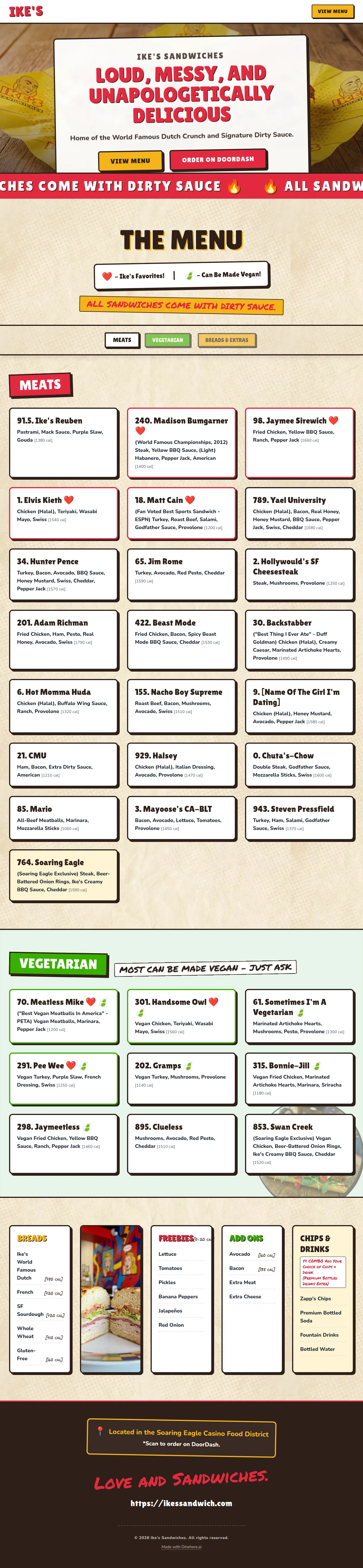
Try It FreeA real restaurant website built with Dinehere
Built from a few menu photos — this is a live site. Take a look.
Tips for Steakhouse Restaurant Owners
Visualize the Doneness
Consider adding a small text description in your menu footer explaining your chef's definitions of Rare, Medium-Rare, etc. This manages customer expectations and reduces the number of steaks sent back to the kitchen.
Highlight Local Ranches
If you source from specific farms, name them in your menu descriptions. 'Creekstone Farms Ribeye' sells better and commands a higher price than just 'Ribeye' because it signals quality and traceability.
Keep the 'MP' Updated
Nothing frustrates a customer more than asking for the market price and finding out it's double what they expected. Use the easy text editor to keep these rough ranges current so guests feel respected.
Showcase the Experience
Use your 'About' section to describe the atmosphere—is it a quiet romantic spot or a loud, energetic chophouse? Setting the mood via text helps attract the right crowd for your specific vibe.
Separate the Wine List
Don't bury your wine list at the bottom of the food menu. Create a distinct section for it. Serious steak diners often choose a restaurant based on the depth of the Cabernets and Malbecs available.
Challenges Steakhouse Restaurants Face Online
PDF-Only Menus
Why it matters: Steakhouse menus are often long and complex. PDF menus require downloading and pinching-to-zoom on phones, which frustrates hungry mobile users.
How we help: Dinehere converts your menu into a clean, responsive HTML format that reads perfectly on any smartphone without downloading files.
Perception of Price Opacity
Why it matters: High-end steakhouses can be intimidating. If prices aren't listed online, many customers assume it's 'too expensive' and go elsewhere.
How we help: Our simple menu editor allows you to display prices clearly (or price ranges), reducing intimidation and attracting customers who appreciate transparency.
Invisibility to Travelers
Why it matters: Business travelers and tourists live by Google Maps. Without an SEO-optimized site, a local steakhouse is invisible to high-value transient customers.
How we help: We provide a fast, SEO-friendly site structure that helps your restaurant rank locally for terms like 'steakhouse near me' or 'best prime rib'.
Three Simple Steps
Upload Your Menu
Take photos of your steakhouse menu or upload existing images. Our AI reads any format.
AI Creates Your Site
Watch as our AI designs a beautiful website tailored to steakhouse cuisine aesthetics.
Go Live Instantly
Preview, make edits if needed, and publish. Your restaurant is now online.
One Price, Everything Included
or $390/year — 2 months free
No contracts, no setup fees. Cancel anytime. Just a beautiful website for your steakhouse restaurant.
- AI-powered website generation
- Mobile-responsive design
- Custom subdomain (yourname.dinehere.ai)
- Menu parsing from photos
- SEO optimized
- Hosting included
- SSL certificate included
Common Questions About Steakhouse Restaurant Websites
Yes, you can easily update text fields to say 'MP' or list the current price. Since the website builder is text-based for prices, you can change this instantly from your phone as market rates fluctuate.
Our 'About' or 'Story' section is perfect for this. You can write a detailed explanation of your aging locker and process to educate customers before they even sit down.
Yes. We recommend creating a dedicated 'Enhancements' or 'Toppers' menu section right below your steaks, which clearly lists add-ons like Béarnaise, Lobster Tail, or Bleu Cheese crusts.
Absolutely. While food photos are great, steakhouses often benefit from a text-heavy, classic menu design. You can use a few high-quality atmospheric shots of the dining room or the grill instead of photographing every single steak.
Yes, this is critical. Many steakhouse customers are business travelers looking for a place to eat nearby. Our sites are mobile-responsive by default, ensuring your menu and location are easy to find on a small screen.
Yes. You can create a specific section for your wine list. If it changes frequently, you can paste the text directly into the editor without needing to upload PDF files that are hard to read on phones.
We recommend adding this to the footer or the 'About' section so guests know what to expect (e.g., 'Business Casual' or 'Jackets Preferred') before they arrive.
Dinehere does not integrate directly with booking engines, but you can place a prominent 'Call to Reserve' button or a link to your external booking page in the contact section.
You can add a specific content block describing your private dining options, capacity, and a direct phone number or email for event coordinators.
Best Cities for Steakhouse Restaurants
Related Cuisines You Might Like
Ready to Build Your Steakhouse Restaurant Website?
Join other steakhouse restaurant owners who built their websites with Dinehere.
Build My Steakhouse Site