
Build Your Cajun Restaurant Website
From po-boy shops to crawfish boil spots, our AI creates festive websites that celebrate Louisiana flavors.
Cajun Restaurant Website Examples

AI-designed for Cajun restaurants
Understanding Cajun Cuisine
History & Origins
Cajun cuisine is a rustic, hearty style of cooking born from the Acadians—French colonists deported from Canada to Louisiana by the British in the mid-18th century (Le Grand Dérangement). Unlike the aristocratic, city-based Creole cuisine of New Orleans, Cajun food evolved in the bayous and prairies as country cooking. It relies on locally available ingredients like wild game, seafood, and rice, adapted through French techniques and influenced heavily by Spanish, West African, and Native American traditions. The cuisine is famously built upon the "Holy Trinity" of vegetables: onions, bell peppers, and celery, which forms the aromatic base for nearly every stew and sauce. Historically, it was a cuisine of necessity and ingenuity, utilizing every part of the animal (boucherie) and relying on one-pot meals like jambalaya or gumbo that could feed large families. Over centuries, it has transformed from subsistence cooking into one of America's most distinct and celebrated regional culinary identities.
Regional Styles
While often lumped together, Cajun food has distinct sub-regional styles. 'Prairie Cajun' cuisine, centered around areas like Lafayette, historically relies more on meat (pork, chicken, sausage) and uses rice as a staple filler; their gumbos often feature a dark brown roux and contain no tomatoes. 'Coastal' or 'Bayou Cajun' cooking is naturally more seafood-centric, utilizing shrimp, oysters, crabs, and crawfish, with slightly lighter sauces and a higher prevalence of seafood boils. It is crucial to distinguish Cajun from Creole. Creole cuisine uses tomatoes (Cajun typically does not), butter-based roux (Cajun uses oil or lard), and historically had access to more exotic spices and luxury ingredients. Cajun food is characterized by pungent, peppery flavors, heavy smoking of meats (like Tasso and Andouille), and the use of 'filé' powder (ground sassafras leaves) as a thickener.
Signature Techniques
The mastery of the roux is the litmus test for any Cajun cook; it involves slowly cooking flour and fat until it reaches a color ranging from peanut butter to dark chocolate, providing depth and thickening. 'Smothering' (étouffée) is another signature technique where a protein is cooked down in a covered pot with vegetables and liquid until tender. One-pot cooking is essential for classics like Jambalaya (a rice and meat dish similar to Paella but with different spices). Boiling is the primary method for seafood, involving massive pots of seasoned water, often occurring outdoors as a communal event.
Dining Culture
Cajun dining is inherently communal, unpretentious, and celebratory, epitomized by the phrase 'Laissez les bons temps rouler' (Let the good times roll). The 'Crawfish Boil' is the ultimate expression of this culture: newspapers are spread over long tables, and food is dumped directly onto the surface for people to eat with their hands. It is loud, messy, and family-oriented. Even in restaurant settings, the atmosphere tends to be casual and hospitable. Portions are generous, often served 'family style' or in large bowls. Bread is essential for sopping up gravy, and hot sauce is always on the table. The focus is rarely on plating aesthetics but rather on the richness of flavor and the joy of sharing a meal.
Our AI understands Cajun cuisine
Seasonal Availability Indicators
Text-based formatting that clearly marks items like boiled crawfish as 'In Season' or 'Market Price' to manage customer expectations without complex software.
Ingredient Glossary Support
Ample description space to explain regional terms like 'boudin', 'tasso', or 'maque choux' to uninitiated diners.
High-Contrast Menu Sections
Distinct visual separation for different cooking styles (Fried vs. Boiled vs. Etouffée) to help customers navigate dense menus.
Spice & Allergen Clarity
Simple visual cues or descriptions to indicate heat levels or shellfish content, crucial for a cuisine known for spice and seafood.
Story-Driven About Page
A dedicated section to share family history or the origins of recipes, which is central to the authenticity of Cajun marketing.
AI That Understands Cajun Menus
Our AI automatically recognizes and organizes traditional cajun menu categories.
Lagniappe (Starters)
Small bites to start the meal, featuring items like Boudin Balls, Alligator Bites, and Fried Green Tomatoes.
Les Etouffées & Gumbos
Rich stews served over rice, including Crawfish Etouffée, Chicken & Sausage Gumbo, and Seafood Gumbo.
Boiled Seafood (Market Price)
Seasonal offerings sold by the pound: Crawfish, Gulf Shrimp, and Blue Crabs, usually served with corn and potatoes.
Cajun Classics
Rice-based entrees and smothered meats like Jambalaya, Red Beans & Rice with Sausage, and Smothered Pork Chops.
On the Side
Traditional accompaniments including Maque Choux (corn), Dirty Rice, Potato Salad, and Mustard Greens.
Sweet Endings
Desserts such as Bread Pudding with Rum Sauce, Beignets, or Pecan Pie.
Upload your menu photos and watch the magic happen
Try It FreeA real restaurant website built with Dinehere
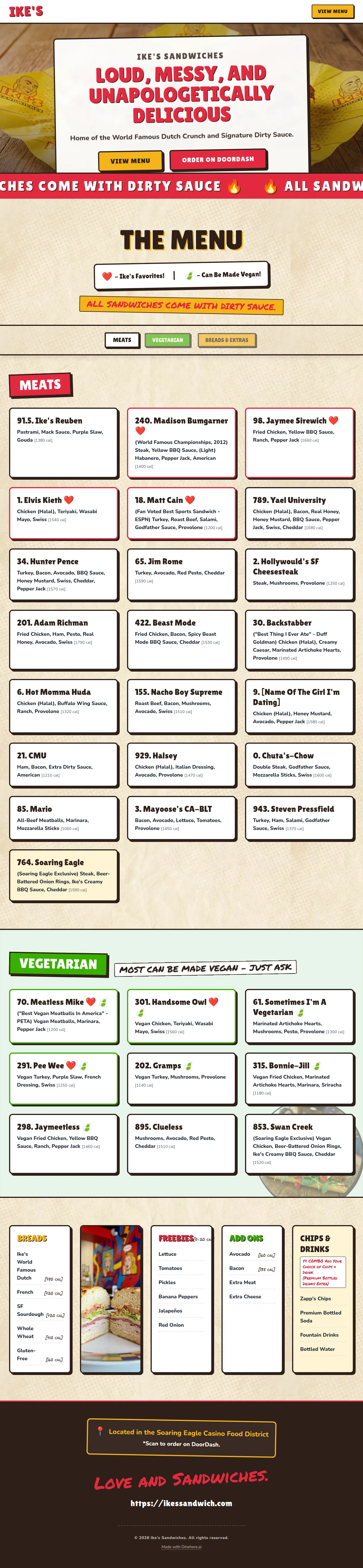
Built from a few menu photos — this is a live site. Take a look.
Tips for Cajun Restaurant Owners
Educate Your Customer
Use your menu descriptions to explain what goes into a dish. Defining terms like 'Holy Trinity' or 'Roux' establishes authenticity and helps outsiders feel comfortable ordering unfamiliar items.
Highlight Freshness and Origin
If you source your crawfish or shrimp from a specific parish in Louisiana or the Gulf, mention it in your 'About' section. Provenance is a huge selling point for quality Cajun food.
Keep Pricing Flexible
For seafood boils, use 'Market Price' on your digital menu or list a price range. This saves you from having to rebuild your menu every time the cost of a sack of crawfish changes.
Leverage the 'Dirty' Aesthetic
Don't worry about white-tablecloth elegance. Use photos that show the rustic, hands-on nature of the food. A photo of a newspaper-covered table piled with shells communicates 'authentic' better than a staged studio shot.
Optimize for 'Near Me' Searches
Ensure your address and hours are prominent. When people crave Cajun food, they often search for 'gumbo near me' or 'crawfish boil nearby.' A simple, fast-loading site helps Google connect them to you.
Challenges Cajun Restaurants Face Online
Seasonal Menu Fluctuation
Why it matters: Crawfish and crab seasons are short. Paper menus become obsolete quickly, and outdated online menus frustrate customers who arrive expecting items that aren't available.
How we help: Dinehere allows for instant text updates to the menu sections. You can mark items as 'Out of Season' or hide them entirely in seconds, keeping your online presence accurate.
Reliance on Social Media
Why it matters: Many Cajun spots only use Facebook. This hurts discoverability because social posts get buried, and menus are hard to find in photo albums, leading to lost customers who want quick info.
How we help: We provide a static, permanent home for your business on the web. It's search-engine optimized, meaning customers find your menu immediately on Google without digging through social feeds.
Explaining Complex Dishes
Why it matters: Customers unfamiliar with Cajun food might be intimidated by names like 'Etouffée', 'Boudin', or 'Atchafalaya'. Confusion often leads to them ordering a burger or going elsewhere.
How we help: Our layout prioritizes clear descriptions. You can easily add a sentence explaining the ingredients and cooking method for every dish, making the menu accessible to everyone.
Three Simple Steps
Upload Your Menu
Take photos of your cajun menu or upload existing images. Our AI reads any format.
AI Creates Your Site
Watch as our AI designs a beautiful website tailored to cajun cuisine aesthetics.
Go Live Instantly
Preview, make edits if needed, and publish. Your restaurant is now online.
One Price, Everything Included
or $390/year — 2 months free
No contracts, no setup fees. Cancel anytime. Just a beautiful website for your cajun restaurant.
- AI-powered website generation
- Mobile-responsive design
- Custom subdomain (yourname.dinehere.ai)
- Menu parsing from photos
- SEO optimized
- Hosting included
- SSL certificate included
Common Questions About Cajun Restaurant Websites
Not at all. Dinehere is designed for quick text edits. You can log in, change 'Market Price' to a specific dollar amount, or update the lb price in seconds from your phone.
Yes, our menu parser includes description fields for every item. This is the perfect place to explain that boudin is a rice and pork sausage or that étouffée means 'smothered'.
You don't need photos for every item. Dinehere builds a clean, text-forward menu. A few good atmosphere shots or a picture of the restaurant front are often enough to look professional.
Absolutely. You can create a specific 'Weekend Boil' section or add notes to your business hours and menu descriptions to clarify availability.
Yes, all Dinehere sites are mobile-responsive by default. This is critical for tourists or locals looking for 'crawfish near me' while on the go.
Yes, you can create a dedicated menu section for 'Family Packs' or 'Catering Trays' so customers know they can order large quantities for events.
That's perfectly fine. We can use a photo of your signage or a simple text header. The most important thing is that customers can read your menu and find your address.
Yes. Having a dedicated website linked to your Google Business Profile is one of the best ways to improve your local search ranking and verify your legitimacy.
Best Cities for Cajun Restaurants
Related Cuisines You Might Like
Ready to Build Your Cajun Restaurant Website?
Join other cajun restaurant owners who built their websites with Dinehere.
Build My Cajun Restaurant Site