
Build Your Filipino Restaurant Website
From kamayan feasts to turo-turo favorites, our AI creates warm websites that celebrate Filipino cuisine.
Filipino Restaurant Website Examples

AI-designed for Filipino restaurants
Understanding Filipino Cuisine
History & Origins
Filipino cuisine is a complex and historical tapestry woven from over a hundred distinct ethno-linguistic groups, deeply influenced by centuries of trade and colonization. Originally, the cuisine relied on Austronesian methods of boiling, steaming, and roasting, utilizing ingredients native to the tropical archipelago like coconuts, seafood, and calamansi. The arrival of Chinese traders introduced staples such as noodles (pancit) and soy sauce, which were seamlessly integrated into local cooking. This foundation was later dramatically layered with 300 years of Spanish colonization, which brought techniques like sautéing with garlic and onions, as well as rich stews and tomato-based sauces. The American occupation in the 20th century introduced convenience and canned goods, leading to the unique Filipino adaptation of ingredients like SPAM and corned beef, often enjoyed as breakfast staples. Today, Filipino food is characterized by its bold combination of sweet (tamis), sour (asim), and salty (alat) flavors. It is often described as 'East meets West' in the kitchen, where a single meal might feature a Hispanic-style tomato stew alongside a Chinese-inspired noodle dish and an indigenous sour soup.
Regional Styles
The Philippines consists of over 7,000 islands, creating distinct regional flavor profiles. In Luzon, particularly Pampanga (the culinary capital), dishes are rich and savory, known for the invention of Sisig and vibrant cured meats like Tocino. The Bicol region is distinct for its heavy use of coconut milk (gata) and chili peppers (siling labuyo), creating spicy, creamy dishes unlike the rest of the country. In the Visayas, particularly Cebu, the focus is on roasting, with Lechon (whole roast pig) being the centerpiece, often seasoned simply with lemongrass and onions to highlight the meat's natural flavor. Further south in Mindanao, the cuisine reflects heavy influence from neighboring Malaysia and Indonesia, utilizing spices like turmeric and avoiding pork in favor of Halal preparation methods.
Signature Techniques
A defining technique in Filipino cooking is 'Sankutsa,' or braising meat in its own juices and aromatics before adding liquid, ensuring deep flavor penetration. 'Adobo' is not just a dish but a preservation technique involving stewing meat in vinegar, soy sauce, garlic, and peppercorns. 'Kinilaw' is an indigenous curing method similar to ceviche but uses vinegar rather than citrus to 'cook' raw seafood. Finally, 'Inihaw' refers to the tradition of charcoal grilling, often marinating meats in a sweet-savory glaze of soy sauce, banana ketchup, and calamansi.
Dining Culture
Filipino dining is anchored in the concept of 'Salo-salo'—gathering together to eat. Hospitality is paramount; the common greeting is not 'How are you?' but 'Kumain ka na ba?' (Have you eaten yet?). Meals are almost always family-style, with dishes placed in the center to be shared. A significant cultural tradition is the 'Kamayan' or 'Boodle Fight,' where food is laid out on banana leaves and eaten with hands, symbolizing equality and camaraderie. Rice is the non-negotiable canvas for every meal, balancing the typically salty and sour flavors of the 'Ulam' (viands).
Our AI understands Filipino cuisine
Boodle Fight Visuals
Large-format image headers that can capture the width and scale of a Kamayan table spread, essential for attracting group bookings.
Bilingual Menu Support
Descriptions that allow for the Tagalog name of the dish followed by a clear English explanation for non-Filipino customers.
Rotating Daily Specials
Simple text editor allows 'Turo-Turo' (cafeteria style) restaurants to quickly update daily offerings like 'Monday: Sinigang' or 'Friday: Monggo'.
Dietary Transparency Tags
Clearly mark dishes containing allergens common in Filipino food, such as shrimp paste (bagoong) or peanuts in Kare-Kare.
Family Meal Bundle Display
Layouts optimized to show 'Bilao' (winnowing basket) platter options and family sets, which are core revenue drivers.
Heritage Story Section
A dedicated space to explain regional origins (e.g., 'Kapampangan Style') to differentiate your cooking from generic Filipino food.
AI That Understands Filipino Menus
Our AI automatically recognizes and organizes traditional filipino menu categories.
Silog Specials
All-day breakfast combos featuring Sinangag (garlic rice) and Itlog (egg).
Sabaw (Soups)
Hearty, often sour soups meant to be eaten with rice.
Inihaw (Grill)
Charcoal-grilled skewers and meats.
Gulay (Vegetables)
Vegetable-forward dishes, often sautéed with shrimp paste.
Kakanin
Native rice cakes and sticky rice treats.
Upload your menu photos and watch the magic happen
Try It FreeA real restaurant website built with Dinehere
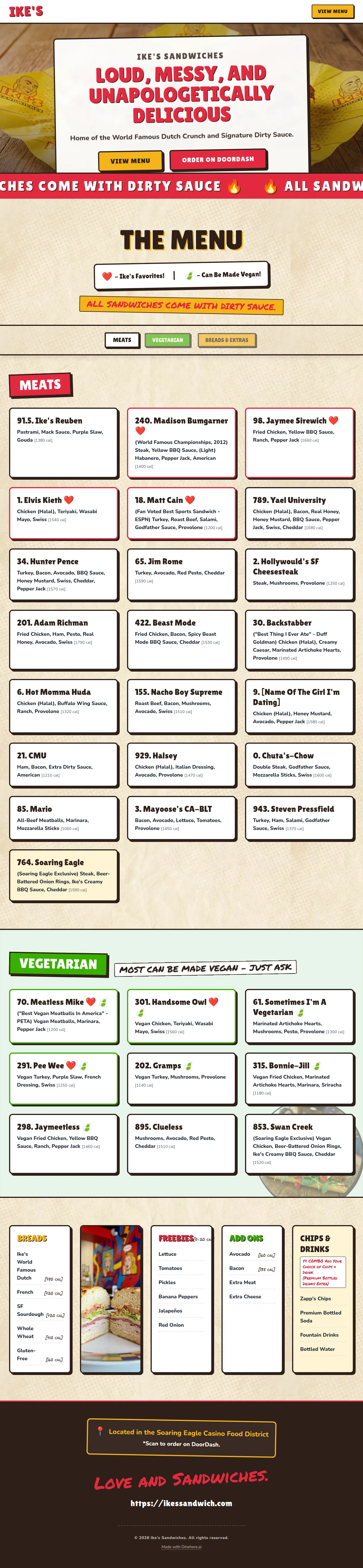
Built from a few menu photos — this is a live site. Take a look.
Tips for Filipino Restaurant Owners
Describe the Flavor, Not Just Ingredients
Filipino ingredients like bagoong (shrimp paste) can sound intimidating. Describe the 'umami depth' or 'savory richness' it adds to the dish to entice non-Filipino customers.
Highlight the 'Fiesta' Atmosphere
Use your website's About section to explain that food is a celebration in Filipino culture. Position your restaurant as the perfect place for birthdays and family reunions.
Standardize Your 'Turo-Turo' Names
If you serve cafeteria-style, give your combos clear names on your website (e.g., 'The Manila Combo'). It reduces anxiety for new customers who don't know how to order from a steam table.
Leverage the Ube Trend
Ube (purple yam) is incredibly photogenic and trendy. Ensure your Ube desserts are prominently featured at the top of your menu or as a highlighted item to attract social media savvy diners.
Explain the 'Sawsawan' (Dipping Sauces)
Add a note on your menu about your house-made vinegars and sauces. Educating customers that they can customize the flavor at the table enhances their dining experience.
Challenges Filipino Restaurants Face Online
The 'Brown Food' Aesthetic
Why it matters: Many delicious Filipino dishes (Adobo, Dinuguan, Kare-Kare) are brown and stew-like, which can look unappetizing in amateur photos, deterring new customers.
How we help: Dinehere's clean, minimalist layout focuses on clear text and descriptions first. If you do upload photos, our design frames them professionally so the focus is on the menu content.
Complex Menu Structures
Why it matters: Filipino menus often have varied portion sizes (single, to share, party size) and complex combos (Silogs) that are hard to format on generic website builders.
How we help: We allow for flexible menu categorization. You can easily group items by 'Family Platters' vs 'Solo Meals' without complicated coding or formatting issues.
Language Barriers
Why it matters: Using only Tagalog names limits your audience to Filipinos, but anglicizing everything loses authenticity.
How we help: Our menu items allow for a bold title (Tagalog) and a subtle subtitle/description (English), striking the perfect balance between authenticity and accessibility.
Three Simple Steps
Upload Your Menu
Take photos of your filipino menu or upload existing images. Our AI reads any format.
AI Creates Your Site
Watch as our AI designs a beautiful website tailored to filipino cuisine aesthetics.
Go Live Instantly
Preview, make edits if needed, and publish. Your restaurant is now online.
One Price, Everything Included
or $390/year — 2 months free
No contracts, no setup fees. Cancel anytime. Just a beautiful website for your filipino restaurant.
- AI-powered website generation
- Mobile-responsive design
- Custom subdomain (yourname.dinehere.ai)
- Menu parsing from photos
- SEO optimized
- Hosting included
- SSL certificate included
Common Questions About Filipino Restaurant Websites
Yes. You can create a dedicated 'Silog' section where you list the base components (garlic rice, egg) and list the protein choices (Tapa, Longganisa, Tocino) clearly.
Not at all. Dinehere is designed for instant text updates from your phone, so you can change your 'Ulam of the Day' in seconds without needing a web designer.
Dinehere allows for unlimited description text. You can describe the flavor profile (savory, tangy chocolate meat stew) rather than just listing ingredients, making it more approachable.
Yes. While photos help, Dinehere's clean typography makes text-based menus look elegant. If you do use phone photos, our layout keeps them looking neat and uniform.
Absolutely. You can feature this in your 'About' section and use our iconography or clear labels on the menu to indicate Halal certification, which is vital for Mindanao-style cuisine.
Yes, all Dinehere sites are mobile-first. This is crucial for Filipino customers who often coordinate family dining plans via mobile chat apps.
Yes. We recommend creating a specific 'Party Trays' or 'Catering' menu section so customers can see sizes and prices for bulk orders.
Dinehere sites are SEO-optimized. When people search 'Filipino food near me' or 'Best Adobo in [City],' your professional site helps you rank higher than competitors who only have a Facebook page.
Best Cities for Filipino Restaurants
Related Cuisines You Might Like
Ready to Build Your Filipino Restaurant Website?
Join other filipino restaurant owners who built their websites with Dinehere.
Build My Filipino Restaurant Site