
Build Your Hawaiian Restaurant Website
From poke shops to plate lunch spots, our AI creates tropical websites that capture the aloha spirit.
Hawaiian Restaurant Website Examples

AI-designed for Hawaiian restaurants
Understanding Hawaiian Cuisine
History & Origins
Hawaiian cuisine is a fascinating tapestry woven from three distinct eras: the ancient Polynesian voyagers, the plantation era, and the modern culinary renaissance. Originally, the diet consisted of 'canoe plants' brought by early settlers, such as taro (pounded into poi), sweet potato, breadfruit, and fresh seafood caught from the abundant reefs. The primary cooking method was the 'imu,' an underground earth oven that steamed and smoked food like kalua pig for hours, a tradition that remains the centerpiece of luau feasts today. The cuisine dramatically evolved during the mid-19th to mid-20th centuries with the arrival of immigrant laborers for sugar and pineapple plantations. Workers from Japan, China, Korea, the Philippines, Portugal, and Puerto Rico shared their lunches in the fields, creating the mixed-plate culture known today as 'Local Food.' This era birthed staples like Spam musubi, saimin (a hybrid noodle soup), and the iconic plate lunch—two scoops of rice, macaroni salad, and a protein like teriyaki beef or chicken katsu. Today, Hawaiian food honors these roots while embracing fresh, local ingredients and fusion techniques.
Regional Styles
While the islands share a core culinary identity, distinctions exist between 'Native Hawaiian' food and 'Local Food.' Native Hawaiian establishments focus on traditional preparations like laulau (pork wrapped in taro leaves), poi, and lomi lomi salmon. In contrast, 'Local' spots, often found in drive-ins and roadside stands, specialize in plate lunches, heavy gravies, and deep-fried proteins. There is also the 'Hawaii Regional Cuisine' movement, primarily in upscale resort areas, which utilizes local farm-to-table ingredients to create sophisticated fusion dishes that blend French techniques with Asian and Pacific Rim flavors.
Signature Techniques
The 'Imu' (underground oven) remains the most iconic technique, using hot lava rocks and vegetation to steam-roast whole pigs or turkeys. 'Poke' (meaning 'to slice or cut') involves cubing raw fish and curing it with sea salt, limu (seaweed), and crushed kukui nuts, though modern versions heavily utilize soy sauce and sesame oil. Steaming in ti leaves or banana leaves is crucial for preserving moisture in dishes like laulau. Additionally, the 'pulehu' style involves broiling over hot coals, while the heavy influence of Asian immigrants introduced stir-frying, deep-frying (katsu style), and pickling to the everyday repertoire.
Dining Culture
Dining in Hawaii is deeply rooted in the concept of 'Ohana' (family) and 'Aloha Spirit.' It is inherently casual, generous, and communal. The 'Plate Lunch' is the quintessential meal format, designed to be filling and affordable for working people. Potlucks are a major social institution where distinct ethnic dishes sit side-by-side on paper plates. Whether at a garage party or a beachside picnic, food is meant to be shared. Hospitality is paramount; running out of food is considered a major faux pas, leading to the local custom of serving massive portions to ensure everyone leaves stuffed.
Our AI understands Hawaiian cuisine
Daily Catch Updates
Easily update text to reflect market price (MP) or daily availability of fresh Ahi and Ono without needing a developer.
Combo Plate Visualizer
Clear menu layout that explains the 'Mixed Plate' concept (Choice of 2 Entrees + Sides) to uninitiated customers.
Catering & Luau Showcase
Dedicated section to display large tray options for ohana gatherings, office parties, and weddings.
Ingredient Glossary Support
Space to describe local ingredients like 'furikake', 'limu', or 'kukui nut' so visitors understand the unique flavors.
Visual Storytelling
High-resolution photo headers that capture the vibrant colors of fresh poke and the tropical ambiance of your location.
Mobile-First Location Finder
Prominent map and hours integration for tourists searching for 'food near me' on their phones while exploring.
AI That Understands Hawaiian Menus
Our AI automatically recognizes and organizes traditional hawaiian menu categories.
The Mixed Plate
The quintessential local meal. Choose 2 entree choices.
Lawaiʻa (Fisherman) Bowls
Fresh raw fish preparations over rice.
Native Favorites
Traditional Polynesian staples.
Island Breakfast
Hearty morning meals to start the day.
Saimin & Noodles
Hot noodle soups and fried noodles.
Ohana Packs
Family-sized portions for takeout.
Upload your menu photos and watch the magic happen
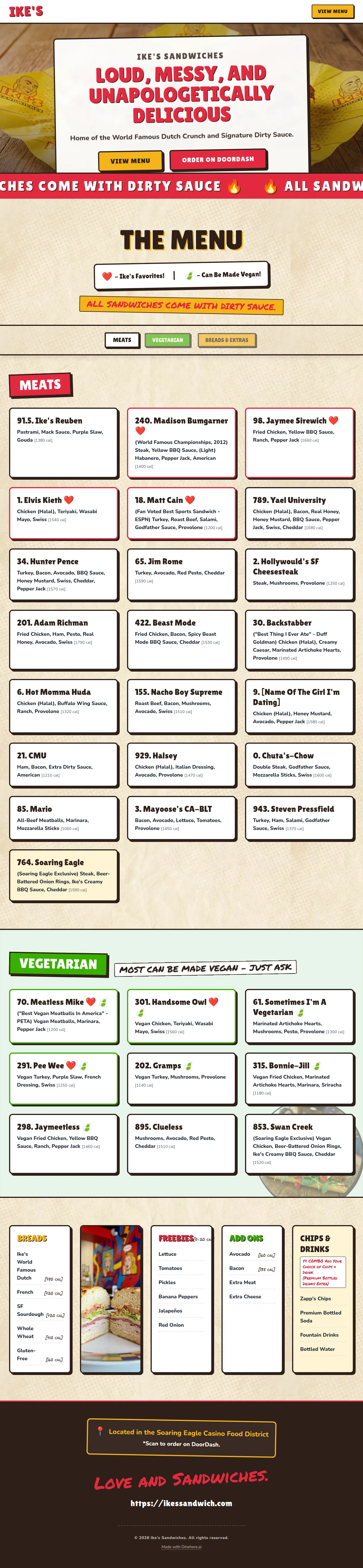
Try It FreeA real restaurant website built with Dinehere
Built from a few menu photos — this is a live site. Take a look.
Tips for Hawaiian Restaurant Owners
Explain the 'Sides' Rule
Mainlanders often don't understand that 'Plate Lunch' implies specific sides. Use your menu description to clearly state 'All plates come with 2 scoops rice and 1 scoop mac salad' to avoid repetitive questions at the register.
Highlight Freshness for Poke
If you use fresh, never-frozen fish, state this boldly in your website's 'About' section. In the competitive poke market, quality is your biggest differentiator and online readers look for keywords like 'fresh catch' or 'flown in daily'.
Use Appetizing Adjectives
Don't just write 'Spam Musubi.' Describe it as 'Glazed teriyaki Spam on a block of sticky rice, wrapped in crisp nori.' Descriptive text helps sell simple comfort food to customers browsing online.
Showcase the 'Aloha Spirit'
Your website is often the first interaction a customer has with you. Use warm, welcoming language in your bio. Sharing a brief history of your recipes (e.g., 'Grandma's secret gravy recipe') builds an emotional connection before they even taste the food.
Clarify Dietary Options
Hawaiian food can be heavy on soy (gluten) and sugar. Clearly labeling items as 'Gluten-Free' (like plain poke with tamari) or 'Vegetarian' helps you capture groups of diners who might otherwise skip your restaurant due to dietary uncertainty.
Challenges Hawaiian Restaurants Face Online
Visualizing Unfamiliar Dishes
Why it matters: Tourists may not know what 'Lau Lau' or 'Lomi Salmon' looks like, making them hesitant to order it.
How we help: Dinehere allows you to easily upload photos next to every menu item, demystifying traditional dishes and encouraging adventurous ordering through visual appeal.
Managing Seasonal Availability
Why it matters: Fish prices fluctuate and seasonal fruits (like mango for desserts) aren't always available, leading to disappointed customers if menus are outdated.
How we help: Our platform lets you update menu text and hide items instantly from any device, ensuring your online menu always matches what's actually in the kitchen.
Looking Professional on Mobile
Why it matters: Tourists exploring the area rely entirely on smartphones. A PDF menu that requires pinching and zooming frustrates users and sends them elsewhere.
How we help: Dinehere automatically creates a fully responsive, mobile-optimized website where customers can easily scroll through your menu, verify your address, and click to call.
Three Simple Steps
Upload Your Menu
Take photos of your hawaiian menu or upload existing images. Our AI reads any format.
AI Creates Your Site
Watch as our AI designs a beautiful website tailored to hawaiian cuisine aesthetics.
Go Live Instantly
Preview, make edits if needed, and publish. Your restaurant is now online.
One Price, Everything Included
or $390/year — 2 months free
No contracts, no setup fees. Cancel anytime. Just a beautiful website for your hawaiian restaurant.
- AI-powered website generation
- Mobile-responsive design
- Custom subdomain (yourname.dinehere.ai)
- Menu parsing from photos
- SEO optimized
- Hosting included
- SSL certificate included
Common Questions About Hawaiian Restaurant Websites
Yes. You can edit your menu text instantly from your phone. If Ahi prices spike or you sell out of Aku, you can update the description or mark it as unavailable in seconds.
Dinehere is excellent for food trucks. While we don't have a live GPS tracker, you can easily update your 'About' or 'Location' text to show your weekly schedule, and the mobile-friendly design ensures customers standing in line can read the menu clearly.
The 'About' section is perfect for storytelling. You can explain the history of the plantation lunch and list the standard sides (mac salad and rice) clearly in your menu headers so customers know exactly what they are getting.
While professional photos are great, modern smartphones take amazing pictures. Because Hawaiian food is so colorful (think bright red Ahi poke or purple Taro buns), clear, well-lit phone photos work perfectly with our layout.
Absolutely. You can create a distinct menu section specifically for 'Catering' or 'Ohana Packs' with its own pricing and descriptions, keeping your individual lunch items separate.
Dinehere sites are SEO-optimized. By including your city, neighborhood, and specific keywords like 'fresh poke' or 'authentic Hawaiian food' in your content, you significantly improve your chances of appearing in local search results.
Yes. Our design looks clean and professional even with just text headers. If you don't have a graphic logo, the typography will still give your restaurant a polished, established look.
There is no strict limit. You can list all your variations—Shoyu, Spicy, Limu, Wasabi, California—so customers can browse your full selection before they arrive at the counter.
Best Cities for Hawaiian Restaurants
Related Cuisines You Might Like
Ready to Build Your Hawaiian Restaurant Website?
Join other hawaiian restaurant owners who built their websites with Dinehere.
Build My Hawaiian Restaurant Site