
Build Your Moroccan Restaurant Website
From intimate riads to modern Moroccan dining, our AI creates warm websites that transport guests to Marrakech.
Moroccan Restaurant Website Examples

AI-designed for Moroccan restaurants
Understanding Moroccan Cuisine
History & Origins
Moroccan cuisine is a sophisticated tapestry woven from centuries of interaction between the indigenous Amazigh (Berber) people and waves of Arab, Andalusian, Mediterranean, and French influences. At its core, the cuisine relies on the ancient traditions of the Amazigh, who introduced the tagine pot and the staple grain, couscous. Following the Arab conquest in the 7th century, new spices like cinnamon, ginger, and saffron were introduced from the East, while the Moors arriving from Andalusia brought olives, citrus, and the unique concept of combining sweet and savory flavors in a single dish. The cuisine reached its zenith in the imperial cities of Fez, Marrakech, Meknes, and Rabat, where royal chefs developed complex recipes like the B'stilla (a pigeon or chicken pie dusted with sugar). Unlike other Mediterranean cuisines, Moroccan food is characterized by its patience; slow-cooking methods transform tough cuts of meat into tender delicacies, and preserved ingredients like salted lemons and smen (aged butter) add distinct, funky depth profiles that are impossible to replicate with fresh substitutes.
Regional Styles
While couscous and tagine are national staples, regional differences are profound. In the north, near Tangier and Tetouan, Spanish influence is evident in seafood-heavy dishes and the use of olive oil. The imperial city of Fez is famous for its intricate sweet-and-savory combinations, particularly dishes using dried fruits like prunes and apricots with lamb. Marrakech, influenced by the desert trade routes, is known for the Tangia—a bachelor's stew slow-cooked in a clay urn in the embers of a hammam furnace. The coastal cities like Essaouira offer a distinct style of fish tagines featuring chermoula, a potent marinade of cilantro, parsley, garlic, cumin, and paprika.
Signature Techniques
The defining technique of Moroccan cooking is the use of the tagine, a conical clay pot that traps steam and returns moisture to the food, allowing for slow braising with very little added water. Equally important is the proper steaming of couscous; traditionally, the grains are steamed multiple times over a simmering broth—never boiled—to achieve a fluffy, light texture. Spicing is an art form, often utilizing Ras el Hanout, a complex blend of up to 30 spices. Preservation is also key, with lemons cured in salt for months to soften the rind and mellow the acidity, becoming a crucial condiment for chicken and fish dishes.
Dining Culture
Moroccan dining is fundamentally communal and centers around hospitality. Meals typically begin with the ritual of hand-washing, often using orange blossom water. Food is traditionally served in a large, single platter placed in the center of a low round table. Diners eat with their right hand, using pieces of khobz (round bread) to scoop up tagines and salads, symbolizing unity and sharing. The meal is almost invariably concluded with the ceremonial pouring of sweet mint tea, served from high above to create a frothy 'crown' in the glass, signaling friendship and welcome.
Our AI understands Moroccan cuisine
Ingredient Glossary Integration
Dedicate space to explain unique ingredients like 'preserved lemon,' 'Ras el Hanout,' or 'Smen' directly on the menu to educate hesitant customers.
Visual Texture Display
High-resolution photo capabilities that capture the steam of a tagine and the flake of a B'stilla, crucial for appetizing presentation.
Family Style Formatting
Menu layouts that clearly distinguish between individual plates and 'to share' platters, helping groups understand portion sizes.
Halal Assurance Badge
Prominent placement options for Halal certification or sourcing info, a critical decision factor for many diners seeking Moroccan cuisine.
Ramadan Hours Toggle
Easy-to-update operating hours specifically for Iftar and Suhoor times during the holy month.
Atmosphere Showcase
A dedicated 'About' section to highlight your interior decor (zellige tiles, lanterns) which is a major draw for customers seeking an experience.
AI That Understands Moroccan Menus
Our AI automatically recognizes and organizes traditional moroccan menu categories.
Kemia & Salades
A selection of small cooked and cold salads meant to stimulate the appetite.
Briouats & Cigars
Crispy, triangular or cylindrical pastries filled with meat, cheese, or seafood.
Les Tagines
Slow-braised stews cooked in earthenware conical pots.
Bastilla (Pastilla)
A complex pie of phyllo dough layered with meat, omelet, and almonds.
Couscous Specialties
Steamed semolina grains served with seven vegetables and meat.
Grillades (Mechoui)
Charcoal-grilled meats, skewers, and chops.
Thé à la Menthe & Patisserie
Maghrebi mint tea and honey-soaked sweets like Chebakia.
Upload your menu photos and watch the magic happen
Try It FreeA real restaurant website built with Dinehere
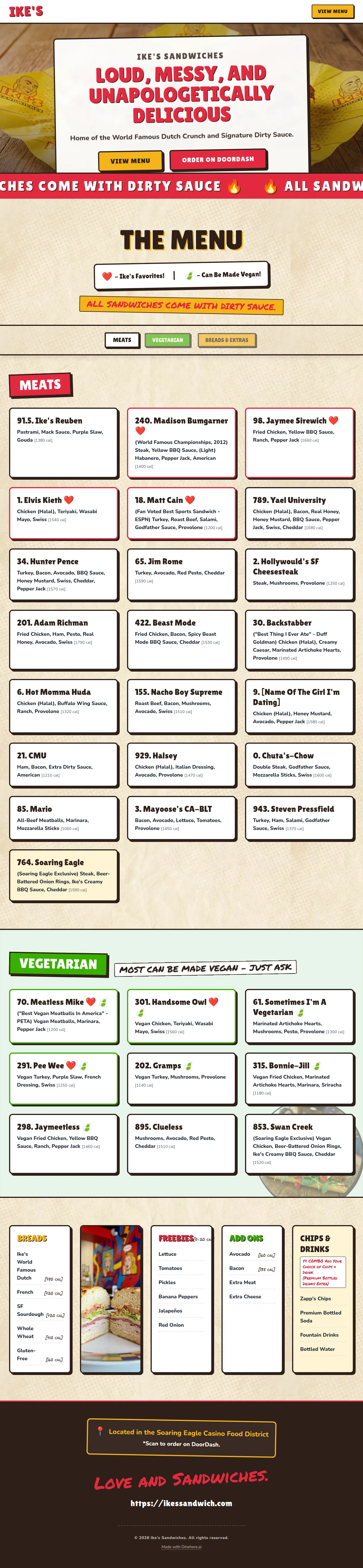
Built from a few menu photos — this is a live site. Take a look.
Tips for Moroccan Restaurant Owners
Photograph the Tagine Lid-Off
A closed tagine pot looks mysterious but doesn't sell food. Always take photos with the lid off to show the bubbling sauce and colorful arrangement of ingredients inside.
Explain the Sweet/Savory Mix
Western palates can be surprised by sugar on meat (Bastilla). Use your website's item descriptions to frame this as a 'royal delicacy' and 'complex flavor profile' rather than just letting it be a surprise.
Highlight Vegetarian Options
Moroccan cuisine is naturally rich in vegetarian dishes (Vegetable Tagine, Couscous, Zaalouk). Create a clear section for this on your site to attract plant-based diners who might assume you only serve lamb.
Sell the Experience, Not Just Food
Use your 'About' section to mention the music, the decor, and the hospitality. People visit Moroccan restaurants for a mini-vacation; your website text should promise that transportive experience.
Clarify 'Spicy' vs. 'Spiced'
Many customers confuse 'spices' (cumin, coriander, cinnamon) with 'heat' (chili). Use your website to clarify that Moroccan food is aromatic and flavorful, not necessarily hot, to reassure sensitive diners.
Challenges Moroccan Restaurants Face Online
Menu Intimidation
Why it matters: Customers often don't know what 'Chermoula,' 'Zaalouk,' or 'Merguez' are, leading them to click away to a simpler pizza menu.
How we help: Dinehere allows for rich descriptions under every item, letting you describe flavors and ingredients clearly so customers feel safe ordering new things.
The 'Hookah Lounge' Stigma
Why it matters: Many authentic Moroccan restaurants are mistaken for late-night smoking lounges, alienating the dinner crowd and families.
How we help: A professional website that puts food photos first establishes you immediately as a culinary destination, distinguishing your kitchen from lounge-only competitors.
Visualizing Brown Stews
Why it matters: Tagines are delicious but can look unappealingly brown in amateur photos, making the food look messy rather than appetizing.
How we help: Our clean, minimalist layout frames your photos professionally. We encourage using descriptions to paint the picture where photos might fail, focusing on 'tender,' 'aromatic,' and 'slow-cooked' qualities.
Three Simple Steps
Upload Your Menu
Take photos of your moroccan menu or upload existing images. Our AI reads any format.
AI Creates Your Site
Watch as our AI designs a beautiful website tailored to moroccan cuisine aesthetics.
Go Live Instantly
Preview, make edits if needed, and publish. Your restaurant is now online.
One Price, Everything Included
or $390/year — 2 months free
No contracts, no setup fees. Cancel anytime. Just a beautiful website for your moroccan restaurant.
- AI-powered website generation
- Mobile-responsive design
- Custom subdomain (yourname.dinehere.ai)
- Menu parsing from photos
- SEO optimized
- Hosting included
- SSL certificate included
Common Questions About Moroccan Restaurant Websites
Yes. Many Moroccan restaurants use French terms (like 'Poulet Citron'). Dinehere allows you to use the traditional name and provide a clear English description underneath.
You can use the 'About' section or a menu preamble to explain your slow-cooking process, setting the right expectations for authenticity before the customer even arrives.
Absolutely. Since the ambiance is a huge part of Moroccan dining, we encourage uploading photos of your seating area, lanterns, and tea service in the story section.
Not at all. You can upload a new PDF or update your text items in minutes from your phone, ensuring your Iftar specials are always current.
Yes, Dinehere websites are mobile-first. This is crucial for tourists walking around the city looking for a nearby dinner spot.
Yes. Since almonds and walnuts are common in Moroccan cuisine (like in Bastilla), you can clearly label these items in the description for allergy safety.
You can create a specific 'Beverages & Tea' section on your digital menu to showcase the mint tea ritual as a standalone experience, rather than just a drink.
No. Dinehere is a fraction of the cost of custom web design, making it affordable for family-run establishments.
Best Cities for Moroccan Restaurants
Related Cuisines You Might Like
Ready to Build Your Moroccan Restaurant Website?
Join other moroccan restaurant owners who built their websites with Dinehere.
Build My Moroccan Restaurant Site