
Build Your Middle Eastern Restaurant Website
From shawarma shops to fine Levantine dining, our AI creates warm websites that celebrate your cuisine.
Middle Eastern Restaurant Website Examples

AI-designed for Middle Eastern restaurants
Understanding Middle Eastern Cuisine
History & Origins
Middle Eastern cuisine represents one of the oldest and most influential culinary traditions in the world, originating from the Fertile Crescent where wheat, barley, pistachios, figs, and pomegranates were first cultivated. For millennia, this region served as the crossroads of the Silk Road, facilitating a vibrant exchange of spices like saffron, turmeric, and cardamom between the East and West. The cuisine is deeply rooted in ancient civilizations, from the Babylonians to the Persians, each leaving an indelible mark on how ingredients are processed and combined. The expansion of the Ottoman Empire further unified the region's culinary landscape, standardizing techniques like the shish kebab and the concept of stuffed vegetables (dolma), while allowing local identities to flourish. Today, Middle Eastern food in the United States has evolved from niche immigrant enclaves to mainstream popularity, celebrated for its emphasis on fresh vegetables, heart-healthy fats, and the communal warmth of sharing bread and salt.
Regional Styles
While often grouped together, the region boasts distinct culinary identities. The Levantine style (Lebanon, Syria, Jordan, Palestine) is famous for its elaborate mezze culture, featuring fresh herbs, olive oil, and lemon-heavy dishes like tabbouleh and baba ganoush. In contrast, Persian cuisine (Iran) relies heavily on slow-cooked stews (khoresh), the delicate use of saffron, dried limes, and fruits like barberries and pomegranate combined with fluffy, steamed rice. North African (Maghreb) traditions introduce couscous and tagines with flavor profiles utilizing preserved lemons and harissa, while the Gulf region (Khaleej) emphasizes aromatic rice dishes spiced with baharat and dried limes, often featuring seafood or lamb. Turkish influence permeates the northern borders with a strong focus on breads, savory pastries (borek), and a vast array of grilled meats.
Signature Techniques
The mastery of fire is central to the cuisine, from the vertical rotisseries used for shawarma to the charcoal grills for kebabs and kofta. Baking in tandoors or taboon ovens creates the essential flatbreads that serve as utensils for many meals. Pickling (kabees) is another signature technique, preserving turnips, cucumbers, and peppers to cut through rich meats. Slow-cooking is vital for tough cuts of lamb and goat, often braised with yogurt or tomato bases until tender. Additionally, the art of layering flavors is achieved through the use of distinct spice blends like za'atar, sumac, and ras el hanout, which are often toasted before grinding to release their full aromatic potential.
Dining Culture
Hospitality, or 'karam', is the cornerstone of Middle Eastern dining culture; food is the primary language of welcome, and abundance is a sign of generosity. Meals are rarely solitary events but rather communal gatherings where dishes are placed in the center of the table to be shared. The concept of 'mezze' allows diners to graze on a variety of textures and flavors before the main course arrives. Bread is sacred and ubiquitous, used to scoop dips and wrap meats, replacing silverware in many traditional settings. The meal typically concludes not just with dessert, but with mint tea, Turkish coffee, or digestion-aiding herbal infusions, signaling that the guest is welcome to linger and socialize long after the eating has finished.
Our AI understands Middle Eastern cuisine
Dietary Badge Integration
Prominently display Halal, Vegan, and Gluten-Free indicators, which are crucial decision-making factors for customers seeking Middle Eastern cuisine.
Ingredient Education Tooltips
Allow customers to understand unique ingredients like 'sumac', 'tahini', or 'labneh' directly on the menu without cluttering the design.
Visual Mezze Layouts
A photo-centric menu layout specifically designed to showcase the vibrant colors and variety of small plate spreads.
Catering & Platter Focus
Dedicated sections to highlight family-style platters and catering packages, a high-revenue stream for Middle Eastern restaurants.
Bilingual Text Support
Cleanly display item names in Arabic, Persian, or Hebrew alongside English descriptions to maintain cultural authenticity.
Seasonal Hours Display
Easily update operating hours for specific cultural events like Ramadan Iftar or Eid without needing technical skills.
AI That Understands Middle Eastern Menus
Our AI automatically recognizes and organizes traditional middle eastern menu categories.
Mashawi (Grills)
Charcoal-grilled skewers of lamb, chicken, and kafta.
Cold Mazza
Vegetarian starters served chilled or at room temperature.
Hot Mazza
Warm appetizers and fried specialties.
Fatteh & Stews
Layered dishes with toasted bread, yogurt, and chickpeas, or slow-cooked meats.
Manakish
Flatbreads topped with za'atar, cheese, or minced meat.
Sharbat & Tea
Traditional beverages including mint tea, Turkish coffee, and fruit syrups.
Upload your menu photos and watch the magic happen
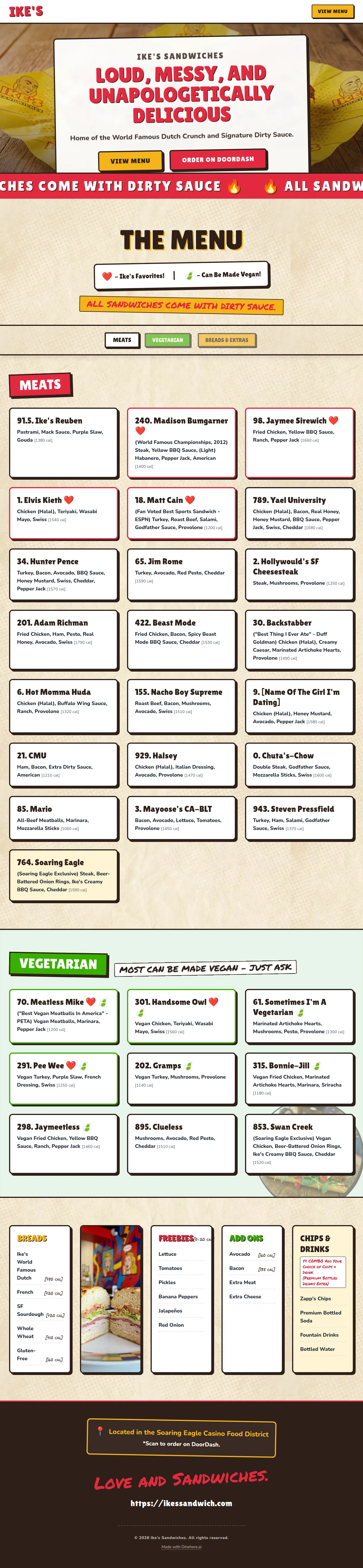
Try It FreeA real restaurant website built with Dinehere
Built from a few menu photos — this is a live site. Take a look.
Tips for Middle Eastern Restaurant Owners
Educate Through Descriptions
Don't just list 'Muhammara'. Describe it as 'Roasted red pepper and walnut dip with pomegranate molasses'. This reduces intimidation for customers unfamiliar with the cuisine.
Highlight Vegetarian Options
Middle Eastern cuisine is naturally plant-rich. Clearly labeling vegan and vegetarian dishes can attract a huge demographic of health-conscious diners looking for flavorful meat-free meals.
Showcase the Bread
Bread is the utensil of the meal. Mention if your pita is house-made or baked in a wood-fired oven. This detail signals freshness and authenticity to food lovers.
Promote Family Platters
Use your website to feature 'Family Trays' or 'Feast for 4'. This encourages higher check averages and appeals to groups looking for a communal dining experience.
Visual Texture Matters
When taking photos for your site, ensure dips look fresh. A drizzle of high-quality olive oil and a sprinkle of paprika or za'atar right before the photo makes the food pop on screen.
Challenges Middle Eastern Restaurants Face Online
Menu Intimidation
Why it matters: Customers may avoid the restaurant if they don't understand what the dishes are or how to pronounce them.
How we help: Dinehere allows for clear, descriptive text under every item, helping you bridge the gap between authentic names and customer understanding.
Invisible Special Diets
Why it matters: Halal and Vegan diners constantly search online for safe places to eat. If you don't explicitly state this, they scroll past.
How we help: Our simple text editor and 'About' section let you clearly state dietary compliances and certifications, making you discoverable to these specific groups.
Mobile Menu Navigation
Why it matters: Middle Eastern menus can be extensive (dozens of mezze). PDF menus are impossible to read on phones.
How we help: Dinehere converts your menu into a mobile-responsive list. Customers can scroll through 'Mezze', 'Grills', and 'Desserts' effortlessly without pinching and zooming.
Three Simple Steps
Upload Your Menu
Take photos of your middle eastern menu or upload existing images. Our AI reads any format.
AI Creates Your Site
Watch as our AI designs a beautiful website tailored to middle eastern cuisine aesthetics.
Go Live Instantly
Preview, make edits if needed, and publish. Your restaurant is now online.
One Price, Everything Included
or $390/year — 2 months free
No contracts, no setup fees. Cancel anytime. Just a beautiful website for your middle eastern restaurant.
- AI-powered website generation
- Mobile-responsive design
- Custom subdomain (yourname.dinehere.ai)
- Menu parsing from photos
- SEO optimized
- Hosting included
- SSL certificate included
Common Questions About Middle Eastern Restaurant Websites
Yes, building trust is essential. You can upload your Halal certificate image to your 'About' section or footer, and use text badges on your menu items to reassure customers.
Not at all. You can upload a new PDF or edit your text menu in seconds from your phone. This is perfect for daily Iftar specials or temporary holiday hours.
Dinehere is designed for storytelling. You can include rich descriptions for every dish, explaining the history or ingredients of your grandmother's recipe without ruining the page layout.
While professional photos help, they aren't mandatory. If you have a few great shots of a mixed platter, that can serve as the hero image, while the text menu lists the individual items clearly.
Absolutely. You can create a distinct section or page specifically for 'Catering & Events' to separate individual plates from large family trays.
Dinehere supports standard character sets, so you can write menu item titles in Arabic or Farsi followed by English descriptions to welcome all customers.
Yes, you can add a 'Market' or 'Pantry' section to your menu to list retail items like olive oil, za'atar, or tea blends that customers can buy in-store.
Dinehere sites are optimized for local SEO. By properly structuring your menu and location data, we help search engines understand exactly what you serve and where you are.
Best Cities for Middle Eastern Restaurants
Related Cuisines You Might Like
Ready to Build Your Middle Eastern Restaurant Website?
Join other middle eastern restaurant owners who built their websites with Dinehere.
Build My Middle Eastern Restaurant Site