
Build Your Filipino Restaurant Website
From kamayan feasts to turo-turo favorites, our AI creates warm websites that celebrate Filipino cuisine.
Filipino Restaurant Website Examples

AI-designed for Filipino restaurants
Understanding Filipino Cuisine
History & Origins
Filipino cuisine is a complex culinary tapestry woven from centuries of trade and colonization, often described as 'East meets West' in the kitchen. Its roots lie in Austronesian methods of boiling, steaming, and roasting, but the culinary landscape changed dramatically with the arrival of Chinese traders who introduced noodles (pancit) and soy products, and later Spanish colonizers who brought techniques like sautéing (guisado) and rich stews. The American occupation further influenced local tastes with the introduction of canned goods, giving rise to unique adaptations of spam and corned beef in local breakfast culture. Unlike its spicy Southeast Asian neighbors, traditional Filipino food focuses heavily on the interplay of bold flavors—specifically sourness (asim), saltiness (alat), and sweetness (tamis). Vinegar is a ubiquitous ingredient, used for preservation in the tropical climate and as a primary seasoning agent. Today, Filipino cuisine is experiencing a global renaissance, moving from 'mom and pop' turo-turo (point-point) joints to high-end establishments in major cities like London, celebrating the archipelago's diverse regional ingredients.
Regional Styles
The Philippines is an archipelago of over 7,000 islands, leading to distinct regional styles. Pampanga in Luzon is often hailed as the 'Culinary Capital,' known for rich, savory dishes like Sisig and Tocino. The Bicol region is famous for its heavy use of coconut milk (gata) and chili peppers (siling labuyo), creating spicy, creamy dishes rare in other parts of the country. In the Visayas, specifically Bacolod, grilled chicken (Inasal) marinated in calamansi and annatto is king, while Ilocos in the north is renowned for bitter, vegetable-heavy dishes like Pinakbet and their unique empanadas.
Signature Techniques
The defining technique of Filipino cooking is 'Adobo'—not just a dish, but a method of braising meat in vinegar, soy sauce, garlic, and peppercorns. Another crucial method is 'Kinilaw,' an indigenous form of curing raw seafood in vinegar and citrus, pre-dating Spanish ceviche. 'Gisa' (sautéing) forms the base of most stews, starting with the holy trinity of garlic, onions, and tomatoes. Finally, the art of 'Sawsawan' (dipping sauces) is unique; the chef provides the food, but the diner completes the flavor profile by mixing their own blend of vinegar, soy sauce, fish paste, and chili at the table.
Dining Culture
Filipino dining is anchored in the concept of 'Saln-Salo' (eating together) and the spirit of 'Bayanihan' (communal unity). Food is rarely served in individual portions; it is almost always family-style, meant to be shared. The most iconic traditional dining style is 'Kamayan,' where banana leaves cover the table and mounds of rice and viands are eaten with one's hands, symbolizing equality and brotherhood. Hospitality is paramount; the phrase 'Kain tayo!' (Let's eat!) is a standard greeting to anyone entering a Filipino home or restaurant.
Our AI understands Filipino cuisine
Bilingual Menu Clarity
Easily display authentic Tagalog dish names alongside clear English descriptions to welcome both homesick Filipinos and curious locals.
Party Tray Showcase
A dedicated section to list 'Bilao' sizes and party platter options, which are essential for driving high-value catering orders.
Visual Storytelling
High-quality photo layouts that make brown stews (like Adobo or Dinuguan) look appetizing and colorful desserts (Halo-Halo) pop.
Heritage & Story Section
Space to share your family's provincial origins and culinary journey, connecting customers to the 'Lutong Bahay' (home cooked) experience.
Dietary Guide Indicators
Simple text features to flag dishes containing allergens like shrimp paste (bagoong) or peanuts, crucial for UK compliance.
AI That Understands Filipino Menus
Our AI automatically recognizes and organizes traditional filipino menu categories.
Silog Breakfasts
Garlic fried rice (sinangag) and egg combos paired with meat.
Sabaw (Soups)
Hearty, sour, or savory broths meant to be eaten with rice.
Inihaw (Grill)
Charcoal-grilled meats and seafood marinated in sweet-savory glazes.
Gulay (Vegetables)
Vegetable dishes sautéed with shrimp paste or coconut milk.
Pang-Himagas (Dessert)
Sweet treats often featuring ube, coconut, and rice.
Bilao Specials
Large woven winnowing trays filled with pancit or kakanin.
Upload your menu photos and watch the magic happen
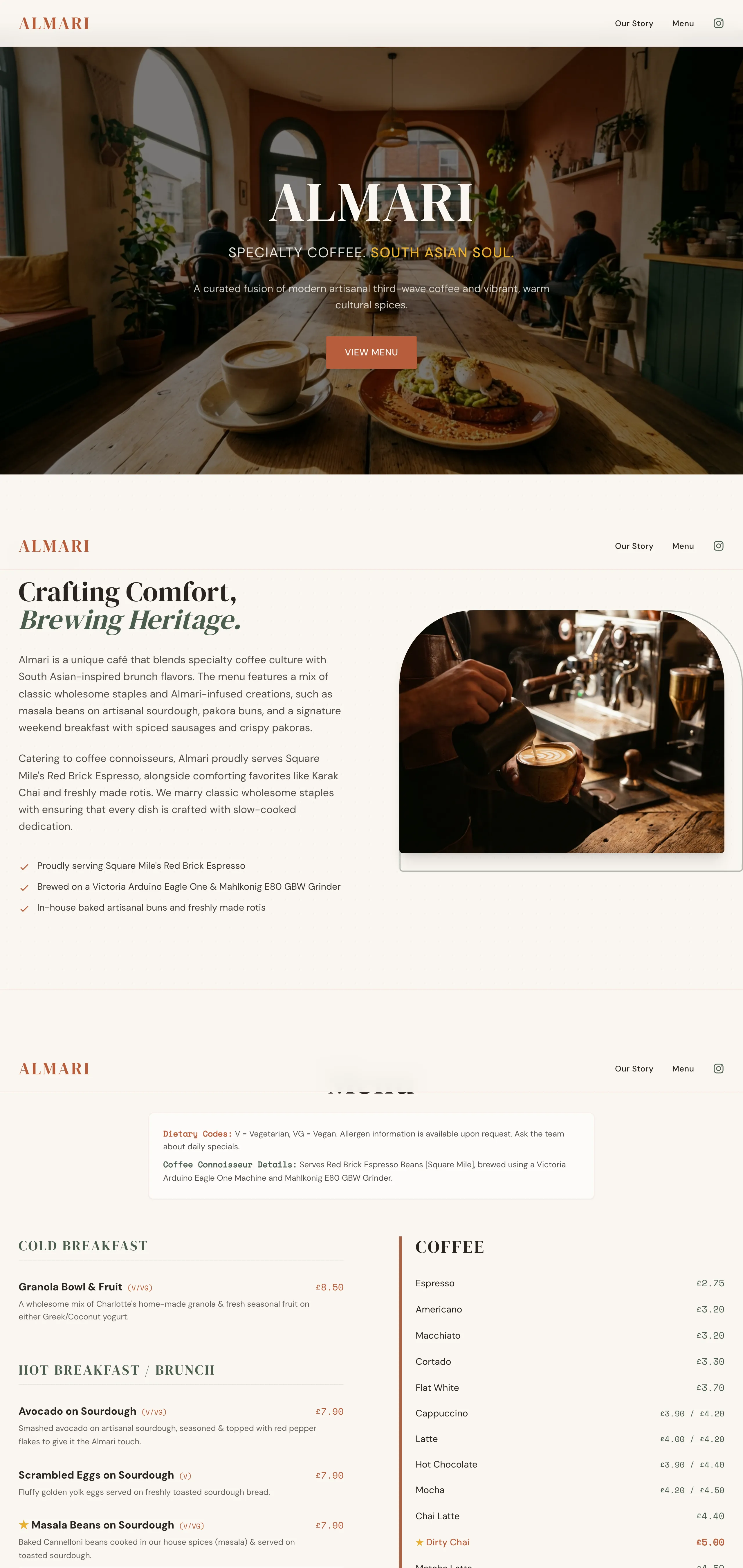
Try It FreeA real restaurant website built with Dinehere
Built from a few menu photos — this is a live site. Take a look.
Tips for Filipino Restaurant Owners
Showcase the 'Silog' Potential
Promote your Silog menu as a 'Filipino Brunch' option. The combination of garlic rice, egg, and meat appeals strongly to Western brunch culture and is a great gateway dish for new customers.
Educate on Flavor Profiles
Use your menu descriptions to explain the balance of 'sweet, sour, and salty.' Explaining that Sinigang is a 'tamarind-based savory soup' helps uninitiated diners understand what to expect.
Highlight the 'Boodle Fight'
If you offer Kamayan/Boodle Fight feasts, make this the hero image of your website. It is a visually striking, unique dining experience that attracts groups and social media influencers.
Clarify 'Ulam' Portions
Clearly state that main dishes (Ulam) are family-style and meant to be shared. This manages customer expectations about pricing and portion sizes, preventing confusion for solo diners.
Visuals for the Adventurous
Be strategic with photos. Beautifully plated Adobo or vibrant Halo-Halo are great for the homepage, while challenging dishes like Balut or Dinuguan are best kept as text items or secondary photos to avoid overwhelming newcomers.
Challenges Filipino Restaurants Face Online
Reliance on Social Media
Why it matters: Many Filipino businesses exist only on Facebook. This makes menus hard to find, search engines ignore them, and customers without accounts can't view details.
How we help: Dinehere provides a permanent, searchable web address that anyone can access without a login, making your menu visible to Google and all potential customers.
Explaining Unfamiliar Ingredients
Why it matters: Ingredients like 'bagoong' (shrimp paste) or 'dinuguan' (pork blood stew) can intimidate new customers if not described invitingly.
How we help: Our text-focused layout gives you ample space to write appetizing, descriptive explanations for dishes, bridging the cultural gap for non-Filipino diners.
Competing with 'Asian Fusion'
Why it matters: Filipino food is often lumped into generic Asian categories. Without a dedicated site, it's hard to establish your unique brand identity.
How we help: A dedicated website allows you to control the narrative, use authentic colors and imagery, and proudly assert your specific regional Filipino identity separate from generic Pan-Asian spots.
Three Simple Steps
Upload Your Menu
Take photos of your filipino menu or upload existing images. Our AI reads any format.
AI Creates Your Site
Watch as our AI designs a beautiful website tailored to filipino cuisine aesthetics.
Go Live Instantly
Preview, make edits if needed, and publish. Your restaurant is now online.
One Price, Everything Included
or £290/year — 2 months free
No contracts, no setup fees. Cancel anytime. Just a beautiful website for your filipino restaurant.
- AI-powered website generation
- Mobile-responsive design
- Custom subdomain (yourname.dinehere.ai)
- Menu parsing from photos
- SEO optimized
- Hosting included
- SSL certificate included
Common Questions About Filipino Restaurant Websites
Not at all. Dinehere allows you to update your menu text or hide items instantly from your phone, so you never disappoint a customer expecting a specific dish.
Yes, you can clearly list different portion sizes and prices, helping customers understand the value of ordering party trays for their gatherings.
While photos help, they aren't mandatory. You can use appetizing descriptions or focus on photographing your most colorful dishes like Halo-Halo or Pancit to draw people in.
Absolutely. Dinehere builds your site with proper SEO structure, helping you appear when locals search for 'Filipino food near me' or 'Adobo in [Your City]'.
Yes. The website clearly displays your location, hours, and phone number, encouraging customers to visit or call for pickup without confusing delivery interfaces.
Yes, there is a dedicated 'About' section where you can tell the story of your province, your grandmother's recipes, and what makes your kitchen authentic.
The site is fully responsive and looks great on mobile, making it easy for the Filipino community to share your menu links in group chats and social media.
You can include clear descriptions for every item, allowing you to mention ingredients like bagoong (shrimp paste) or peanuts to keep your customers safe and informed.
Best Cities for Filipino Restaurants
Related Cuisines You Might Like
Ready to Build Your Filipino Restaurant Website?
Join other filipino restaurant owners who built their websites with Dinehere.
Build My Filipino Restaurant Site