
Build Your Hawaiian Restaurant Website
From poke shops to plate lunch spots, our AI creates tropical websites that capture the aloha spirit.
Hawaiian Restaurant Website Examples

AI-designed for Hawaiian restaurants
Understanding Hawaiian Cuisine
History & Origins
Hawaiian cuisine is a fascinating tapestry woven from the islands' ancient Polynesian roots and the diverse immigrant cultures that arrived during the 19th and 20th centuries. Originally, the diet consisted of 'canoe plants' brought by voyagers, such as taro (pounded into poi), sweet potato, breadfruit, and fresh seafood. The preparation was simple, often involving steaming in an underground oven known as an 'imu' or salting raw fish for preservation. With the boom of the sugar and pineapple plantations, waves of laborers arrived from China, Japan, Portugal, Korea, and the Philippines. These groups shared their lunches in the fields, leading to a culinary cross-pollination that created 'Local Food.' This era gave birth to staples like the Plate Lunch (two scoops of rice, macaroni salad, and a protein), Spam musubi, and saimin. Today, Hawaiian cuisine is a distinct fusion, balancing traditional Native Hawaiian dishes like Laulau and Kalua Pork with the pan-Asian influences of the plantation era and the modern, fresh-ingredient focus of the poke craze.
Regional Styles
While the islands share a core culinary identity, distinct styles exist. 'Native Hawaiian Food' refers strictly to pre-contact dishes like Poi, Lomi Lomi Salmon, and Squid Luau. 'Local Food' encompasses the plantation-era comfort food found in drive-ins, such as Loco Moco and Chicken Katsu. In recent decades, 'Hawaii Regional Cuisine' emerged as a chef-driven movement focusing on farm-to-table ingredients grown on the islands, blending French techniques with Asian flavors. The most globally recognized export, Poke, has evolved from a simple fisherman's snack of reef fish and sea salt to complex bowls featuring mayonnaise, avocado, and various toppings popular in the UK and US.
Signature Techniques
The 'Imu' is the heart of traditional cooking—an underground earth oven lined with hot rocks and banana leaves used to slow-cook whole pigs (Kalua pig) to a smoky tenderness. Steaming in ti leaves is crucial for dishes like Laulau. Pickling and curing are fundamental, seen in the salting of fish for poke or the lomi (massaging) of salmon with tomatoes and onions. Pan-frying and deep-frying are heavily utilized in 'Local' cuisine, particularly for katsu cutlets and Portuguese sausage. The blending of soy sauce and sugar (teriyaki style) is a ubiquitous flavoring method across proteins.
Dining Culture
Dining in Hawaii is centered around the concept of 'Ohana' (family) and 'Aloha,' emphasizing hospitality and sharing. Food is rarely eaten in isolation; it is the centerpiece of social gatherings, from beachside potlucks to backyard celebrations. The atmosphere is distinctively casual—'grindz' (good food) are often served in disposable containers even at sit-down spots to facilitate easy cleanup and beach dining. Portions are notoriously generous, reflecting a culture that views feeding others as an expression of love. Respect for the ocean and land ('aina) is also a core value, with a strong emphasis on not wasting food.
Our AI understands Hawaiian cuisine
Fresh Catch Showcase
A dedicated section to highlight daily fish arrivals, crucial for establishing the freshness quality expected of authentic poke shops.
Plate Lunch Visualizer
Large, high-quality layout options to show the specific 'mac salad and two scoops rice' configuration that defines the authentic plate lunch.
Ingredient Glossary
Space to explain unique ingredients like Kukui nut, Furikake, or Poi to UK customers who might be unfamiliar with the terminology.
Origin Story Section
A prominent area to share your connection to the islands or the sourcing of your ingredients, building authenticity and trust.
Dietary & Allergen Filtering
Clear indicators for gluten-free (tamari options) or shellfish allergies, which is critical for seafood-heavy menus.
AI That Understands Hawaiian Menus
Our AI automatically recognizes and organizes traditional hawaiian menu categories.
Fresh Poke Bar
cubed raw fish marinated in various sauces
Plate Lunches
The quintessential Hawaiian meal: protein + 2 scoops rice + mac salad
Musubi & Handhelds
Portable snacks featuring rice and nori
Kau Kau (Sides)
Essential accompaniments like Lomi Salmon, Poi, or Kimchi
Saimin & Bowls
Noodle soups and hot savory bowls
Island Sweets
Tropical desserts like Haupia (coconut pudding) or Shave Ice
Upload your menu photos and watch the magic happen
Try It FreeA real restaurant website built with Dinehere
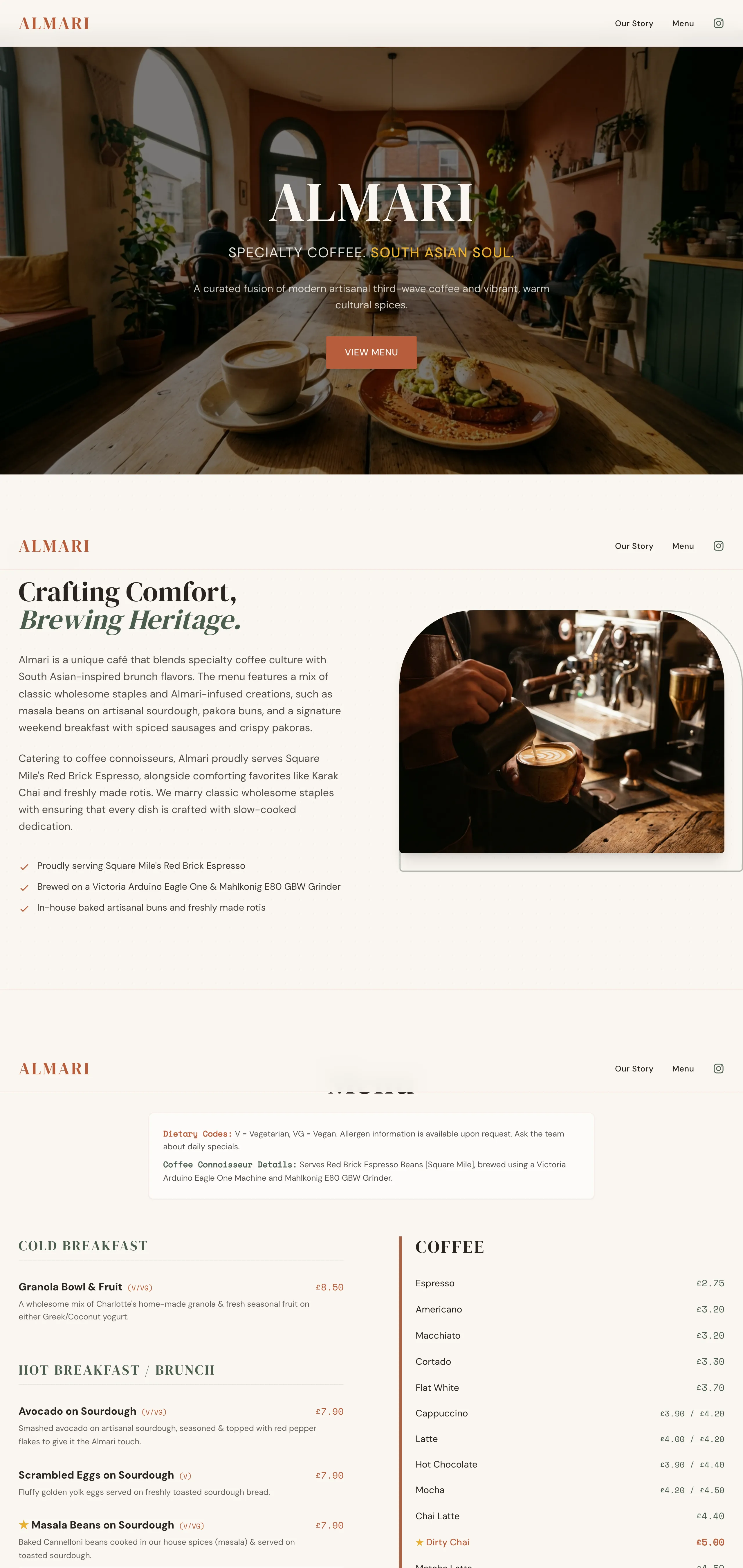
Built from a few menu photos — this is a live site. Take a look.
Tips for Hawaiian Restaurant Owners
Highlight Freshness Visually
Hawaiian food, especially poke, relies on the visual appeal of fresh fish. Use bright, natural lighting for your photos to make the tuna look ruby red and the salmon vibrant orange, proving quality to skeptical customers.
Educate on the 'Plate Lunch' Concept
Don't assume UK customers know what a 'Plate Lunch' is. Use your About section to explain the tradition of the 'two scoops rice and mac salad' so they understand the carb-heavy comfort food style.
Leverage 'Gluten-Free' SEO
Poke is naturally friendly to gluten-free diets if you use tamari. Make sure your website text mentions 'Gluten-Free Options' clearly, as this is a high-volume search term for healthy lunch seekers.
Tell the Story of Ingredients
If you import specific ingredients like Alae salt or Maui onions, or if you source sustainable local fish, mention this explicitly. It justifies your price point and builds culinary authority.
Optimize for 'Lunch Near Me'
Ensure your location and opening hours are front and center. Most poke and plate lunch business comes from office workers making split-second decisions; they need to know you are open and close by immediately.
Challenges Hawaiian Restaurants Face Online
Explaining Unfamiliar Terminology
Why it matters: Terms like 'Furikake', 'Lomi Lomi', or 'Musubi' can intimidate customers, causing them to choose a familiar sandwich shop instead.
How we help: Dinehere allows for descriptive text and clear imagery alongside every menu item, demystifying the food and making it accessible to newcomers.
Differentiating from 'Fast Food'
Why it matters: Because plate lunches are casual, customers might mistake them for low-quality junk food rather than culturally rich, scratch-made cuisine.
How we help: A sleek, professional one-page website with an 'Our Story' section helps elevate your brand perception from a 'greasy spoon' to a culinary destination.
Mobile Visibility for Foot Traffic
Why it matters: Hawaiian food is often an impulse buy or a quick lunch decision. If you don't show up on mobile search, you don't exist.
How we help: Dinehere sites are technically optimized for SEO and mobile speed, ensuring you rank when hungry locals search for 'lunch spots' or 'healthy bowls'.
Three Simple Steps
Upload Your Menu
Take photos of your hawaiian menu or upload existing images. Our AI reads any format.
AI Creates Your Site
Watch as our AI designs a beautiful website tailored to hawaiian cuisine aesthetics.
Go Live Instantly
Preview, make edits if needed, and publish. Your restaurant is now online.
One Price, Everything Included
or £290/year — 2 months free
No contracts, no setup fees. Cancel anytime. Just a beautiful website for your hawaiian restaurant.
- AI-powered website generation
- Mobile-responsive design
- Custom subdomain (yourname.dinehere.ai)
- Menu parsing from photos
- SEO optimized
- Hosting included
- SSL certificate included
Common Questions About Hawaiian Restaurant Websites
Yes. Our simple editor allows you to update menu items in seconds from your phone, so you can let customers know if you're serving Ahi, Salmon, or Octopus that day.
Dinehere prioritizes visual menus. You can upload photos of your full plates, showing the rice, mac salad, and meat combo, which explains the concept instantly better than text could.
We avoid cheesy clip-art. Our designs are clean and modern, allowing your colorful food photography to provide the tropical vibe while maintaining a professional, trustworthy business look.
Absolutely. It validates your business when people search for you, provides a permanent link for your social media bio, and helps customers check your menu and location before they visit.
Yes, you can create a dedicated section for 'Ohana Packs' or catering trays, which is a massive revenue driver for Hawaiian-style food businesses.
Yes, all Dinehere sites are fully responsive. This is critical for poke shops and lunch spots where most customers are searching on their phones while walking.
If you have your photos and menu text ready, the AI helps you build the structure in about 10-15 minutes.
No. Dinehere is a website builder, not a delivery app, so you keep 100% of your sales. It's a simple subscription (£29/month, or £290/year with two months free) and we never take a cut of your revenue. Cancel anytime.
Best Cities for Hawaiian Restaurants
Related Cuisines You Might Like
Ready to Build Your Hawaiian Restaurant Website?
Join other hawaiian restaurant owners who built their websites with Dinehere.
Build My Hawaiian Restaurant Site