
Build Your Spanish Restaurant Website
From tapas bars to paella specialists, our AI creates warm websites that celebrate Spanish cuisine.
Spanish Restaurant Website Examples

AI-designed for Spanish restaurants
Understanding Spanish Cuisine
History & Origins
Spanish cuisine is a complex tapestry woven from centuries of conquest, exploration, and geographic diversity. Its roots lie in the rustic fare of farmers and fishermen, heavily influenced by the Romans who introduced olive oil and viticulture, and the Moors who ruled Al-Andalus for centuries, bringing saffron, rice, citrus, and almonds. This historical fusion created the foundational flavor profile of modern Spanish cooking: a balance of Mediterranean freshness and Moorish spice.
Regional Styles
Spain is a collection of distinct culinary nations. The Basque Country is world-renowned for its 'pintxos' culture and emphasis on grilling (asador). Galicia, with its rugged coastline, specializes in octopus and shellfish. Valencia is the undisputed home of rice dishes, most notably paella. Andalusia, in the south, is the birthplace of gazpacho and masters the art of 'fritura' (frying) with olive oil. Meanwhile, central Castile creates hearty roasts of suckling pig and lamb, contrasting with the avant-garde molecular gastronomy emerging from Catalonia.
Signature Techniques
The holy trinity of Spanish cooking often starts with the 'sofrito' (a slow-cooked base of onions, garlic, peppers, and tomatoes). Preservation techniques like curing (salazón) and pickling (escabeche) remain vital, producing world-class hams and conservas. The manipulation of temperature is also distinct; from the high-heat searing of 'a la plancha' cooking to the patient, low-heat rendering required for stews and the precise formation of the 'socarrat' (crust) on rice dishes.
Dining Culture
Spanish dining is inherently social and communal. The concept of 'tapeo'—moving from bar to bar to enjoy small bites and drinks—is more than a way of eating; it is a lifestyle. Meals are often late by international standards, with lunch being the main event of the day. The 'sobremesa'—the period of time spent relaxing and chatting at the table after a meal—is a sacred custom that emphasizes the importance of company over mere sustenance.
Our AI understands Spanish cuisine
Denominación de Origen Highlighting
Text sections to emphasize certified ingredients like Jamón Ibérico de Bellota or Manchego, crucial for justifying price points.
Menu del Día Display
A prominent section to showcase daily lunch specials, a staple of Spanish dining culture that drives midday traffic.
Visual Tapas Guide
Photo-centric layout allowing UK customers to see portion sizes (Tapa vs. Ración) before ordering to prevent confusion.
Regional Storytelling
About section templates specifically designed to explain the chef's regional origins (e.g., 'A Taste of Seville').
Sherry & Vermouth Focus
Specialized beverage list formatting to separate Aperitivos and Jerez from standard wine lists.
AI That Understands Spanish Menus
Our AI automatically recognizes and organizes traditional spanish menu categories.
Para Picar
Nibbles and appetizers like marinated olives, salted almonds, and pan con tomate.
Ibéricos y Quesos
Cured meats and cheeses featuring Jamón Serrano, Chorizo, and Manchego.
Del Mar
Seafood dishes ranging from fried calamari (Andalusian style) to steamed mussels.
Carnes
Meat dishes such as Albondigas (meatballs), Secreto Ibérico, or Oxtail stew.
Arroces y Fideuà
Rice dishes and noodle paellas, including Paella Valenciana and Arroz Negro.
Vinos y Jerez
A curated list of Rioja, Ribera del Duero, and various Sherries (Fino to Oloroso).
Upload your menu photos and watch the magic happen
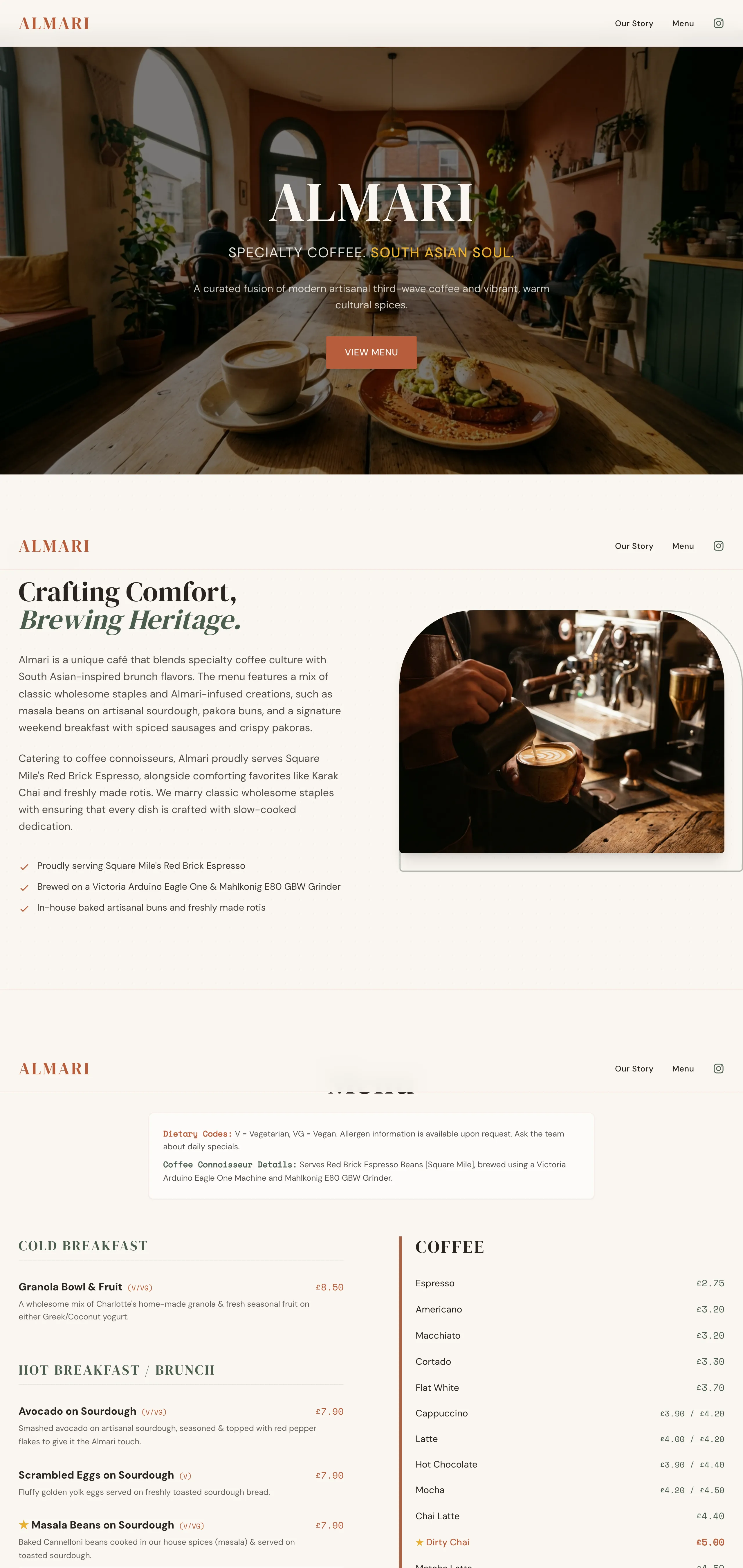
Try It FreeA real restaurant website built with Dinehere
Built from a few menu photos — this is a live site. Take a look.
Tips for Spanish Restaurant Owners
Clarify Tapas vs. Raciones
Use your website's menu description to explain portion sizes. UK diners often get confused about how much to order; a clear note like 'We recommend 3 tapas per person' helps manage expectations and increase average order value.
Highlight Imported Ingredients
If you import your chorizo, paprika, or anchovies from Spain, mention this in your 'About' section. Authenticity is your biggest selling point against high-street chains.
Showcase the Atmosphere
Spanish dining is about the vibe. Ensure you upload at least one high-quality photo of your dining room when it's busy to convey the warmth and energy (jaleo) of the experience.
Optimize for 'Near Me' Searches
Ensure your address and phone number are prominent (Dinehere handles this). Hungry customers looking for 'paella near me' need to see your location immediately without clicking through multiple pages.
Promote the Lunch Culture
If you offer a 'Menu del Día', list it clearly. It is a huge draw for value-conscious diners and introduces new customers to your cuisine who might return for a full dinner later.
Challenges Spanish Restaurants Face Online
Complex Menu Navigation
Why it matters: Spanish menus can be long, with separate sections for tapas, mains, and drinks. PDF menus are often unreadable on phones, causing frustration.
How we help: Dinehere converts complex menu photos into a clean, vertical scrolling digital format that is easy to read on any smartphone.
Language Barriers
Why it matters: Customers may be intimidated by unfamiliar terms like 'Chipirones' or 'Morcilla' and choose a safer, less authentic restaurant.
How we help: Our layout encourages clear descriptions alongside dish names, allowing you to educate the customer and make the menu accessible without losing authenticity.
Inconsistent Business Hours
Why it matters: Small family-run Spanish spots often have specific break times (siesta hours). If Google or your site isn't clear, customers show up when you're closed.
How we help: We provide a prominent, easy-to-update hours section so your customers always know exactly when the kitchen is open.
Three Simple Steps
Upload Your Menu
Take photos of your spanish menu or upload existing images. Our AI reads any format.
AI Creates Your Site
Watch as our AI designs a beautiful website tailored to spanish cuisine aesthetics.
Go Live Instantly
Preview, make edits if needed, and publish. Your restaurant is now online.
One Price, Everything Included
or £290/year — 2 months free
No contracts, no setup fees. Cancel anytime. Just a beautiful website for your spanish restaurant.
- AI-powered website generation
- Mobile-responsive design
- Custom subdomain (yourname.dinehere.ai)
- Menu parsing from photos
- SEO optimized
- Hosting included
- SSL certificate included
Common Questions About Spanish Restaurant Websites
Yes. Our text sections allow you to clearly define portion sizes so customers know whether they are ordering a bite-sized snack or a sharing plate.
Not at all. If you have a printed menu or a photo of your chalkboard, you can upload it instantly, or make quick text edits in minutes.
Absolutely. Dinehere fully supports all Spanish character sets, ensuring your 'Caña de Lomo' and 'Piñones' are spelled correctly.
Yes. While photos help, Dinehere's clean design looks professional even with just a text-based menu and a few atmospheric shots of your restaurant.
We recommend listing the authentic Spanish name followed by an English description. Our layout handles this bilingual format perfectly.
Use the 'About' section to tell your family's story, mention your hometown in Spain, or describe your sourcing of imported ingredients.
Yes. We optimize your site so when locals search for 'Spanish food near me' or 'Tapas bar', your restaurant has a much better chance of appearing.
100%. Dinehere sites are mobile-first, meaning tourists walking by can pull up your menu instantly on their phones without pinching or zooming.
Best Cities for Spanish Restaurants
Related Cuisines You Might Like
Ready to Build Your Spanish Restaurant Website?
Join other spanish restaurant owners who built their websites with Dinehere.
Build My Spanish Restaurant Site