
Build Your Seafood Restaurant Website
From casual fish shacks to upscale raw bars, our AI creates coastal websites that showcase your fresh catch.
Seafood Restaurant Website Examples

AI-designed for Seafood restaurants
Understanding Seafood Cuisine
History & Origins
The history of seafood in the United Kingdom is inextricably linked to its identity as an island nation. For centuries, coastal communities from Cornwall to the Scottish Highlands have relied on the ocean not just for sustenance, but for their economic survival. Historically, oysters were considered a food for the poor, plentiful in the Thames estuary, while freshwater fish were reserved for the aristocracy. The advent of the railway system in the 19th century revolutionised the industry, allowing fresh catch to be transported rapidly from ports like Grimsby and Billingsgate to inland cities, giving rise to the national institution of fish and chips. Today, British seafood cuisine has undergone a renaissance, moving beyond the fryer to embrace the exceptional quality of local produce. Modern British seafood restaurants celebrate the cold-water bounty of the North Sea and Atlantic, highlighting ingredients like Scottish langoustines, Cornish crab, and Strangford Lough oysters. There is a strong movement toward nose-to-tail eating (or fin-to-gill) and a renewed appreciation for undervalued species like megrim sole and gurnard, driven by sustainability concerns and a desire to support local fishing fleets.
Regional Styles
Regionality defines British seafood. In the South West (Cornwall and Devon), you find rich crab sandwiches and lobster bisque, often influenced by French techniques across the channel. Scotland is world-renowned for its smoked salmon and Arbroath smokies (haddock smoked over hardwood). The East End of London maintains a historic (though shrinking) tradition of jellied eels and whelks. Meanwhile, coastal towns like Whitby and Brighton fight fiercely over who serves the best traditional battered cod, with a distinct divide between those who fry in beef dripping versus vegetable oil.
Signature Techniques
Beyond the iconic battering and deep-frying associated with 'chippies', British seafood relies heavily on smoking and curing, techniques originally developed for preservation that are now prized for flavour (e.g., kippers, smoked mackerel). Steaming mollusks in cider or ale is a popular local method. Modern establishments often favour grilling whole flatfish on the bone (Dover sole, turbot) to retain moisture, or serving shellfish 'au naturel' with nothing more than a wedge of lemon and shallot vinegar to showcase the pristine freshness of the waters.
Dining Culture
Seafood dining in the UK spans the entire social spectrum. It ranges from the casual ritual of eating fish and chips out of paper on a wind-swept pier to high-end dining in London's Mayfair where de-shelling a lobster is a table-side performance. There is a strong emphasis on seasonality; the 'Rule of R' (only eating oysters in months containing the letter 'r') is still largely respected. Friday remains the traditional day for fish consumption, a lingering cultural habit from religious traditions. In recent years, transparency has become paramount, with diners expecting to know exactly which boat landed their catch.
Our AI understands seafood
Provenance & Sourcing Highlight
A dedicated section to list specific fishing boats or local suppliers, building trust with diners who care about sustainability.
Seasonal Availability Indicators
Simple text areas to communicate what is currently in season, explaining why certain items might be temporarily off the menu.
Daily Specials Board
An easy-to-update text section for 'Catch of the Day' or market specials, replacing the need for uploading new PDFs daily.
Allergen Clarity Layout
Clean, legible menu formatting that makes it easy to tag shellfish, gluten (batter), and dairy, which is critical for seafood safety.
Atmosphere Gallery
Photo grid specifically designed to showcase the texture of fresh fish and the ambiance, whether it's rustic seaside or white-tablecloth.
AI That Understands Seafood Menus
Our AI automatically recognizes and organizes traditional seafood menu categories.
Fruits de Mer
Shellfish platters on ice, including oysters, whelks, langoustines, and dressed crab.
From the Smoker
Cured and smoked fish such as mackerel pâté, oak-smoked salmon, or kippers.
The Fryer
Traditional battered items: Cod, Haddock, Scampi, served with chips.
Day Boat Specials
Whole fish grilled or roasted, dependent entirely on that morning's landing.
Sides & Salads
Samphire with butter, minted crushed peas, pickled onions, bread and butter.
Upload your menu photos and watch the magic happen
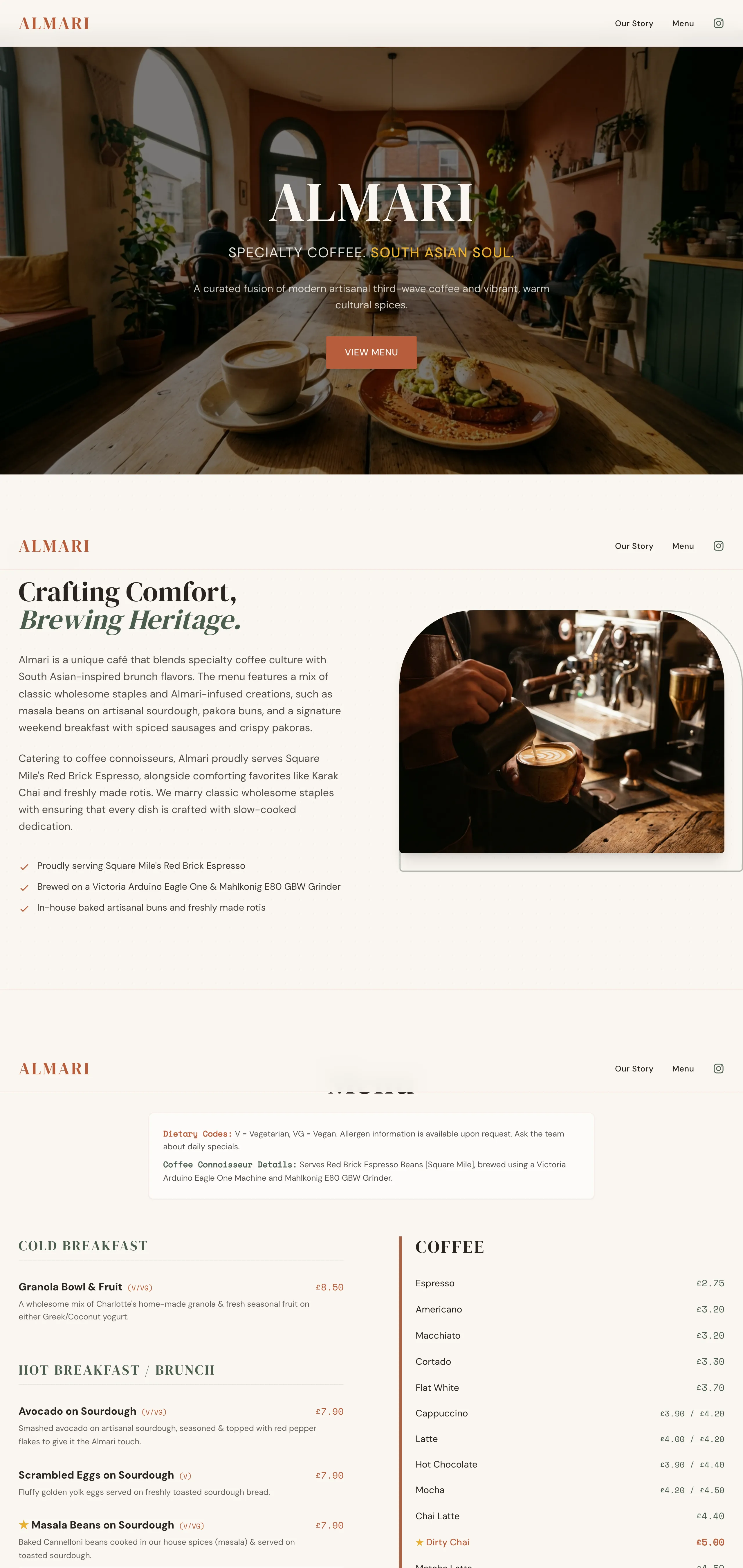
Try It FreeA real restaurant website built with Dinehere
Built from a few menu photos — this is a live site. Take a look.
Tips for Seafood Restaurant Owners
Highlight the 'Landed' Time
In your menu descriptions, mention when the fish was caught (e.g., 'Landed this morning at Newlyn Harbour'). This specific detail proves freshness more than the generic word 'fresh'.
Use Natural Light for Photos
Seafood looks best in natural daylight. Avoid yellow indoor bulbs; photograph your oysters and fish near a window to make the ice look crisp and the fish scales glisten.
Clarify 'Market Price'
Instead of just writing 'MP', consider adding a price range (e.g., '£25-£35 depending on weight') in the description. This reduces anxiety for budget-conscious diners.
Tell the Fisherman's Story
Use your 'About' section to name the specific boats or families you buy from. This narrative connects the diner to the local community and justifies premium pricing.
Optimize for 'Near Me' Searches
Ensure your address and opening hours are accurate on your Dinehere site. Seafood is often an impulse crave for coastal visitors searching for 'fish and chips near me' on Google.
Challenges Seafood Restaurants Face Online
Daily Menu Fluctuations
Why it matters: Seafood availability changes with the weather and tides. A static PDF menu from last month frustrates customers asking for dishes you don't have.
How we help: Dinehere's text-based menu editor lets you edit items in seconds from your phone, ensuring your online menu always matches the chalkboard.
Perception of Freshness
Why it matters: A poorly designed, outdated website makes customers subconsciously fear the fish might be old or the kitchen dirty.
How we help: A clean, modern, mobile-responsive layout signals professionalism and hygiene, which is critical for trust in seafood dining.
Visualizing the Food
Why it matters: Generic names like 'Fish Platter' don't convey value. Customers need to know if it's fried, grilled, or raw before visiting.
How we help: Our image-focused headers and clear descriptive text allow you to showcase the quality of your plating, distinguishing you from basic fast-food chippies.
Three Simple Steps
Upload Your Menu
Take photos of your seafood menu or upload existing images. Our AI reads any format.
AI Creates Your Site
Watch as our AI designs a beautiful website tailored to seafood cuisine aesthetics.
Go Live Instantly
Preview, make edits if needed, and publish. Your restaurant is now online.
One Price, Everything Included
or £290/year — 2 months free
No contracts, no setup fees. Cancel anytime. Just a beautiful website for your seafood restaurant.
- AI-powered website generation
- Mobile-responsive design
- Custom subdomain (yourname.dinehere.ai)
- Menu parsing from photos
- SEO optimized
- Hosting included
- SSL certificate included
Common Questions About Seafood Restaurant Websites
You can update your menu text instantly as often as you like. Since market prices for lobster or turbot fluctuate daily, you can change the price on your phone in seconds before service starts.
Yes, all Dinehere sites are mobile-responsive by default. This is crucial for seafood restaurants in coastal towns where tourists search for food while walking around.
Absolutely. You can use the 'About' or 'Story' section to display text regarding MSC certification, local boat partnerships, or your commitment to sustainable fishing practices.
Yes, you can create distinct sections on the page for 'Restaurant Menu' and 'Takeaway/Counter', helping customers understand your different offerings clearly.
Not necessarily. While good photos help, our clean design works well with just a few high-quality hero images of your best platters or the restaurant interior, letting the menu text do the work.
Yes, the storytelling section is perfect for explaining your relationship with local fishermen or your philosophy on wild vs. farmed seafood.
You can quickly log in and add a 'Sold Out' note to specific items or hide them temporarily so customers don't get disappointed upon arrival.
You can add a prominent advisory notice at the top of your menu section or in the footer regarding cross-contamination risks and allergen policies.
Related Cuisines You Might Like
Ready to Build Your Seafood Restaurant Website?
Join other seafood restaurant owners who built their websites with Dinehere.
Build My Seafood Restaurant Site