
Build Your Pizza Restaurant Website
From neighborhood pizzerias to artisan pizza, our AI creates mouth-watering websites that showcase your pies.
Pizza Restaurant Website Examples

AI-designed for Pizza restaurants
Understanding Pizza Cuisine
History & Origins
The origins of pizza can be traced back to ancient civilizations in the Mediterranean, where flatbreads garnished with herbs and oils were common staples. However, the modern iteration of pizza was born in Naples, Italy, during the 18th century as a quick, affordable meal for the working class. The most significant milestone occurred in 1889 when pizzaiolo Raffaele Esposito allegedly created the Pizza Margherita—featuring tomatoes, mozzarella, and basil to represent the Italian flag—in honor of Queen Margherita of Savoy. This event elevated the humble dish from street food to a national icon. Following World War II, pizza exploded in popularity globally, particularly in the UK and US, carried by returning soldiers and Italian immigrants. What began as a strictly Neapolitan tradition evolved rapidly as it crossed borders, adapting to local tastes and ingredient availability. Today, pizza has transformed from a simple peasant dish into a global culinary phenomenon, ranging from strict traditionalist interpretations protected by European law to avant-garde gourmet creations.
Regional Styles
Pizza is defined by its regional styles, each boasting unique dough hydration, fermentation times, and cooking methods. The Neapolitan style is characterized by a soft, thin crust with a puffy, charred edge (cornicione) cooked rapidly in wood-fired ovens. In contrast, Roman pizza comes in two main forms: 'al taglio' (baked in rectangular trays and sold by weight) and 'tonda' (round, cracker-thin, and crispy). Across the Atlantic, styles like New York (large, foldable slices), Chicago (deep-dish casserole style), and Detroit (rectangular with a caramelized cheese 'frico' edge) have developed their own cult followings.
Signature Techniques
The soul of any great pizzeria lies in its dough management. Key techniques include long fermentation periods (often 24 to 72 hours) to develop complex flavors and digestibility. Hydration levels—the ratio of water to flour—are strictly controlled to achieve specific textures, from the airy lightness of a pinsa to the chew of a bagel crust. Stretching is an art form itself; while traditionalists insist on hand-slapping the dough to push air into the crust, other styles utilize rolling pins or pans. Finally, oven management is critical, whether maintaining a blistering 480°C (900°F) in a wood-fired dome or regulating heat zones in a gas deck oven.
Dining Culture
Pizza is inherently social and communal, designed to be shared among friends and family. In Italy, a pizzeria is often a loud, energetic environment where pizzas are served uncut and eaten with a knife and fork, or folded 'a portafoglio' as street food. In the UK and US, the culture often leans towards the 'slice shop' for quick lunches or the takeaway tradition for family nights. Regardless of the setting, the dining culture revolves around informality and comfort, making it one of the most accessible dining experiences available.
Our AI understands pizza
Ingredient Provenance Showcase
Dedicate space to explain the origin of your San Marzano tomatoes, fior di latte, or 00 flour to justify premium pricing and signal quality.
Dietary Iconography
Instantly flag gluten-free crusts, vegan cheese options, and halal meats on your digital menu, which is critical for modern group ordering.
Oven & Atmosphere Imagery
High-impact visual sections to display your wood-fired oven or cozy dining room, helping customers choose you for a dine-in experience.
Mobile-First Menu Scaling
Ensures complex menus with multiple sizes and topping lists are readable on phones without pinch-zooming, crucial for hungry mobile users.
Dough & Fermentation Story
A specialized 'About' section to explain your 48-hour fermentation process, differentiating your craft product from fast-food chains.
AI That Understands Pizza Menus
Our AI automatically recognizes and organizes traditional pizza menu categories.
Pizze Rosse (Red Base)
Traditional tomato-based pies featuring San Marzano sauce.
Pizze Bianche (White Base)
Olive oil or cream-based pizzas without tomato sauce.
Antipasti & Fritti
Starters like Arancini, Bruschetta, and fried dough bites.
Calzones & Panuozzo
Folded pizzas and pizza-dough sandwiches.
Bambini (Kids)
Smaller, simpler pizzas for children.
Upload your menu photos and watch the magic happen
Try It FreeA real restaurant website built with Dinehere
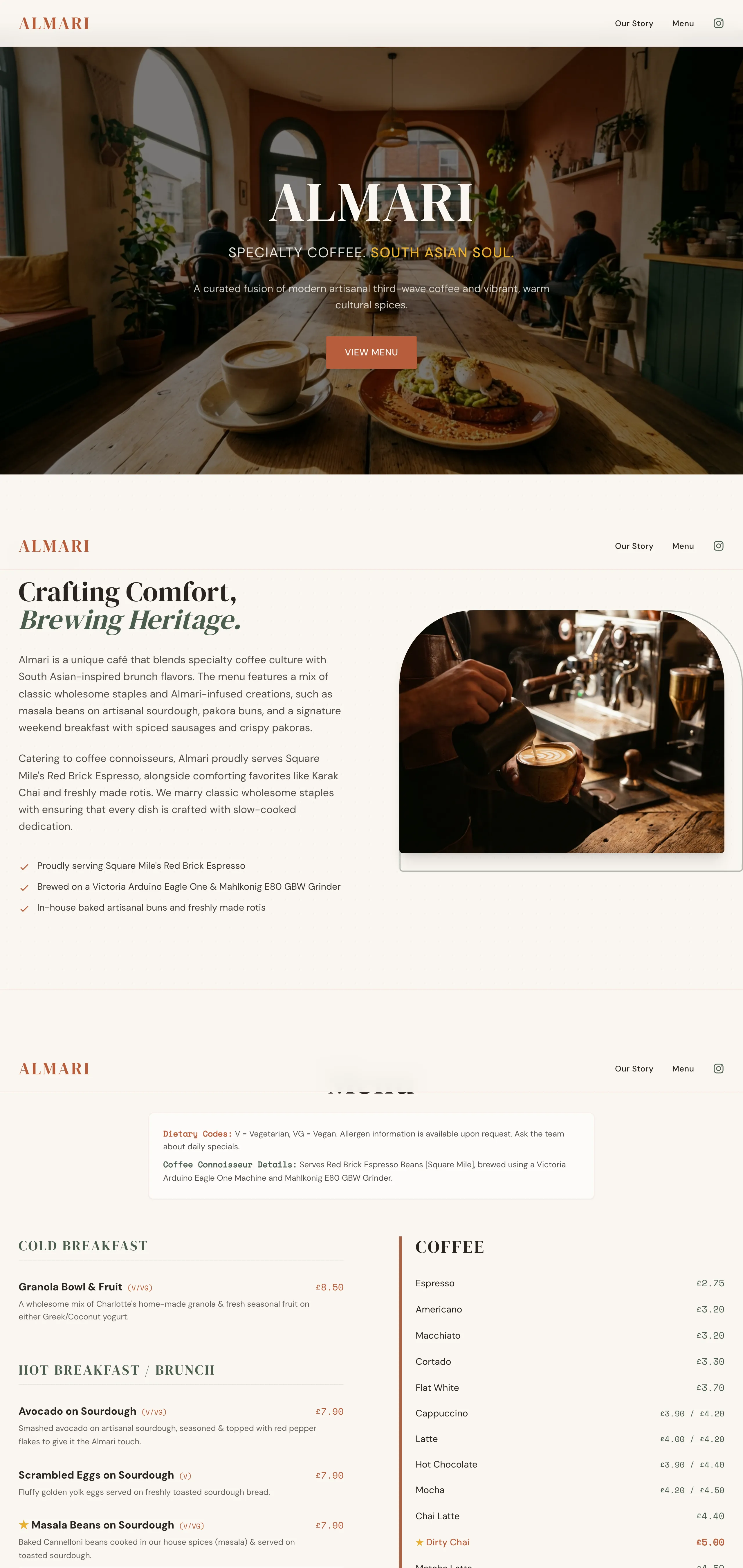
Built from a few menu photos — this is a live site. Take a look.
Tips for Pizza Restaurant Owners
Showcase the Cornicione
When taking photos, don't just shoot from above. Get a side angle to show the airiness and char of the crust (cornicione), which signals quality dough to pizza aficionados.
Highlight Your Flour Source
Pizza lovers are increasingly educated. Mentioning you use Caputo '00' flour or a local organic mill in your 'About' section adds immediate credibility and justifies higher prices.
Clarify Size Expectations
Use your website to visually or textually explain your sizes. A 'Personal 10-inch' vs a 'Sharing 18-inch' distinction prevents negative reviews about portion sizes.
Suggest Beverage Pairings
On your digital menu, suggest a specific wine or craft beer for your signature pizzas. This encourages customers to order drinks when they visit, increasing ticket size.
Tell the Oven Story
If you use a wood-fired or coal oven, mention it prominently. The cooking method is a specific flavor profile that customers actively search for online.
Challenges Pizza Restaurants Face Online
Reliance on Third-Party Aggregators
Why it matters: Apps like Deliveroo or UberEats take huge commissions (up to 30%) and hide customer data from you.
How we help: Dinehere gives you an independent platform to showcase your menu, encouraging locals to call or walk in directly, saving you the commission fees.
Illegible Social Media Menus
Why it matters: Posting a photo of a printed menu on Facebook makes it hard for users to read on mobile, leading to lost sales.
How we help: We convert your menu into a clean, mobile-responsive HTML format that is easy to read, searchable, and always looks professional on any device.
Inconsistent Opening Hours
Why it matters: Pizza shops often have late-night hours that vary. Incorrect info on the web leads to frustrated customers arriving at a closed shop.
How we help: We provide a single source of truth for your hours that is easy to update, ensuring your Google Business Profile and website always match.
Three Simple Steps
Upload Your Menu
Take photos of your pizza menu or upload existing images. Our AI reads any format.
AI Creates Your Site
Watch as our AI designs a beautiful website tailored to pizza cuisine aesthetics.
Go Live Instantly
Preview, make edits if needed, and publish. Your restaurant is now online.
One Price, Everything Included
or £290/year — 2 months free
No contracts, no setup fees. Cancel anytime. Just a beautiful website for your pizza restaurant.
- AI-powered website generation
- Mobile-responsive design
- Custom subdomain (yourname.dinehere.ai)
- Menu parsing from photos
- SEO optimized
- Hosting included
- SSL certificate included
Common Questions About Pizza Restaurant Websites
Absolutely. A Dinehere website is perfect for driving foot traffic and phone orders. We emphasize your location, hours, and phone number so customers know exactly how to reach you without third-party fees.
Yes, our system handles size variants perfectly. Your menu will clearly display the price differences for each size alongside the toppings description, just like a printed menu.
We can include a dedicated 'Crust Options' or 'Modifications' section at the top of your menu or within item descriptions to clearly communicate extra costs for specialty doughs.
Not at all. You can request updates whenever your menu changes. This is much better than having an outdated PDF menu floating around the internet that frustrates customers.
No. While great photos help, you don't need a photo for every item. We can use a few high-quality 'hero' shots of your best-sellers to set the mood, and list the rest in a clean text format.
Yes. Having a verified website linked to your Google Business Profile is a major ranking factor. It proves to Google you are a legitimate, active business, helping you appear in 'pizza near me' searches.
Definitely. We can add prominent buttons that link customers directly to your delivery partner pages if they prefer to order that way, while keeping your direct info visible for locals.
We structure long menus into clear, collapsible or distinct categories (e.g., Reds, Whites, Calzones) so the customer isn't overwhelmed and can find exactly what they want.
Best Cities for Pizza Restaurants
Related Cuisines You Might Like
Ready to Build Your Pizza Restaurant Website?
Join other pizza restaurant owners who built their websites with Dinehere.
Build My Pizza Restaurant Site