
Build Your Sushi Restaurant Website
From neighborhood sushi bars to omakase experiences, our AI creates elegant websites that showcase your craft.
Sushi Restaurant Website Examples

AI-designed for Sushi restaurants
Understanding Sushi Cuisine
History & Origins
The origins of sushi date back over a thousand years, not as the fresh delicacy we know today, but as a method of preserving fish known as 'narezushi.' Originating in Southeast Asia and spreading to Japan, fish was fermented in rice for months; the rice was discarded, and only the preserved fish was eaten. By the Muromachi period, people began eating the rice with the fish before fermentation was complete, creating a sour taste that eventually led to the addition of vinegar to fresh rice. The modern form of 'nigiri' sushi was born in Edo (now Tokyo) in the early 19th century. Hanaya Yohei is often credited with the innovation of hand-pressing vinegared rice with a slice of fresh fish, creating a 'fast food' that could be eaten at roadside stalls. This style, known as Edomae sushi, relied on cooking or curing the fish (via simmering, salting, or marinating) to prevent spoilage before refrigeration existed. Following World War II and the advent of advanced refrigeration and logistics, sushi evolved into a global phenomenon, transforming from a street snack into one of the world's most refined culinary arts.
Regional Styles
While 'Edomae' (Tokyo style) focuses on nigiri and marinated toppings, the Kansai region (Osaka) is famous for 'Oshizushi' or pressed sushi. In this style, rice and toppings are pressed into wooden molds (oshibako) to create perfect rectangular blocks, often using cured fish like mackerel. Another distinct variation is 'Temarizushi' from Kyoto, which are small, ball-shaped sushi designed for elegant visual presentation. Globally, Western-style sushi has developed its own distinct identity. The introduction of the 'uramaki' (inside-out roll), such as the California Roll, catered to Western palates by hiding the seaweed and incorporating ingredients like avocado and cream cheese. In recent years, 'Nikkei' cuisine has also risen in popularity, fusing Japanese techniques with Peruvian ingredients like lime, chili, and corn.
Signature Techniques
The heart of sushi lies in 'shari' (sushi rice). Chefs spend years mastering the washing of the rice to remove starch, cooking it to the perfect consistency, and folding in 'su' (vinegar mix) while fanning it to achieve a glossy finish and body temperature serving. The balance of sweet, sour, and salty in the rice is the canvas upon which the fish sits. Knife skills, or 'hocho-do', are equally critical. Techniques vary based on the fish's texture: 'sogigiri' (slant cut) is used for white fish to create surface area, while 'hirazukuri' (rectangular cut) is standard for tuna. Chefs also employ 'kobujime' (curing fish between kelp strips) to impart umami and firm up the texture of softer fish.
Dining Culture
Traditional sushi dining is an exercise in minimalism and respect. At a high-end 'sushiya', the counter is the stage; diners eat pieces immediately as the chef presents them, often without adding extra soy sauce if the chef has already applied 'nikiri' (sweet soy glaze). Ginger is intended strictly as a palate cleanser between courses, not as a garnish to be eaten with the fish. Conversely, 'Kaitenzushi' (conveyor belt sushi) represents the democratization of sushi, offering a casual, high-volume environment. Whether at a Michelin-starred counter or a casual neighborhood spot, the emphasis remains on the freshness of ingredients ('shun' or seasonality) and the harmonious balance between the topping ('neta') and the rice.
Our AI understands sushi
Seasonal Menu Agility
Easily update your digital menu to reflect daily catch availability or seasonal specialties like Sanma or Uni without printing new sheets.
Ingredient Provenance Story
A dedicated section to highlight where your fish is sourced (e.g., Tsukiji via air freight or local sustainable fisheries), building trust with connoisseurs.
Visual Texture Clarity
High-contrast image support that captures the gloss of the sash and the grain of the rice, essential for appetizing sushi presentation.
Omakase Explanation Area
Space to clearly articulate your chef's tasting menu philosophy, pricing, and course count to manage customer expectations before they arrive.
Dietary Filter Tags
Clear indicators for gluten-free (tamari options), vegetarian, or cooked rolls, helping anxious customers navigate the menu confidently.
Etiquette & Guide Section
An 'About' subsection to educate diners on how to enjoy your specific style of sushi, from soy sauce usage to eating with hands vs. chopsticks.
AI That Understands Sushi Menus
Our AI automatically recognizes and organizes traditional sushi menu categories.
Zensai / Otsumami
Small appetizers to start the meal, such as Edamame, Ohitashi (spinach in broth), or Chawanmushi (steamed egg custard).
Omakase
Chef's selection course, typically priced per person, featuring the day's best catches.
Donburi
Rice bowls topped with sashimi (Chirashi), grilled eel (Unadon), or salmon roe (Ikura-don).
Temaki
Cone-shaped hand rolls meant to be eaten immediately while the nori is crisp.
Agemono
Fried dishes like Tempura (battered seafood/veg) or Karaage (fried chicken).
Suimono / Miso
Soups, often clear broth with clams or red miso soup with fish stock.
Upload your menu photos and watch the magic happen
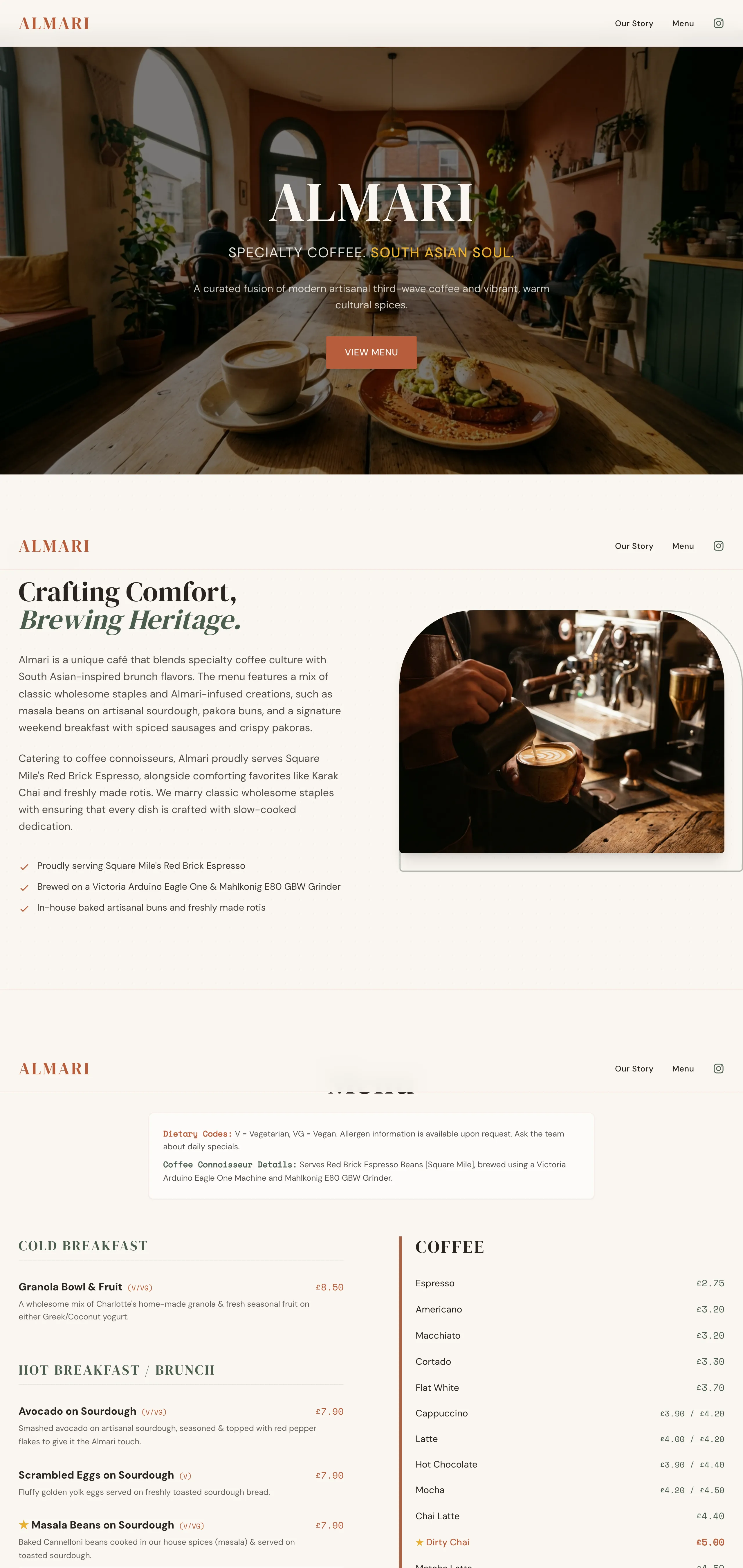
Try It FreeA real restaurant website built with Dinehere
Built from a few menu photos — this is a live site. Take a look.
Tips for Sushi Restaurant Owners
Highlight the 'Shari' (Rice)
Sushi connoisseurs judge a restaurant by its rice. Use your website's 'About' section to mention the type of vinegar you use (e.g., Akazu red vinegar) or the specific rice grain, signaling authenticity to serious diners.
Use Macro Photography
Sushi is about texture. Avoid wide shots of empty tables; instead, use close-up photos of the fish that show the glistening oils and knife scores. This triggers the appetite more effectively than atmospheric shots.
Demystify the Experience
Sushi can be intimidating. Include a simple 'How to Order' or 'Dining Logic' guide on your site (e.g., 'We recommend ordering light fish before fatty fish') to make newcomers feel welcome and savvy.
Showcase the Chef
Sushi is a personal craft. Include a photo and bio of your head chef. Knowing who is handling their raw food builds immense trust and establishes a connection before the customer walks in.
Clarify Sourcing Policies
If you use sustainable fish or fly ingredients in from Japan, state it clearly. This value proposition justifies price points and differentiates you from generic high-street sushi chains.
Challenges Sushi Restaurants Face Online
PDF Menus on Mobile
Why it matters: Sushi menus are dense. Pinching and zooming on a PDF to read small text about ingredients frustrates hungry mobile users, causing them to bounce to a competitor.
How we help: Dinehere converts your menu into a mobile-responsive digital format. Categories like 'Nigiri' and 'Rolls' are collapsible and text is perfectly legible on any screen size.
Lack of Visual Context
Why it matters: Names like 'O-Toro' or 'Uni' mean nothing to some customers. Without visual cues or descriptions, customers default to ordering cheaper, familiar items like Salmon.
How we help: Our simple menu editor allows you to attach descriptions and photos to specific items, educating the customer and encouraging them to try higher-margin, premium items.
Outdated Seasonal Items
Why it matters: Leaving winter fish on a summer menu looks unprofessional and leads to awkward 'we are out of that' conversations at the table.
How we help: You can hide or remove items in seconds using our dashboard. This allows you to maintain an accurate 'Live Menu' that reflects exactly what the chef has in the case that day.
Three Simple Steps
Upload Your Menu
Take photos of your sushi menu or upload existing images. Our AI reads any format.
AI Creates Your Site
Watch as our AI designs a beautiful website tailored to sushi cuisine aesthetics.
Go Live Instantly
Preview, make edits if needed, and publish. Your restaurant is now online.
One Price, Everything Included
or £290/year — 2 months free
No contracts, no setup fees. Cancel anytime. Just a beautiful website for your sushi restaurant.
- AI-powered website generation
- Mobile-responsive design
- Custom subdomain (yourname.dinehere.ai)
- Menu parsing from photos
- SEO optimized
- Hosting included
- SSL certificate included
Common Questions About Sushi Restaurant Websites
Yes. Dinehere is built for speed. You can toggle items on or off or update text descriptions from your phone in seconds, ensuring your online menu always matches what is available at the counter.
Absolutely. You can list items as 'MP' or 'Seasonal Price' in the menu editor, allowing you to feature premium cuts like Otoro or Uni without committing to a fixed digital price tag.
The 'About' or 'Story' section is perfect for this. We recommend a dedicated paragraph explaining your rice preparation (shari) and sourcing of wasabi, as these details justify higher price points.
No. Our design uses collapsible categories. Customers can tap 'Maki', 'Nigiri', or 'Special Rolls' to expand only what they want to see, keeping the mobile experience clean and scroll-free.
Yes. The menu item fields allow for dual-language input. You can list 'Hamachi' as the title and 'Yellowtail' in the description, or vice versa, to cater to both purists and newcomers.
Not at all. Dinehere removes the clutter of 'Order Now' buttons. Your website will serve purely as a digital brochure to showcase your quality, location, and hours, driving foot traffic rather than online orders.
High-quality photos are key. Our template highlights your imagery. By uploading photos of your knife work and fresh fish textures, the visual difference between your product and mass-produced sushi becomes immediately obvious.
Yes. While we don't build booking software, you can easily add a prominent button that links directly to your existing reservation provider's page.
Best Cities for Sushi Restaurants
Related Cuisines You Might Like
Ready to Build Your Sushi Restaurant Website?
Join other sushi restaurant owners who built their websites with Dinehere.
Build My Sushi Restaurant Site