
Build Your Argentinian Restaurant Website
From neighborhood parrillas to upscale steakhouses, our AI creates bold websites that celebrate Argentine passion for beef.
Argentinian Restaurant Website Examples

AI-designed for Argentinian restaurants
Understanding Argentinian Cuisine
History & Origins
Argentine cuisine is a rich tapestry woven from the indigenous agricultural traditions of South America and the massive waves of European immigration, primarily from Italy and Spain, during the 19th and 20th centuries. While the indigenous peoples of the northwest contributed staples like corn, potatoes, and peppers, the vast grassy plains of the Pampas gave rise to the nation's defining culinary icon: the gaucho and his cattle. This cattle culture established beef as the undisputed king of the Argentine table, creating a society where the consumption of red meat per capita is among the highest in the world. The unique character of Argentine food lies in its simplicity and reliance on high-quality ingredients rather than heavy spices. The colonial Spanish influence introduced empanadas and stews, while the Italian diaspora radically transformed the culinary landscape, making pasta, pizza, and milanesas (breaded meat cutlets) as ubiquitous as steak. Today, Argentine cuisine is celebrated globally not just for its grass-fed beef, but for the ritual of the 'asado'—a social event centered around fire, meat, and friendship that sits at the very heart of the national identity.
Regional Styles
While the Pampas region is famous for its beef and asados, Argentina's diverse geography offers distinct regional flavors. In the Andean Northwest (Salta and Jujuy), the food is spicier and retains strong indigenous roots, featuring dishes like locro (hearty corn stew), humitas (fresh corn tamales), and distinctively small, baked empanadas. In Patagonia, specifically the southern regions, Cordero Patagónico (spit-roasted lamb) takes precedence over beef, often accompanied by trout from glacial lakes and berries from the forests. Meanwhile, the cosmopolitan capital of Buenos Aires serves as a melting pot where bodegones (traditional taverns) serve massive portions of fresh pasta and milanesas alongside classic grilled cuts.
Signature Techniques
The defining technique of Argentine cooking is the 'asado,' which is far more than just grilling. It involves slow-cooking meat over 'brazas' (hot coals) or wood fire on a 'parrilla' (cast-iron grill) or 'asador' (cross-shaped metal stake). The goal is to cook the meat slowly to preserve its juices without overpowering it with smoke. Another distinct method is 'cooking to the disco,' using an iron plough disc over an open fire to sauté meats and vegetables. Baking is also crucial, particularly for the endless variety of regional empanadas, each folded with a specific 'repulgue' (braided edge) to indicate its filling.
Dining Culture
Dining in Argentina is a prolonged social affair. Dinner is traditionally eaten late, often starting after 9:00 PM or even 10:00 PM in cities. Meals are never rushed; the concept of 'sobremesa'—lingering at the table for an hour or more after eating to talk and drink coffee—is a vital cultural practice. Sundays are almost exclusively reserved for the family asado, a ritual that can last the entire afternoon. Wine, particularly Malbec, is considered food rather than a luxury and is present at nearly every dinner table.
Our AI understands Argentinian cuisine
Steak Cut Glossary Integration
Space to clearly explain distinct Argentine cuts (e.g., Vacio vs. Flank) to educate customers who may not know the difference.
Wine Varietal Highlighting
Dedicated sections to showcase Malbec, Torrontés, and Bonarda selections with tasting notes alongside the food menu.
High-Res Meat Photography
Image-first layout that emphasizes the texture and char of grilled meats, crucial for appetizing steakhouse presentation.
Dietary Filter for Sides
Clear indicators for vegetarian options like salads and grilled vegetables, helping groups with mixed dietary needs navigate a meat-heavy menu.
Imported Goods Showcase
A specific section to highlight retail items you might sell, such as jars of Dulce de Leche, Yerba Mate, or Alfajores.
AI That Understands Argentinian Menus
Our AI automatically recognizes and organizes traditional argentinian menu categories.
Entradas Calientes
Hot appetizers and starters
Pastas Caseras
Homemade pasta dishes
Achuras
Offal and starter meats
Guarniciones
Side dishes
Minutas
Quick, short-order dishes
Carta de Vinos
Wine List
Upload your menu photos and watch the magic happen
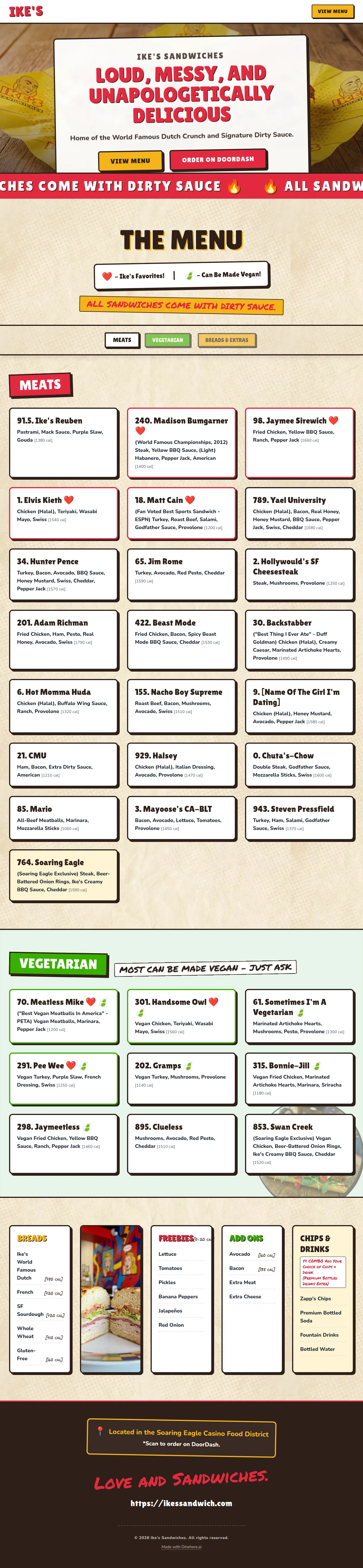
Try It FreeA real restaurant website built with Dinehere
Built from a few menu photos — this is a live site. Take a look.
Tips for Argentinian Restaurant Owners
Photograph the Texture
When taking photos of steak, lighting is key. Ensure the 'costra' (sear) and the juices are visible; flat lighting makes meat look unappealing. Use warm light to accentuate the browns and reds of the grill.
Educate on Portions
Argentine portions are notoriously large. Use your item descriptions to indicate if a dish like a 'Milanesa' or 'Parrillada' is intended to be shared, which adds value and prevents customer confusion.
Tell the Story of the Cut
Don't just list 'Vacio'. Describe it as 'Flank steak with a protective fat layer that keeps it incredibly juicy and flavorful.' Romance the description to justify the price and quality.
Highlight the 'Casero' Aspect
If your empanadas, pastas, or flan are homemade ('casero'), mention it in every description. This distinction is vital in Argentine cuisine and sets you apart from frozen competitors.
Promote the Sobremesa Experience
Mention your coffee and dessert selection prominently. Encouraging customers to stay for coffee and flan increases check average and reinforces the authentic cultural experience.
Challenges Argentinian Restaurants Face Online
Translating Butchery Terms
Why it matters: Direct translations often fail (e.g., translating 'Bife de Chorizo' as 'Sausage Steak' would be disastrous). Customers need to know exactly what cut of beef they are ordering.
How we help: Dinehere gives you unlimited text space for descriptions, allowing you to list the Spanish name for authenticity while explaining the cut in English (e.g., 'New York Strip style') to avoid confusion.
Visualizing 'Brown' Food
Why it matters: Grilled meats, empanadas, and milanesas are all brown dishes. On a cluttered or dark website, they can look unappetizing or indistinguishable.
How we help: Our clean, white-space-oriented designs allow your food photos to pop. The simple layout ensures that the texture and juiciness of the meat stand out without distraction.
Managing Wine Inventory Online
Why it matters: Argentine restaurants often have rotating wine lists based on import availability. PDF menus become outdated quickly, leading to customer disappointment.
How we help: Dinehere's digital menu editor allows you to hide out-of-stock wines or add new vintages instantly from your phone, ensuring your online wine list always matches your cellar.
Three Simple Steps
Upload Your Menu
Take photos of your argentinian menu or upload existing images. Our AI reads any format.
AI Creates Your Site
Watch as our AI designs a beautiful website tailored to argentinian cuisine aesthetics.
Go Live Instantly
Preview, make edits if needed, and publish. Your restaurant is now online.
One Price, Everything Included
or $390/year — 2 months free
No contracts, no setup fees. Cancel anytime. Just a beautiful website for your argentinian restaurant.
- AI-powered website generation
- Mobile-responsive design
- Custom subdomain (yourname.dinehere.ai)
- Menu parsing from photos
- SEO optimized
- Hosting included
- SSL certificate included
Common Questions About Argentinian Restaurant Websites
Yes. Dinehere allows you to add detailed descriptions to every item. This is perfect for explaining that 'Entraña' is skirt steak or clarifying the difference between 'Bife de Chorizo' and 'Bife Angosto' to customers unfamiliar with Argentine butchery.
Not at all. You can update your wine list in seconds from your phone. If a specific vintage of Malbec runs out, you can hide it or replace it instantly so customers always see accurate availability.
Yes. You can write your menu item names in Spanish (e.g., 'Mollejas al Verdeo') and the descriptions in English, or mix both to maintain authenticity while ensuring accessibility for all local diners.
Absolutely. You can create a dedicated 'Lunch Specials' or 'Menu Ejecutivo' category that appears at the top of your menu, ensuring office workers and lunch crowds see your value offers first.
Yes, we encourage it. Since the 'repulgue' (fold) often identifies the flavor, having a photo for your Beef, Chicken, and Humita empanadas helps customers choose exactly what they want visually.
That's fine. Dinehere looks professional even without a photo for every single item. You can start with photos of your star dishes (like the Parrillada) and add more images of sides and desserts later as you take them.
Yes. We include a prominent Google Maps integration and address display. This is critical for driving foot traffic, ensuring that when someone searches for 'Argentinian steak near me,' they can find directions to your door immediately.
Dinehere is a simple, flat subscription ($39/month, or $390/year with two months free) with hosting and a custom subdomain included. The price doesn't change with your traffic, there are no setup fees or hidden costs, and you can cancel anytime.
Best Cities for Argentinian Restaurants
Related Cuisines You Might Like
Ready to Build Your Argentinian Restaurant Website?
Join other argentinian restaurant owners who built their websites with Dinehere.
Build My Argentinian Restaurant Site