
Build Your Greek Restaurant Website
From traditional tavernas to modern Greek cuisine, our AI creates websites that capture Hellenic warmth.
Greek Restaurant Website Examples

AI-designed for Greek restaurants
Understanding Greek Cuisine
History & Origins
Greek cuisine is one of the oldest and most influential culinary traditions in the world, with roots tracing back over 4,000 years to Ancient Greece. Fundamentally based on the 'Mediterranean Triad' of wheat, olive oil, and wine, the cuisine has evolved through centuries of history, absorbing influences from the Romans, the Byzantine Empire, and the Ottoman Turks. This rich timeline introduced ingredients like tomatoes, potatoes, and various spices to the Greek pantry, creating the vibrant, flavor-forward profile we recognize today. While ancient Greeks focused on simple roasted meats and honey-sweetened treats, the modern Greek culinary landscape is defined by the concept of 'cucina povera' or peasant cooking—making incredible dishes from simple, seasonal ingredients. Following the diaspora in the 20th century, Greek cuisine traveled globally, transforming from strictly home-cooked family meals into a beloved restaurant category ranging from casual street food souvlaki joints to high-end seafood establishments.
Regional Styles
Greece's geography heavily dictates its culinary variations. In the islands (Nisiotika), the focus is heavily on seafood, fresh vegetables, and distinct cheeses like Mizithra, often prepared simply with lemon and oregano to highlight freshness. Crete is renowned for its specific diet utilizing wild greens (horta), snails, and barley rusks (dakos). Conversely, Northern Greece and the mainland, particularly around Thessaloniki and Macedonia, show stronger Balkan and Ottoman influences, featuring richer meat dishes, savory pies (pites) made with intricate phyllo layers, and sweeter, spice-laden desserts.
Signature Techniques
Greek cooking relies on patience and distinct flavor balancing. 'Ladera' describes the technique of cooking vegetables in generous amounts of olive oil until they are meltingly soft. The 'Avgolemono' method—tempering eggs with lemon juice and warm broth—is iconic for thickening soups and sauces without cream. Grilling (tis oras) over charcoal is essential for meats and fish, while 'Souvla' involves slow-roasting whole cuts on a spit. Finally, the art of working with phyllo dough, whether for savory Spanakopita or sweet Baklava, requires precision and butter-layering techniques passed down through generations.
Dining Culture
At the heart of Greek dining is the concept of 'Philoxenia'—friend of the stranger—which translates to profound hospitality. Dining is rarely a solitary or rushed affair; it is a communal event centered around sharing. The 'Meze' culture encourages ordering many small plates for the table rather than individual entrees, fostering conversation and connection. Whether in a rustic 'Taverna' or a loud 'Ouzeri', the atmosphere is typically informal, loud, and lingering, where food is meant to be enjoyed 'siga siga' (slowly, slowly).
Our AI understands Greek cuisine
Visual 'Fresh Counter' Display
Recreate the experience of a taverna's fresh fish or meat display case using high-quality photo galleries.
Dietary & Fasting Indicators
Easily tag dishes as Vegetarian or 'Nistisima' (Lenten/Fasting friendly), a crucial aspect of Greek dining culture.
Bilingual Menu Support
List authentic names (e.g., 'Xtapodi') alongside English descriptions so customers learn while they browse.
Family Story Section
A dedicated space to share your family's migration story or the origins of your grandmother's recipes.
Daily Specials Spotlight
Highlight 'Mageirefta' (cooked dishes of the day) which change frequently in authentic Greek kitchens.
Catering & Events Layout
Clearly display large-format menu options for baptisms, name days, and weddings.
AI That Understands Greek Menus
Our AI automatically recognizes and organizes traditional greek menu categories.
Orektika (Appetizers)
Small starter plates including dips like Tzatziki, Melitzanosalata, and Tirokafteri.
Tis Oras (From the Hour)
Grilled meats cooked to order, including Paidakia (lamb chops) and Mpifteki.
Mageirefta (Homestyle Cooking)
Oven-baked dishes like Gemista, Moussaka, and Pastitsio.
Thalassina (Seafood)
Fresh catch including grilled Octopus, Calamari, and whole Lavraki (Bronzini).
Salates (Salads)
Seasonal variety including authentic Horiatiki (Village Salad) and Marouli (Lettuce).
Glyka (Sweets)
Syrup-soaked pastries like Baklava and Kataifi, or spoon sweets.
Upload your menu photos and watch the magic happen
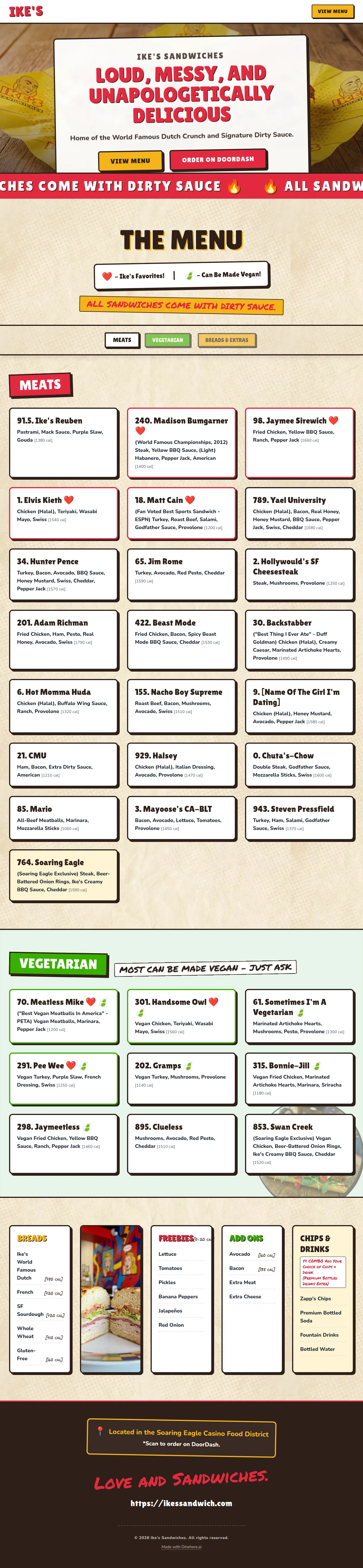
Try It FreeA real restaurant website built with Dinehere
Built from a few menu photos — this is a live site. Take a look.
Tips for Greek Restaurant Owners
Explain the Ingredients
Don't assume everyone knows what 'Kefalograviera' is. Use your menu descriptions to briefly explain ingredients (e.g., 'hard, salty sheep's milk cheese') to make dishes more approachable for non-Greeks.
Highlight Imported Goods
If you import your olive oil from Kalamata or your oregano from Mount Taygetos, mention it prominently. Provenance is a huge selling point for authentic Greek cuisine.
Showcase the 'Parea' Vibe
Use your 'About' section to emphasize that your restaurant is a place for 'Parea' (company of friends). Mention that lingering over coffee and dessert is encouraged, not rushed.
Leverage Lenten Season
During the 40 days before Easter, update your site to highlight your 'Nistisimo' (fasting) menu. This attracts not just religious observers, but also the growing vegan community.
Photography of Whole Fish
If you serve whole grilled fish, include a photo of the presentation. It signals freshness and authenticity that distinguishes you from fast-food gyro spots.
Challenges Greek Restaurants Face Online
Menu Complexity & Terminology
Why it matters: Customers may feel intimidated by unfamiliar names or large menus and choose a 'safer' option like pizza.
How we help: Dinehere's clean menu structure allows for clear categorization and ample space for English descriptions, making the menu educational and inviting.
Differentiating from Fast Food
Why it matters: Full-service Greek restaurants often get lumped in with fast-food gyro stands in search results.
How we help: A dedicated, professional website establishes your brand identity as a sit-down dining experience, separating you from delivery-only takeout spots.
Inaccurate Third-Party Menus
Why it matters: TripAdvisor or Yelp often display outdated photos of menus with old prices, leading to customer disputes.
How we help: By having your own Dinehere site, you establish the 'source of truth.' You can direct all Google Maps traffic to your site where YOU control the prices and items.
Three Simple Steps
Upload Your Menu
Take photos of your greek menu or upload existing images. Our AI reads any format.
AI Creates Your Site
Watch as our AI designs a beautiful website tailored to greek cuisine aesthetics.
Go Live Instantly
Preview, make edits if needed, and publish. Your restaurant is now online.
One Price, Everything Included
or $390/year — 2 months free
No contracts, no setup fees. Cancel anytime. Just a beautiful website for your greek restaurant.
- AI-powered website generation
- Mobile-responsive design
- Custom subdomain (yourname.dinehere.ai)
- Menu parsing from photos
- SEO optimized
- Hosting included
- SSL certificate included
Common Questions About Greek Restaurant Websites
Yes. Since traditional Greek kitchens often rotate oven-cooked specials daily, our simple editor lets you update text quickly from your phone without needing a developer.
Absolutely. You can list the authentic Greek name as the item title and use the description field to explain the ingredients (e.g., 'Dandelion greens with lemon' or 'Fried Kefalograviera cheese').
Yes, Dinehere fully supports UTF-8 characters, so you can display the Greek spelling alongside the English transliteration if you wish.
It is. While photos help, Dinehere's clean layouts look professional even with just text menus. You can add photos later as you take them with your smartphone.
Definitely. You can create a distinct section for 'Krasia' to showcase your Assyrtiko, Agiorgitiko, and Retsina selections with tasting notes.
Yes, all Dinehere sites are fully responsive. This is critical for capturing tourists looking for 'Greek food near me' on their phones.
You can easily adjust your opening hours or add a temporary announcement banner to the top of your site for specific holidays like Pascha.
No, Dinehere focuses purely on showcasing your brand and menu to bring people through your door. We provide a clear 'Call to Order' button linked to your phone number.
Not at all. Unlike custom agencies that charge thousands, Dinehere offers a low-cost, professional presence designed specifically for small business owners.
Best Cities for Greek Restaurants
Related Cuisines You Might Like
Ready to Build Your Greek Restaurant Website?
Join other greek restaurant owners who built their websites with Dinehere.
Build My Greek Restaurant Site