
Build Your Vegan Restaurant Website
From casual vegan cafes to upscale plant-based dining, our AI creates fresh websites that celebrate your mission.
Vegan Restaurant Website Examples

AI-designed for Vegan restaurants
Understanding Vegan Cuisine
History & Origins
While plant-based eating traces its roots back to ancient civilizations in India and Greece—most notably through the concept of Ahimsa and the Pythagorean diet—the specific term 'vegan' was coined in 1944 by Donald Watson in the UK, marking a distinct separation from vegetarianism by excluding all animal byproducts. For decades, it remained a fringe counter-culture movement, often associated with asceticism and limited culinary variety. The cuisine relied heavily on simple whole foods like lentils, rice, and seasonal vegetables, often found only in health food cooperatives or specific religious communities. The culinary landscape shifted dramatically in the early 21st century with the advent of food technology and a global shift toward sustainability. Chefs began treating vegetables with the same reverence as meat, utilizing techniques like smoking, curing, and sous-vide to extract deep, umami flavors. Today, vegan cuisine has bifurcated into two distinct but thriving paths: the high-tech 'molecular' approach that mimics animal proteins with uncanny precision, and the 'whole food' renaissance that celebrates farm-to-table produce in its natural state. It has graduated from side dishes to center-stage at Michelin-starred establishments.
Regional Styles
In the United States, vegan cuisine varies significantly by geography. The West Coast, particularly California, champions 'high-vibration' raw foods, focusing on living enzymes, sprouted grains, and intricate nut-based cheeses. Conversely, the American South has birthed 'Vegan Soul Food,' where jackfruit and oyster mushrooms are battered and fried to replicate the texture of traditional comfort foods like chicken or catfish. The Northeast tends to focus on fusion and fine dining, blending global techniques to create sophisticated, vegetable-forward tasting menus.
Signature Techniques
Modern vegan cooking relies on ingenuity to replicate textures and flavors. 'Fermentation' is paramount, used to create cultured nut cheeses that rival dairy in complexity. 'Vital Wheat Gluten' manipulation (seitan) is washed and kneaded to create fibrous, meat-like textures. 'Aquafaba' (chickpea brine) is whipped to replace egg whites in meringues and baking. Additionally, chefs use 'umami-bombing'—layering ingredients like nutritional yeast, miso, soy sauce, and tomato paste—to build the savory depth often associated with meat-based stocks.
Dining Culture
Vegan dining culture is deeply rooted in transparency and ethics. It is more than just sustenance; it is often a statement about environmental stewardship and animal welfare. The atmosphere ranges from fast-casual ethical eateries to high-end sanctuaries of gastronomy. There is a strong emphasis on community and inclusivity, as vegan restaurants naturally cater to lactose-intolerant diners and those with egg allergies. The service style often involves detailed storytelling about ingredient sourcing, local farms, and the environmental impact of the menu choices.
Our AI understands plant-based
Ingredient Transparency Section
Dedicate space to explain sourcing and partnerships with local farms, crucial for trust in the vegan community.
Dietary Icon Integration
Visual markers for Nut-Free, Soy-Free, and Gluten-Free alongside the Vegan label to help customers with multiple restrictions.
Philosophy & Story Page
A prominent 'About' section to articulate your ethical mission, sustainability practices, and the 'why' behind your food.
High-Fidelity Visual Menu
Support for high-resolution photography to combat the misconception that vegan food is bland or colorless.
Seasonal Menu Updates
The ability to instantly text-edit menu items as availability of seasonal produce changes without needing a developer.
AI That Understands Vegan Menus
Our AI automatically recognizes and organizes traditional vegan menu categories.
The Butcher's Block
House-made plant proteins like smoked seitan, marinated tempeh, and lentil-walnut crumble.
Fermented & Cultured
Artisanal cashew camembert, almond ricotta, pickles, and kimchi.
Roots & Shoots
Roasted root vegetables, seasonal greens, and raw preparations.
Elixirs & Tonics
Cold-pressed juices, kombucha on tap, and adaptogenic lattes.
Handhelds
Sandwiches and wraps featuring jackfruit pulled 'pork' or chickpea 'tuna'.
Upload your menu photos and watch the magic happen
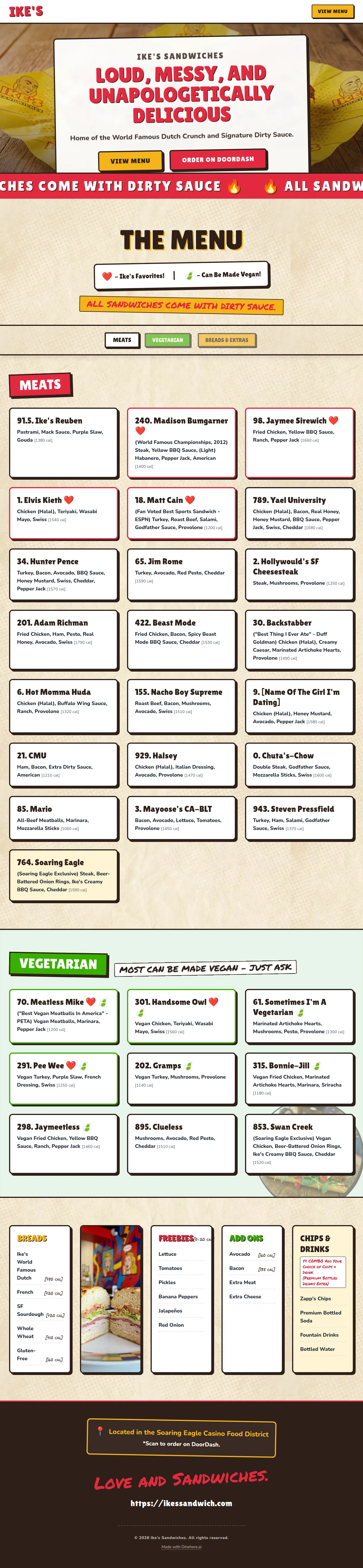
Try It FreeA real restaurant website built with Dinehere
Built from a few menu photos — this is a live site. Take a look.
Tips for Vegan Restaurant Owners
Describe Textures, Not Just Ingredients
Don't just say 'mushrooms.' Use words like 'crispy,' 'charred,' 'velvety,' or 'succulent.' Vegan food often battles a reputation for poor texture, so your website text needs to promise a satisfying mouthfeel.
Highlight the 'Free-From' Benefits
Use your About section to clearly state if you are a dedicated gluten-free or peanut-free facility. This makes your restaurant a safe haven for groups with mixed dietary needs, often deciding where the whole group eats.
Use Natural Light Photography
Plant-based food relies on vibrant colors to look appetizing. Take photos of your dishes near a window during the day. Avoid yellow artificial light, which can make greens look wilted and unappetizing.
Tell Your Sourcing Story
If you buy from local farmers, list them on your website. Vegan diners care deeply about the supply chain, and knowing your kale is local can be the deciding factor in choosing you over a competitor.
Keep the Menu Up to Date
Since vegan food is often seasonal, nothing frustrates a customer more than setting their heart on a specific squash dish only to find it's out of season. Update your Dinehere text menu the moment your kitchen changes offerings.
Challenges Vegan Restaurants Face Online
The 'Veto Vote'
Why it matters: In a group of diners, one non-vegan often vetoes a vegan restaurant because they fear they won't find anything 'satisfying.'
How we help: Dinehere allows you to present a visually rich, professional menu that highlights hearty, familiar items (like burgers or tacos), convincing the skeptic that they will leave full.
Ingredient Scrutiny
Why it matters: Vegan customers read menus more closely than anyone else to avoid hidden animal products. Blurry photos of pdf menus on mobile screens lead to lost customers.
How we help: Our platform creates a clean, mobile-optimized text menu. You can write detailed ingredient lists that are easy to read on any device, building immediate trust.
Perception of Value
Why it matters: Some customers believe paying premium prices for vegetables is unjustified compared to meat.
How we help: A professional 'About' section allows you to explain your labor-intensive processes (like house-made nut cheeses or 48-hour fermentation), justifying the price point through storytelling.
Three Simple Steps
Upload Your Menu
Take photos of your vegan menu or upload existing images. Our AI reads any format.
AI Creates Your Site
Watch as our AI designs a beautiful website tailored to vegan cuisine aesthetics.
Go Live Instantly
Preview, make edits if needed, and publish. Your restaurant is now online.
One Price, Everything Included
or $390/year — 2 months free
No contracts, no setup fees. Cancel anytime. Just a beautiful website for your vegan restaurant.
- AI-powered website generation
- Mobile-responsive design
- Custom subdomain (yourname.dinehere.ai)
- Menu parsing from photos
- SEO optimized
- Hosting included
- SSL certificate included
Common Questions About Vegan Restaurant Websites
It is instant. You can log in from your phone or computer, edit a text field, and hit save. This is essential for farm-to-table vegan concepts where ingredients change weekly.
Yes, visual appeal is critical for plant-based food. Dinehere showcases your photos beautifully, but we recommend taking bright, natural-light photos to make the vegetables pop on the screen.
Absolutely. Our menu layout allows for detailed descriptions, which is vital for vegan customers who scrutinize ingredients for hidden animal byproducts or allergens.
Yes. Dinehere generates a clean, professional typography-based header for you, so you look legitimate even without expensive branding.
Yes. We automatically structure your site's data so search engines understand you are a vegan restaurant, helping you appear in local search results.
Not everyone has Instagram, and scrolling through posts to find a current menu is frustrating. A website provides a permanent, easy-to-read home for your menu that anyone can access.
Yes, all Dinehere sites are fully responsive. This is crucial as most customers will search for your restaurant while on the go.
Yes, you can configure your contact section to display the information relevant to your specific business model.
Best Cities for Vegan Restaurants
Related Cuisines You Might Like
Ready to Build Your Vegan Restaurant Website?
Join other vegan restaurant owners who built their websites with Dinehere.
Build My Vegan Restaurant Site