
Build Your Ethiopian Restaurant Website
From traditional wat dishes to coffee ceremonies, our AI creates warm websites that celebrate Ethiopian culinary traditions.
Ethiopian Restaurant Website Examples

AI-designed for Ethiopian restaurants
Understanding Ethiopian Cuisine
History & Origins
Ethiopian cuisine is one of the world's oldest and most distinct culinary traditions, deeply rooted in the country's unique history as the only African nation never colonized. Its foundations date back thousands of years, influenced by trade routes connecting Africa, the Middle East, and Asia. Central to this history is the cultivation of Teff, an ancient, gluten-free grain used to make Injera, which has been the staple of the Ethiopian diet for millennia. The cuisine has also been shaped heavily by the Ethiopian Orthodox Church, whose fasting calendars led to the development of an incredibly rich and varied array of plant-based dishes.
Regional Styles
While Injera is ubiquitous, regional styles vary significantly based on climate and local agriculture. In the northern highlands (Tigray and Amhara regions), dishes tend to be spicier, heavily utilizing Berbere, and featuring stewed meats known as Wats. The Gurage region is famous for Kocho (false banana bread) and Kitfo (minced raw beef). In the eastern Harar region, culinary styles show more Middle Eastern influence, often sweeter and utilizing different spices like cardamom and cinnamon more aggressively. In the south, root vegetables and corn often replace Teff in daily staples.
Signature Techniques
The soul of Ethiopian cooking lies in its slow-simmered stews and complex spice blends. The most vital technique is the preparation of Niter Kibbeh, a clarified butter simmered with kosseret, cardamom, and other spices, which forms the aromatic base of many dishes. Another pillar is the fermentation of Injera batter, a process that takes several days to develop its signature sour tang and spongy texture. The art of balancing spices is critical, particularly in making Berbere (a hot spice blend) and Mitmita (an even hotter chili powder used for raw meats).
Dining Culture
Dining in Ethiopia is an inherently communal act designed to strengthen social bonds. Food is served on a large, shared platter called a Gebeta, layered with Injera and topped with various mounds of stews and vegetables. Eating is done with the right hand, tearing off pieces of Injera to scoop up the food. A significant cultural tradition is 'Gursha', the act of rolling a large morsel of food and feeding it to a friend or family member as a gesture of love and respect. The meal is often concluded with a traditional coffee ceremony (Buna), which involves roasting green beans over charcoal, incense, and three rounds of brewing.
Our AI understands Ethiopian cuisine
Dietary Guide Integration
Dedicate sections to explain Tsom (fasting) dishes, instantly appealing to the UK's growing vegan and gluten-free market.
Cultural Storytelling Section
A space to explain the origins of your family recipes, the history of Teff, or the significance of the coffee ceremony.
Spice Level Visuals
Simple indicators to help uninitiated customers distinguish between mild Alicha and spicy Kay Wat dishes.
Platter Visualization
High-quality mobile layout that lets customers see exactly what a 'Mahberawi' or shared combo looks like.
Ingredient Education
Pop-up or sidebar details explaining terms like 'Niter Kibbeh' or 'Berbere' so customers order with confidence.
Location & Hours Clarity
Essential for helping customers find your physical location, especially if you are tucked away in a vibrant neighborhood.
AI That Understands Ethiopian Menus
Our AI automatically recognizes and organizes traditional ethiopian menu categories.
Mahberawi & Beyaynetu
Grand tasting platters offering a variety of meat and vegetable dishes served atop a large Injera base.
Qulwa & Tibs
Sautéed meat dishes (lamb, beef, or fish) cooked with onions, garlic, and rosemary, often served sizzling.
Tsom (Fasting Dishes)
A rich selection of vegan stews made from lentils, split peas, collard greens, and cabbage.
Breakfast (Qurs)
Traditional morning dishes like Ful Medames, Chechebsa, and Genfo.
Raw Specialties
Delicacies like Kitfo (minced beef) and Gored Gored (cubed beef), seasoned with spiced butter and mitmita.
Upload your menu photos and watch the magic happen
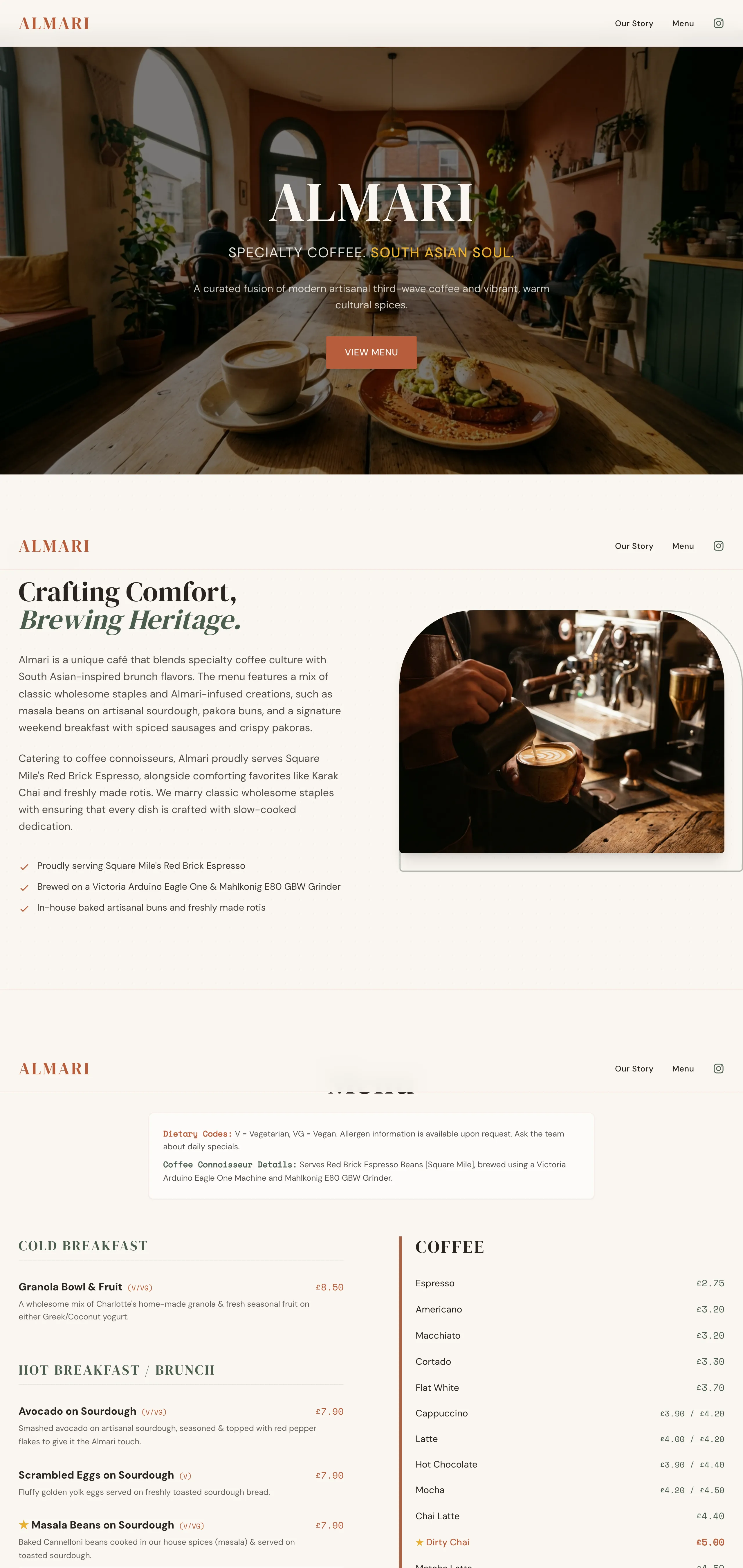
Try It FreeA real restaurant website built with Dinehere
Built from a few menu photos — this is a live site. Take a look.
Tips for Ethiopian Restaurant Owners
Leverage the Vegan Market
The UK has a massive vegan population. Use your website to explicitly label your 'fasting' menu as 'Vegan' to attract this demographic who might not know Ethiopian food is naturally plant-forward.
Demystify the Experience
Use your 'About' section to explain the 'Gebeta' (shared platter) and hand-eating etiquette. Removing the anxiety of 'how to eat' encourages new customers to visit.
Highlight the Coffee Ceremony
Ethiopia is the birthplace of coffee. Feature your traditional coffee ceremony on your homepage as a unique experience that sets you apart from standard cafes or dinner spots.
Showcase Fresh Ingredients
Mentioning that you import spices directly from Ethiopia or use 100% Teff for your Injera builds trust and justifies premium pricing for authentic quality.
Optimize for Local Discovery
Ensure your address and opening hours are prominent. Many customers search for specific cravings like 'doro wat' or 'injera'—a text-based menu on your site captures this traffic.
Challenges Ethiopian Restaurants Face Online
Visual Misunderstanding
Why it matters: To the uninitiated, various wats (stews) can look similar in photos. Poor quality images can make delicious food look unappealing.
How we help: Dinehere focuses on a clean layout where descriptive text does the heavy lifting, so you don't need a professional photoshoot for every single stew to look professional.
Menu Complexity
Why it matters: Amharic names without descriptions confuse customers, leading them to order 'safe' options or not visit at all.
How we help: Our text-based menu system allows for rich descriptions and English translations alongside Amharic names, educating the customer before they arrive.
Invisibility to Dietary Searchers
Why it matters: People searching for 'gluten-free' or 'dairy-free' often miss Ethiopian restaurants because these keywords aren't on their PDFs or social media.
How we help: Dinehere websites are SEO-optimized text, meaning when you list 'gluten-free teff injera', Google reads it and ranks you for those valuable search terms.
Three Simple Steps
Upload Your Menu
Take photos of your ethiopian menu or upload existing images. Our AI reads any format.
AI Creates Your Site
Watch as our AI designs a beautiful website tailored to ethiopian cuisine aesthetics.
Go Live Instantly
Preview, make edits if needed, and publish. Your restaurant is now online.
One Price, Everything Included
or £290/year — 2 months free
No contracts, no setup fees. Cancel anytime. Just a beautiful website for your ethiopian restaurant.
- AI-powered website generation
- Mobile-responsive design
- Custom subdomain (yourname.dinehere.ai)
- Menu parsing from photos
- SEO optimized
- Hosting included
- SSL certificate included
Common Questions About Ethiopian Restaurant Websites
Yes, the About section is perfect for explaining that Injera is a sour, fermented flatbread made from Teff flour, which serves as both plate and utensil.
Not at all. Dinehere allows you to quickly hide or show items, or upload a new menu photo which our team can help parse, making seasonal adjustments simple.
Absolutely. We optimize your site for local SEO, helping you appear when people search for 'Ethiopian food near me' or 'gluten-free restaurant [City Name]'.
While professional photos are great, they aren't required. We can use a few high-quality hero images to set the mood, and a clear text menu does the rest.
We can add clear dietary badges to your menu items or include a prominent banner stating that your Injera is made from 100% Teff (naturally gluten-free).
Yes, it's designed to be affordable for independent owners. Dinehere is a simple subscription (£29/month, or £290/year with two months free), far less than an agency or designer, with hosting included and no hidden maintenance costs. You can cancel anytime.
Yes, we can create a dedicated section for your beverage program, highlighting the traditional coffee ceremony pricing and details.
Yes, all Dinehere websites are fully mobile-responsive, which is crucial since most customers will look you up on their phones while deciding where to eat.
Yes, sharing your journey from Ethiopia to the UK builds a connection with customers. We include a dedicated 'Our Story' section for this purpose.
Best Cities for Ethiopian Restaurants
Related Cuisines You Might Like
Ready to Build Your Ethiopian Restaurant Website?
Join other ethiopian restaurant owners who built their websites with Dinehere.
Build My Ethiopian Restaurant Site