
Build Your Middle Eastern Restaurant Website
From shawarma shops to fine Levantine dining, our AI creates warm websites that celebrate your cuisine.
Middle Eastern Restaurant Website Examples

AI-designed for Middle Eastern restaurants
Understanding Middle Eastern Cuisine
History & Origins
Middle Eastern cuisine is one of the oldest and most diverse culinary traditions in the world, rooted in the Fertile Crescent where wheat, barley, pistachios, figs, and pomegranates were first cultivated. Over millennia, the region served as the crossroads of the Silk Road, absorbing influences from Persia, the Ottoman Empire, and North Africa to create a rich tapestry of flavors. The cuisine is defined by its masterful use of spices like saffron, cumin, and sumac, alongside fresh herbs, olive oil, and lemon, creating a profile that balances aromatic depth with bright acidity. Historically, the cuisine was shaped by the rhythm of nomadic life and the opulence of imperial courts. Bedouin traditions introduced communal eating and the heavy use of dairy and dates, while the Persian and Ottoman courts refined cooking techniques, giving rise to intricate rice pilafs, stuffed vegetables, and delicate pastries. The concept of hospitality is central to the history of the food; serving abundant, high-quality food to guests has always been a matter of honor and social standing across the region. In the United Kingdom, Middle Eastern food has evolved significantly from the late-night kebab shops of the 1980s to a celebrated dining category. Today, it encompasses everything from authentic Lebanese bakeries and Israeli fusion spots to high-end Persian banquet halls. The British palate has embraced the 'sharing plate' culture, making dishes like hummus, halloumi, and shawarma household staples, while increasing interest in vegetarianism has brought the region's plant-forward mezze traditions to the forefront of modern dining.
Regional Styles
The culinary landscape is vast: Levantine cuisine (Lebanon, Syria, Jordan, Palestine) is famous for its vast array of mezze and olive oil-rich dishes. Persian cuisine (Iran) is distinct for its sophisticated use of fruits in savory stews (khoresh) and saffron-infused rice (chelo). Turkish influences are seen in the grilling styles and breads, while North African elements bring tagines and couscous. The Gulf region offers more spice-heavy rice dishes like Kabsa and Mandi.
Signature Techniques
Signature methods include vertical rotisserie grilling (shawarma), charcoal grilling over open flames (mangal), and baking in clay or stone ovens (taboon/tannur). Pickling and fermentation are crucial for vegetables, while slow-cooking is essential for stews and tagines. The use of 'tarka' or blooming spices in oil, and the precise layering of flavors in rice dishes, are techniques passed down through generations.
Dining Culture
Dining is communal and centers on hospitality, often described by the Arabic concept of 'Karam'. It is rare to order a single dish for oneself; instead, tables are filled with small plates (mezze) to share, followed by large platters of grilled meats or stews. Meals are leisurely affairs, often concluding with fresh fruit, sweet pastries like Baklava or Kunafa, and strong tea or cardamom coffee. The philosophy is 'guest is god', meaning portions are generous and the host ensures no one leaves hungry.
Our AI understands Middle Eastern cuisine
Visual Mezze Showcase
Since mezze names like 'Muhammara' or 'Kibbeh' might be unfamiliar to some UK customers, our photo-led menu allows you to visually display the vibrant colors and textures of every small plate.
Heritage Storytelling
Middle Eastern food is about family. Our 'About' section lets you share the history of your grandmother's recipes or your chef's journey from the Levant to the UK.
Dietary & Halal Clarity
Easily tag dishes as Vegetarian, Vegan, or Halal. This transparency builds trust with diverse customer bases who specifically seek out Middle Eastern cuisine for these options.
Ramadan Hours Update
The ability to instantly update opening hours and add 'Iftar Special' menu sections during the holy month without needing a web developer.
Authentic Design Palette
Clean, warm templates that allow your food photography to pop, moving away from clichéd design tropes while maintaining a professional, hospitable aesthetic.
AI That Understands Middle Eastern Menus
Our AI automatically recognizes and organizes traditional middle eastern menu categories.
Cold Mezze
Essential starters served at room temperature, including Hummus, Moutabal (smoked aubergine), Tabbouleh, and Warak Enab (stuffed vine leaves).
Hot Mezze
Warm small plates such as Falafel, Kibbeh (fried bulgur wheat shells), Jawaneh (grilled wings), and Halloumi cheese.
Mashawi (Grills)
Charcoal-grilled skewers including Shish Taouk (chicken), Kofta (minced lamb), and Lamb Shish.
Manakish & Fatayer
Oven-baked flatbreads topped with za'atar, cheese (akkawi), or minced meat, alongside savory pastry parcels.
Tagines & Stews
Slow-cooked dishes like Lamb Tagine with prunes or Bamia (okra stew), served with couscous or vermicelli rice.
Upload your menu photos and watch the magic happen
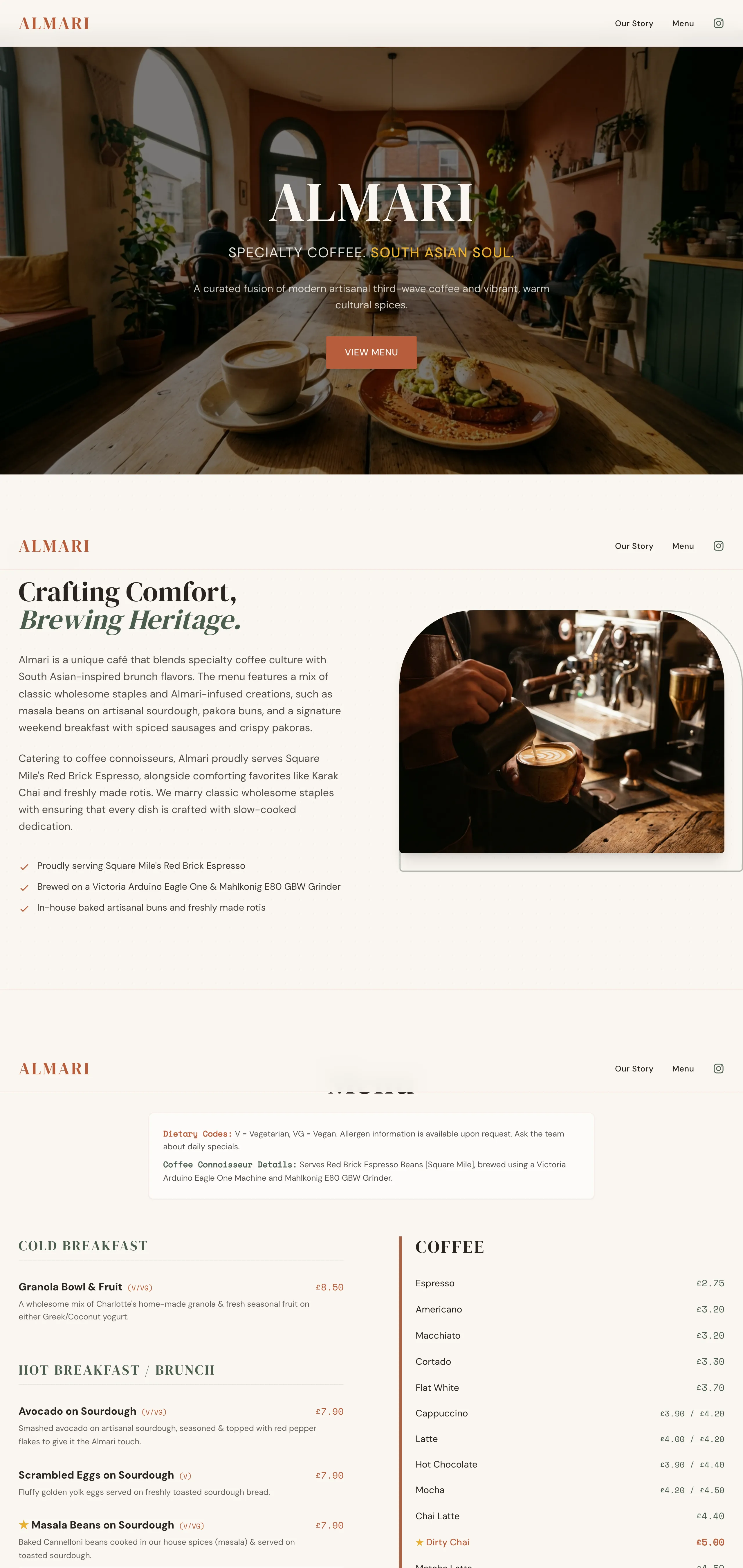
Try It FreeA real restaurant website built with Dinehere
Built from a few menu photos — this is a live site. Take a look.
Tips for Middle Eastern Restaurant Owners
Showcase the Spread
Don't just take photos of individual plates. Middle Eastern food looks best as a 'spread'—a table full of mezze, bread, and grills. This visual signals 'generosity' and encourages larger group bookings.
Educate Your Customer
Use your menu descriptions to demystify ingredients. Instead of just writing 'Moutabal', write 'Smoked aubergine dip with tahini and pomegranate molasses'. This encourages customers to try authentic dishes they might otherwise skip.
Highlight Fresh Bread
If you bake fresh bread or pita in-house, make sure this is mentioned prominently on your homepage. Fresh bread is a major draw for food lovers and signals high quality for the rest of the menu.
leverage 'The Story'
UK diners love authenticity. Use the 'About' section to mention the region your recipes come from (e.g., 'Recipes from our family in Aleppo'). This emotional connection sets you apart from generic chain restaurants.
Clarify 'BYOB' or Alcohol Policy
Middle Eastern restaurants vary on alcohol policies. Clearly stating if you serve alcohol, are alcohol-free, or allow 'Bring Your Own Bottle' (BYOB) on your website prevents customer confusion and awkwardness.
Challenges Middle Eastern Restaurants Face Online
The 'Kebab Shop' Stigma
Why it matters: Many high-quality Middle Eastern grills are unfairly categorized by customers as cheap, late-night takeaways, making it hard to charge restaurant prices.
How we help: A professional Dinehere website visually separates you from takeaways. High-quality imagery and a dedicated 'About' section establish your venue as a legitimate sit-down destination.
Complex Menu Navigation
Why it matters: With Cold Mezze, Hot Mezze, Grills, Sides, and Stews, customers often get overwhelmed and under-order or stick to what they know.
How we help: Dinehere's structured menu format allows you to categorize dishes clearly with descriptions, helping customers build a balanced meal without confusion.
Invisible to Tourists/Out-of-Towners
Why it matters: Tourists looking for 'authentic food' often skip restaurants that don't have a website to verify the menu and atmosphere.
How we help: By providing a Google-indexed website with a clear map and menu, you validate your business to visitors who don't know the local area, capturing new foot traffic.
Three Simple Steps
Upload Your Menu
Take photos of your middle eastern menu or upload existing images. Our AI reads any format.
AI Creates Your Site
Watch as our AI designs a beautiful website tailored to middle eastern cuisine aesthetics.
Go Live Instantly
Preview, make edits if needed, and publish. Your restaurant is now online.
One Price, Everything Included
or £290/year — 2 months free
No contracts, no setup fees. Cancel anytime. Just a beautiful website for your middle eastern restaurant.
- AI-powered website generation
- Mobile-responsive design
- Custom subdomain (yourname.dinehere.ai)
- Menu parsing from photos
- SEO optimized
- Hosting included
- SSL certificate included
Common Questions About Middle Eastern Restaurant Websites
Yes. Dinehere allows for detailed descriptions under every item. You can explain exactly what 'Sumac' or 'Za'atar' is, helping customers feel confident in ordering new things.
Not at all. You can edit your menu from your phone in seconds. If you run out of lamb chops or have a fresh fish special, you can update the site instantly.
Dinehere is designed for professionalism. The clean, modern layout works perfectly for white-tablecloth establishments by focusing on high-quality imagery and your restaurant's story.
Everything's included. Your subscription (£29/month, or £290/year with two months free) covers the website, hosting, and a custom subdomain, so there's no separate hosting bill. If you already own a .com you can connect it too. Cancel anytime.
Dinehere includes prominent 'Call to Book' buttons and displays your phone number clearly. We focus on driving customers to call you directly, saving you from paying commissions to booking platforms.
Yes, it is mobile-first. Most customers looking for 'hummus near me' are on their phones, and our sites load instantly and look perfect on small screens.
Absolutely. You can mention this in your 'About' section, footer, or even upload a photo of your certificate to build trust with your community.
Yes. Middle Eastern cuisine is naturally plant-rich. You can create specific sections like 'Vegetarian Mezze' or 'Vegan Mains' to help customers find what they want quickly.
We optimize the technical SEO of your site automatically. By having a fast, verified website linked to your Google Business Profile, your chances of ranking locally improve significantly.
Best Cities for Middle Eastern Restaurants
Related Cuisines You Might Like
Ready to Build Your Middle Eastern Restaurant Website?
Join other middle eastern restaurant owners who built their websites with Dinehere.
Build My Middle Eastern Restaurant Site