
Build Your Moroccan Restaurant Website
From intimate riads to modern Moroccan dining, our AI creates warm websites that transport guests to Marrakech.
Moroccan Restaurant Website Examples

AI-designed for Moroccan restaurants
Understanding Moroccan Cuisine
History & Origins
Moroccan cuisine is widely considered one of the most diversified cuisines in the world, a result of the centuries-long interaction of Morocco with the outside world. It is a sophisticated blend of Berber, Arab, Andalusian, and French culinary traditions, refined over centuries in the imperial kitchens of Fez, Marrakech, Meknes, and Rabat. The foundation rests on the indigenous Berber diet of couscous, lamb, and vegetables, later enriched by Arab spices like saffron and cinnamon, and the sweet-and-sour combinations introduced by the Moors fleeing Spain.
Regional Styles
The culinary landscape changes dramatically across the terrain. In the coastal cities like Essaouira and Agadir, dishes are dominated by fresh seafood, often prepared with chermoula, a spicy herb marinade. The Imperial cities, particularly Fez, are known for complex, sweet and savory dishes like Pastilla (a pigeon or chicken pie dusted with sugar). In the Atlas Mountains, the cooking is more rustic and hearty, focusing on slow-cooked Berber tagines and heavy use of mutton and root vegetables, while the south incorporates dates and camel meat.
Signature Techniques
The defining technique of Moroccan cooking is the use of the tagine, both the name of the conical clay pot and the dish cooked within it. The cone shape traps steam and returns moisture to the food, allowing tough cuts of meat to become tender with very little water. Another signature method is the triple-steaming of couscous over a simmering broth, ensuring the granules are fluffy and distinct rather than mushy. Preserving is also vital, particularly the curing of lemons in salt and the production of smen (aged, fermented butter).
Dining Culture
Moroccan dining is traditionally a communal affair, centered around hospitality and sharing. Meals typically begin with a ritual hand-washing, followed by salads and distinct courses served from a common central platter. Bread (khobz) is sacred and used in place of utensils to scoop up tagines and sauces; eating is strictly done with the right hand. The experience invariably concludes with the ceremonial preparation and pouring of sweet mint tea, served from a height to create a frothy 'crown' in the glass, symbolizing friendship and welcome.
Our AI understands Moroccan cuisine
Visual Texture Display
High-quality image rendering to showcase the vibrant colors of saffron, olives, and geometric tile patterns typical of your decor.
Ingredient Storytelling
Space to explain exotic ingredients like Argan oil, preserved lemons, and Ras el Hanout to educate uninitiated customers.
Dietary & Halal Clarity
Clear icons and sections to highlight Halal certification, vegetarian options, and nut allergen warnings (common in pastries).
Sharing Concept Layout
Menu formatting that groups dishes by 'To Share' or 'Individual Portions' to help customers understand ordering conventions.
Cultural Context Blocks
Dedicated sections to explain the history of your signature dishes, adding value to the dining experience.
AI That Understands Moroccan Menus
Our AI automatically recognizes and organizes traditional moroccan menu categories.
Kemia & Salads
Small cooked and raw vegetable plates served at the start of the meal.
Bastilla (Pastilla)
Elaborate savory pies wrapped in warqa dough.
Signature Tagines
Slow-cooked stews featuring lamb, chicken, or fish.
Friday Couscous
Semolina grains steamed over broth with seven vegetables.
Mashwi (Grills)
Charcoal-grilled skewers and chops.
Atay & Patisserie
Mint tea service and almond-based pastries.
Upload your menu photos and watch the magic happen
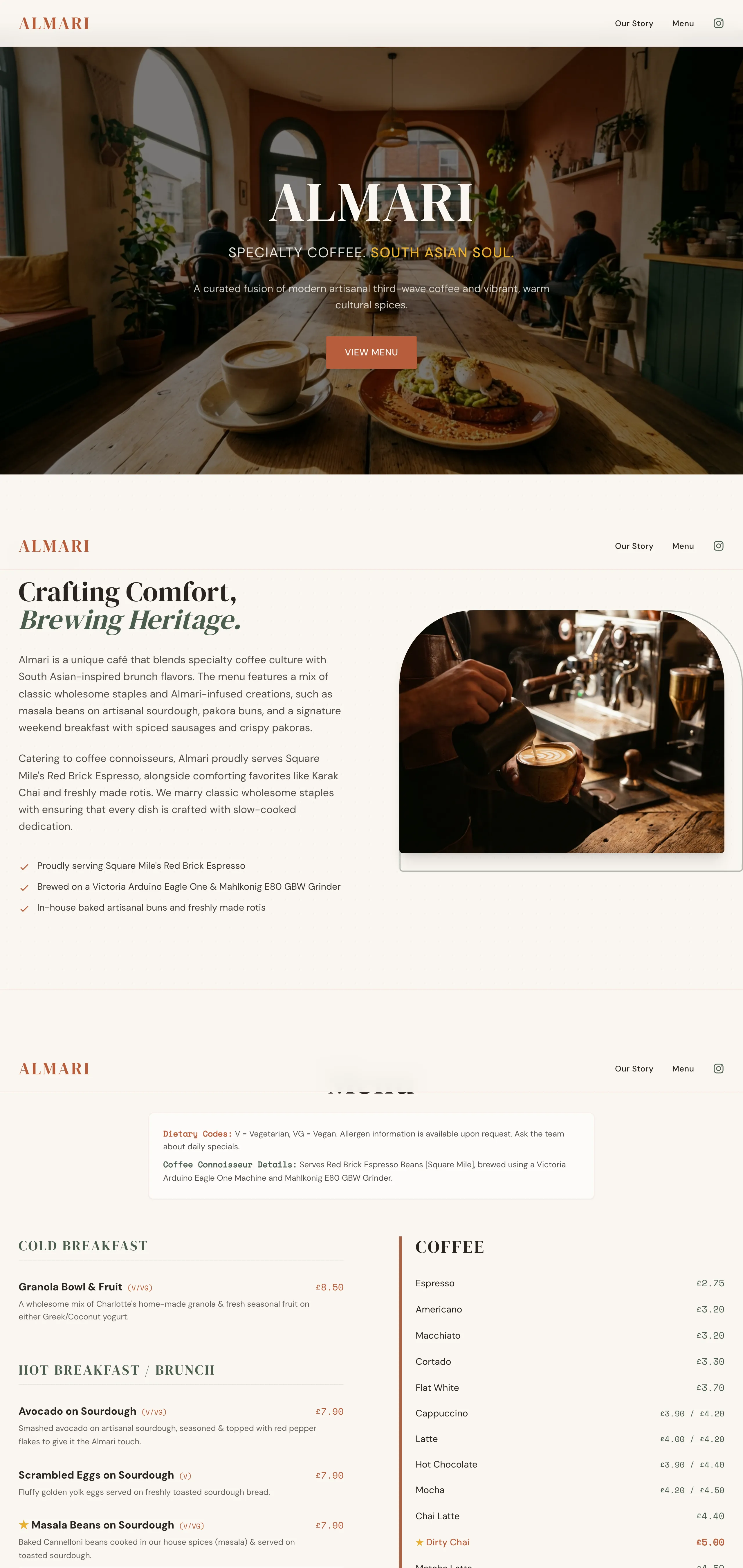
Try It FreeA real restaurant website built with Dinehere
Built from a few menu photos — this is a live site. Take a look.
Tips for Moroccan Restaurant Owners
Highlight the 'Slow Food' Aspect
Use your website's story section to emphasize that tagines take hours to cook. In a world of fast food, marketing the time and care put into your dishes is a massive selling point.
Demystify Sweet and Savory
Western palates can be surprised by sugar on meat (like in Pastilla). Use dish descriptions to explain that this balance is a historic, royal tradition, turning a potential objection into a curiosity.
Visualise the Tea Pour
The high pour of mint tea is your most
Showcase the Interior
Moroccan restaurants often have stunning decor (lanterns, mosaics). Ensure your website features a wide shot of your dining room; the atmosphere is as much a product as the food.
Clarify Portion Sizes
Since Moroccan food is communal, use the menu notes to suggest how many people a large tagine serves. This prevents ordering anxiety and helps groups plan their meal.
Challenges Moroccan Restaurants Face Online
Complex Dish Names
Why it matters: Customers may be intimidated by names like 'Mrouzia' or 'Chermoula' if they don't know what they are, leading them to click away.
How we help: Dinehere's clear menu layout allows for bold titles with prominent, easy-to-read English descriptions underneath, educating the customer immediately.
Lack of Visual Context
Why it matters: A text-only list of tagines doesn't convey the richness or portion size of the dish, making the prices seem arbitrary.
How we help: Our design emphasizes high-quality imagery, allowing you to upload photos of the bubbling tagine pots, which instantly justifies the price and quality.
Inaccurate Third-Party Menus
Why it matters: TripAdvisor or Yelp often display outdated menus uploaded by customers years ago, leading to arguments about pricing or discontinued dishes.
How we help: By having your own official Dinehere website, you establish the 'single source of truth' for your menu that you control and update instantly.
Three Simple Steps
Upload Your Menu
Take photos of your moroccan menu or upload existing images. Our AI reads any format.
AI Creates Your Site
Watch as our AI designs a beautiful website tailored to moroccan cuisine aesthetics.
Go Live Instantly
Preview, make edits if needed, and publish. Your restaurant is now online.
One Price, Everything Included
or £290/year — 2 months free
No contracts, no setup fees. Cancel anytime. Just a beautiful website for your moroccan restaurant.
- AI-powered website generation
- Mobile-responsive design
- Custom subdomain (yourname.dinehere.ai)
- Menu parsing from photos
- SEO optimized
- Hosting included
- SSL certificate included
Common Questions About Moroccan Restaurant Websites
We can create distinct menu sections for 'Lunch Express' and 'Evening Dining,' ensuring customers see the right options for their visit.
Yes, our About or Menu sections are perfect for a brief, appetizing description of the slow-cooking process to entice customers.
Absolutely. You maintain full control over the text, so your authentic spellings remain exactly as you want them.
Not every dish, but a few high-quality photos of your signature tagines and interior are highly recommended. We make sure they look great on mobile.
Yes, you can prominently display your policy or highlight your mocktail and tea selection in the menu section.
We optimize your site with relevant keywords, helping you appear in local searches for Moroccan and Halal dining.
We can add a 'Private Events' or 'Catering' section describing your capacity for weddings or parties, with a direct phone link.
Yes, updating menu prices is simple and instant, so your website always reflects your current in-house pricing.
Certainly. You can use the 'About' or 'Events' text area to list weekly entertainment schedules.
Best Cities for Moroccan Restaurants
Related Cuisines You Might Like
Ready to Build Your Moroccan Restaurant Website?
Join other moroccan restaurant owners who built their websites with Dinehere.
Build My Moroccan Restaurant Site