
Build Your Turkish Restaurant Website
From kebab houses to refined Ottoman cuisine, our AI creates elegant websites that celebrate Turkish flavors.
Turkish Restaurant Website Examples

AI-designed for Turkish restaurants
Understanding Turkish Cuisine
History & Origins
Turkish cuisine is a grand legacy of the Ottoman Empire, representing a sophisticated fusion of Central Asian, Middle Eastern, Eastern European, and Balkan influences. Its roots trace back to the nomadic Turkic tribes of Central Asia who brought with them traditions of drying and preserving meats and dairy, which later merged with the refined culinary arts of the Seljuks and the cosmopolitan tastes of the Ottoman court in Istanbul. Over centuries, the imperial kitchens refined these rustic dishes into complex, layered flavors that emphasize the quality of ingredients rather than heavy sauces.
Regional Styles
The geography of Turkey creates distinct culinary zones. The Aegean and Mediterranean coasts are famous for their olive oil-based dishes (zcyntinyağlılar), abundant seafood, and wild herbs. The Southeast (Gaziantep, Urfa, Adana) is the heartland of spices and flame-grilled kebabs, heavily influenced by Arab and Kurdish traditions. The Black Sea region relies on cornflour, kale, and anchovies (hamsi), while Central Anatolia is the breadbasket, known for its hearty pastries, clay pot stews, and pastas like manti.
Signature Techniques
The 'Ocakbaşı' (fireside) culture is central to Turkish cooking, where meats are grilled over open charcoal pits to impart a distinct smokiness. Layering is another signature technique, seen in the meticulous stacking of meat for Döner or the forty layers of phyllo dough in Baklava. Slow cooking in clay pots (güveç) allows flavors to meld over hours, while the art of 'meze' involves preparing numerous small, cold dishes that balance acidity, creaminess, and texture to precede the main meal.
Dining Culture
In Turkish culture, food is synonymous with hospitality ('misafirperverlik'). A meal is rarely a solitary event; it is a communal experience often starting with a shared spread of meze and accompanied by Raki or Ayran. The concept of the 'sofra' (dining table) is sacred, meant to be lingered over for hours. Whether in a casual 'Esnaf Lokantası' (tradesmen restaurant) or a lively 'Meyhane' (tavern), the meal invariably concludes with çay (tea) or Turkish coffee, signifying that the conversation is as important as the sustenance.
Our AI understands Turkish cuisine
Halal Assurance Display
Prominently highlight Halal certification and sourcing details in your footer or about section to build trust with specific diners.
Serpme Kahvaltı Showcase
A specialized layout to list the dozens of components included in a traditional Turkish full breakfast without cluttering the screen.
Charcoal Grill Visuals
High-impact image headers that capture the smoke and fire of the Ocakbaşı, distinguishing you from standard takeaways.
Ingredient Glossary
Space to explain unique ingredients like sumac, pomegranate molasses, or salça within dish descriptions to educate local customers.
Late-Night Hours Visibility
Clear, easy-to-find operating hours that specifically highlight late-night availability for weekend diners.
AI That Understands Turkish Menus
Our AI automatically recognizes and organizes traditional turkish menu categories.
Çorbalar (Soups)
Traditional starters like Mercimek (Lentil) or İşkembe (Tripe).
Soğuk Meze (Cold Starters)
Hummus, Babaganoush, Ezme, and Haydari.
Ara Sıcaklar (Warm Starters)
Fried liver (ciğer), calamari, grilled halloumi, and borek pastries.
Ocakbaşı (Charcoal Grill)
Adana, Lamb Shish, Chicken Shish, and Ribs.
Sulu Yemek (Stewed Dishes)
Kuru Fasulye, Karnıyarık (stuffed eggplant), and lamb casseroles.
Upload your menu photos and watch the magic happen
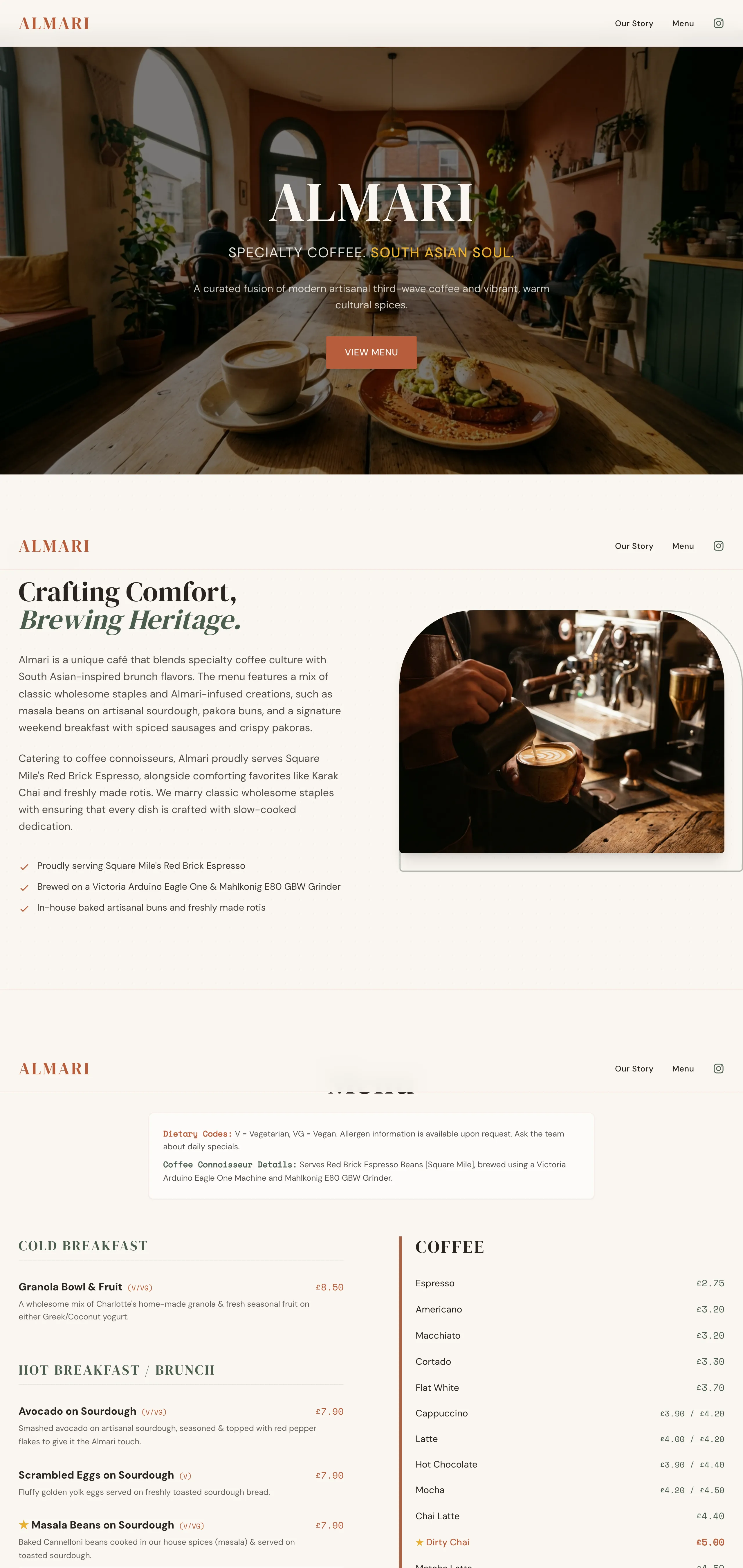
Try It FreeA real restaurant website built with Dinehere
Built from a few menu photos — this is a live site. Take a look.
Tips for Turkish Restaurant Owners
Highlight the 'Ocakbaşı' Experience
Don't just list 'Lamb Shish'. Describe the charcoal grilling process. Mentioning the open fire cooking method elevates the perception of your food from fast food to artisanal cuisine.
Tell the Story of the Region
If your chef is from Gaziantep or Hatay, mention it. Customers love authenticity. Explaining that your spices come from a specific Turkish region adds immense value to your brand.
Clarify 'Acılı' vs. 'Acısız'
Use your menu descriptions to clearly indicate spice levels. Many UK customers are hesitant about heat; clearly marking spicy (Adana) vs. non-spicy (Urfa) options removes barrier to ordering.
Showcase Vegetarian Depth
Turkish cuisine is plant-rich. Don't bury your vegetable dishes. Create a dedicated section for your olive oil dishes (Zeytinyağlılar) to attract vegetarians who might otherwise assume you only serve meat.
Visualise the 'Sharing' Concept
Use your 'About' section to explain the concept of Meze. Encourage customers to order multiple small plates to share, which creates a better dining experience and increases the check size.
Challenges Turkish Restaurants Face Online
The 'Late Night Kebab' Stigma
Why it matters: High-quality Turkish restaurants often get lumped in with cheap, late-night takeaways, making it hard to charge premium prices for sit-down meals.
How we help: A professional Dinehere website with high-quality imagery and an elegant layout signals immediately that you are a seated dining establishment, not just a takeaway counter.
Complex, Lengthy Menus
Why it matters: Turkish menus often have 100+ items including cold meze, hot meze, grills, and specials. PDF menus are impossible to read on mobile phones.
How we help: Dinehere parses your long menu into a mobile-responsive, categorized digital format. Customers can easily expand and collapse sections like 'Meze' or 'Grills' to find what they want quickly.
Unfamiliar Dish Names
Why it matters: Customers might be intimidated by names like 'Hünkarbeğendi' or 'Ali Nazik' if they don't know what they are, leading them to order safe, cheaper options.
How we help: Our text-focused design allows for rich descriptions under every item. You can tell the story of the dish (e.g., 'Sultan's Delight - Smoked eggplant puree topped with tender lamb stew'), tempting customers to try higher-value items.
Three Simple Steps
Upload Your Menu
Take photos of your turkish menu or upload existing images. Our AI reads any format.
AI Creates Your Site
Watch as our AI designs a beautiful website tailored to turkish cuisine aesthetics.
Go Live Instantly
Preview, make edits if needed, and publish. Your restaurant is now online.
One Price, Everything Included
or £290/year — 2 months free
No contracts, no setup fees. Cancel anytime. Just a beautiful website for your turkish restaurant.
- AI-powered website generation
- Mobile-responsive design
- Custom subdomain (yourname.dinehere.ai)
- Menu parsing from photos
- SEO optimized
- Hosting included
- SSL certificate included
Common Questions About Turkish Restaurant Websites
Not at all. Dinehere organizes long menus into clean, collapsible sections (like Cold Meze, Hot Meze, Grills), making it easy for customers to scroll through on their phones without feeling overwhelmed.
Yes, our item description fields allow you to detail the spice levels and ingredients, helping customers understand the difference between spicy Adana and mild Urfa before they order.
Absolutely. While photos help, Dinehere's clean typography and layout make text-based menus look elegant and professional. You can just feature photos of your signature dishes.
Yes, you can mention serving times in the section description for your breakfast menu, ensuring customers know when the 'Serpme Kahvaltı' is available.
We build the site in the language you provide. We recommend listing the Turkish name (e.g., 'İmam Bayıldı') followed by a clear English description so customers get the authentic feel but know what they are eating.
Yes, the 'Story' section is perfect for explaining your origins, your chef's background, or the region of Turkey your recipes come from.
We optimize your site for local SEO. While we don't control Google Maps directly, having a verified website linked to your Google Business Profile significantly improves your ranking and credibility.
We recommend displaying your dine-in menu to set the expectation of a restaurant experience. You can add a note that takeaway prices may vary or offer a downloadable PDF for the takeaway menu.
Best Cities for Turkish Restaurants
Related Cuisines You Might Like
Ready to Build Your Turkish Restaurant Website?
Join other turkish restaurant owners who built their websites with Dinehere.
Build My Turkish Restaurant Site